ARIUS
His teachings about the nature of the Godhead in Christianity, which emphasized the Father's divinity over the Son, and his opposition to what would become the dominant Christology, Homoousian Christology, made him a primary topic of the First Council of Nicaea, which was convened by Emperor Constantine in 325 AD.
Youtube Videos on Arius (7)
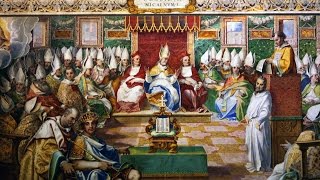 Early Christianity:
 Arian Controversy:
 At Nicaea (325 AD), Arian Controversy was settled; a 'disadvantaged'
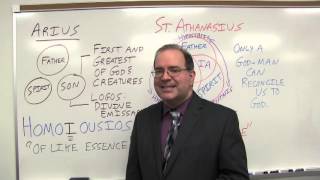 Jesus' Divinity: Decided by
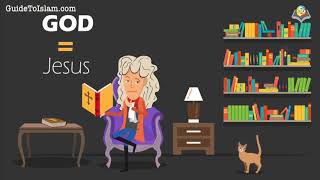 Newton's Law: Isaac Newton, a follower of
FAQ on Arius (2)
1.Do Arians and Jehovah Witnesses share the same beliefs?
While Jehovah's Witnesses are often labeled as modern-day Arians due to their shared non-Trinitarian views, the two systems differ significantly in their specific doctrines. Jehovah's Witnesses believe Jesus can fully know the Father, whereas Arius denied this; additionally, Witnesses view the Holy Spirit as an impersonal active force, while Arius considered the Holy Spirit to be a high-ranking angelic person.
Jehovah Witnesses (JW) are often referred to as 'modern-day Arians'. While there are similarities in theology and doctrine, the JW differ from Arians in the following ways:
2.In 325 AD, did Emperor Constantine burn gospels, writings and religious text?
The books of Arius and his followers, after the first Council of Nicaea (325 C.E.), were burned for heresy by the Roman emperors Constantine, Honorius, and Theodosius I, who published a decree commanding that, 'the doctrine of the Trinity should be embraced by those who would be called catholics; that all others should bear the infamous name of heretics'.