Paul stood in the middle of the Areopagus, and said, “You men of Athens, I perceive that you are very religious in all things.
For as I passed along, and observed the objects of your worship, I found also an altar with this inscription: ‘TO AN UNKNOWN GOD.’ What therefore you worship in ignorance, this I announce to you.
The God who made the world and all things in it, he, being Lord of heaven and earth, doesn’t dwell in temples made with hands,
neither is he served by men’s hands, as though he needed anything, seeing he himself gives to all life and breath, and all things.
He made from one blood every nation of men to dwell on all the surface of the earth, having determined appointed seasons, and the boundaries of their dwellings,
that they should seek the Lord, if perhaps they might reach out for him and find him, though he is not far from each one of us.
‘For in him we live, and move, and have our being.’ As some of your own poets have said, ‘For we are also his offspring.’
Being then the offspring of God, we ought not to think that the Divine Nature is like gold, or silver, or stone, engraved by art and design of man.
The times of ignorance therefore God overlooked. But now he commands that all people everywhere should repent,
because he has appointed a day in which he will judge the world in righteousness by the man whom he has ordained; of which he has given assurance to all men, in that he has raised him from the dead.”
Now when they heard of the resurrection of the dead, some mocked; but others said, “We want to hear you again concerning this.”
Thus Paul went out from among them.
But certain men joined with him, and believed, among whom also was Dionysius the Areopagite, and a woman named Damaris, and others with them.
ACTS 17:22-34
Apostle Paul debates philosophers at the Areopagus in Athens
Listen to the brilliant intellectual presentation of the Gospel as the Apostle Paul debates epicurean philosophers at Areopagus in Athens. 802 views · Last view: 1 day ago
Listen to the brilliant intellectual presentation of the Gospel as the Apostle Paul debates epicurean philosophers at Areopagus in Athens. 802 views · Last view: 1 day ago
Explore More
Apostle Paul PhiloSearch Google Search Explore Topics
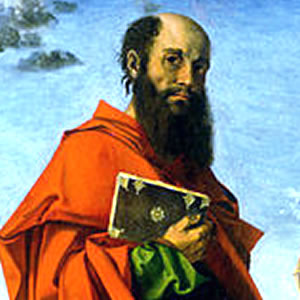 Who was Apostle Paul?
Paul the Apostle (Latin: Paulus), commonly known as Saint Paul and also known by his Jewish name Saul of Tarsus was an apostle (though not one of the Twelve Apostles) who taught the gospel of Christ to the first century world. Paul is generally considered one of the most important figures of the Apostolic Age and in the mid-30s to the mid-50s AD he founded several churches in Asia Minor and Europe. He took advantage of his status as both a Jew and a Roman citizen to minister to both Jewish and Roman audiences. According to writings in the New Testament and prior to his conversion, Paul was dedicated to persecuting the early disciples of Jesus in the area of Jerusalem. In Acts, Paul was traveling on the road from Jerusalem to Damascus on a mission to 'arrest them and bring them back to Jerusalem' when the resurrected Jesus appeared to him in a great light. He was struck blind, but after three days his sight was restored by Ananias of Damascus and Paul began to preach that Jesus of Nazareth is the Jewish Messiah and the Son of God.
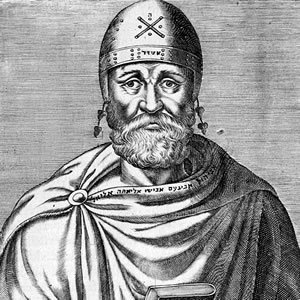 Who was Philo?
Philo of Alexandria (20 BC-50 AD) was a Hellenistic Jewish philosopher who lived in Alexandria, in the Roman province of Egypt. Philo used philosophical allegory to harmonize Jewish scripture, mainly the Torah, with Greek philosophy. His method followed the practices of both Jewish exegesis and Stoic philosophy. His allegorical exegesis was important for some Christian Church Fathers, but he had very little reception history within the Rabbinic Judaism. He adopted allegorical instead of literal interpretations of the Hebrew Bible. Some scholars hold that his concept of the Logos as God's creative principle influenced early Christology.