Q Why do Muslims say non-Muslims will go to Hell?
A One of the basic teachings of Islam is that God does not have a favorable opinion of those who knowingly deny His right to be worshiped alone (as He alone is responsible for our creation, our sustenance, and our judgement) and reject any of His messengers.
This is not to say that there will be conveyor belts for each religion, and we just jump on and go to either Heaven or Hell according to what we call ourselves. Each person will be judged based on their understanding of God's message, as well as his or her capability and intentions to follow the path to God as best he or she could.
Muslims are not allowed to say that someone will go to hell just because they call themselves a Christian, Jew, or Polytheist. Muslims are not allowed to speak without knowledge. And each person's destination in the Hereafter is known only to God.
It is interesting to note that some people of different faiths insist on telling everyone who does not go to their specific place of worship that they will certainly be going to Hell (knowledge they do not have). But when they see this Quran verse, they are upset by it.
2 views (1 day ago)
A One of the basic teachings of Islam is that God does not have a favorable opinion of those who knowingly deny His right to be worshiped alone (as He alone is responsible for our creation, our sustenance, and our judgement) and reject any of His messengers.
This is not to say that there will be conveyor belts for each religion, and we just jump on and go to either Heaven or Hell according to what we call ourselves. Each person will be judged based on their understanding of God's message, as well as his or her capability and intentions to follow the path to God as best he or she could.
Muslims are not allowed to say that someone will go to hell just because they call themselves a Christian, Jew, or Polytheist. Muslims are not allowed to speak without knowledge. And each person's destination in the Hereafter is known only to God.
It is interesting to note that some people of different faiths insist on telling everyone who does not go to their specific place of worship that they will certainly be going to Hell (knowledge they do not have). But when they see this Quran verse, they are upset by it.
Explore More
IslamSearch Google Search Explore Topics
 What is Islam?
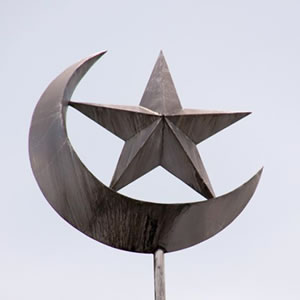
One of the major religions of the world, Islam literally translates to "submission," as a follower of Islam (Muslims) devotes their life to that of their God. The religion began with the teachings of Muhammad in the 7th century. The theology of Islam is based on the Qur'an, which was given to Muhammad by God. Some of the major fundamental principles of Islam include the Five Pillars, which hope to unite all Muslims into a community. Two different factions of Muslims exist - the majority are known as Sunni, with a small percentage known as Shi'a - both predominantly reside throughout the Middle East. Muhammad died in 632 AD and the religion of Islam formally started after his death. The Quran was formally compiled and finalised in 650 AD, prior to which it was 'memorised' and written across many parchments.