135 views
·
Last viewed: 4 days ago
Uploaded: 03 Nov 2023 (3 years ago) · Shared: 06 May 2026
Duration: 56:51
Uploaded: 03 Nov 2023 (3 years ago) · Shared: 06 May 2026
Duration: 56:51
Youtube Description
In a paper presentation at the 2023 UCA Conference, Pastor Sean Finnegan addresses the deity of Christ within a Greco-Roman worldview. When earlyChristian authors called Jesus “god” (or “God”) what did they mean?
Modern apologists routinely point to pre-Nicene quotations in order to prove that early Christians always believed in the deity of Christ, by which they mean that he is of the same substance (homoousios) as the Father.
However, most historians agree that Christians before the fourth century simply didn’t have the cognitive categories available yet to think of Christ in Nicene or Chalcedonian ways. If this consensus is correct, it behooves us to consider other options for defining what early Christian authors meant.
The obvious place to go to get an answer to our initial question is the New Testament. However, as is well known, the handful of instances in which authors unambiguously applied god (θεός) to Christ are fraught with textual uncertainty, grammatical ambiguity, and hermeneutical elasticity. What’s more, granting that these contested texts all call Jesus “god” provides little insight into what they might mean by that phrase. Turning to the second century, the earliest handful of texts that say Jesus is god are likewise textually uncertain or terse. We must wait until the second half of the second century and beyond to have more helpful material to examine. We know that in the meanwhile some Christians were saying Jesus was god. What did they mean?
Explore More
Greco-Roman Roman JESUS
JESUS
Search Google Search Explore Topics
 What is Greco-Roman?
The Greco-Roman world, also Greco-Roman civilization, Greco-Roman culture or Greco-Latin culture is the term used by modern scholars and writers to describe the geographical regions and countries. The regions that were culturally, and so historically, directly and intimately influenced by the language, culture, government, and religion of the ancient Greeks and Romans. The term "classical antiquity" is used for describing the time period when the Greco-Roman culture exerted its greatest influence and dominance on the European continent. Specifically, the term "Mediterranean world" refers to the extensive tracts of land centered on the Mediterranean and Black Sea basins which are considered the "swimming pool and spa" of the Greeks and the Romans. In these regions, the cultural perceptions, ideas, and sensitivities of these peoples became dominant in classical antiquity.
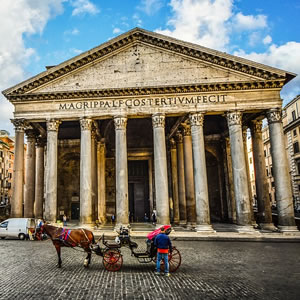 What is Roman?
In historiography, ancient Rome is Roman civilization. From the founding of the city of Rome in the 8th century BC to the collapse of the Western Roman Empire in the 5th century AD, encompassing the Roman Kingdom, Roman Republic and Roman Empire until the fall of the western empire. The civilization began as an Italic settlement in the Italian peninsula, dating from the 8th century BC, that grew into the city of Rome and which subsequently gave its name to the empire over which it ruled and to the widespread civilisation the empire developed. The Roman empire expanded to become one of the largest empires in the ancient world, though still ruled from the city, with an estimated 50 to 90 million inhabitants (roughly 20% of the world's population) and covering 5.0 million square kilometres at its height in AD 117.