Nicene Creed: Eusebius was influenced by Philo of Alexandria

   4:01
640 views  ·  Last viewed: 1 day ago
Uploaded: 05 May 2020   (6 years ago)  ·  Shared: 06 May 2020

Video Description (from Youtube)

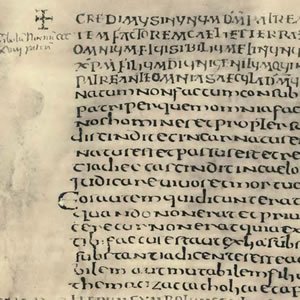
How did the Nicene Creed come about? Who influenced the 'words' written on the Creed? This video explains in detail, the who and what of the matter.
DISCLAIMER
All videos are shared for educational and information purposes only. All videos are hosted and viewable on Youtube servers. Video titles are generated using the original video title; overall content theme including actual dialogue and speech (Transcript); and A.I-based recommendations with a focus on SEO, keyword density, and internal search functions. The video title does not represent the views held by the Youtube video uploader, or any individual, organisation or business.

If you spot any mistake, omission or give feedback, kindly Contact Us with details

Search Results on 'Nicene Creed: Eusebius was influenced by Philo of Alexandria'

SCROLL TO:   TOPICS |   4   NEWS |   0   ARTICLES |   2   FAQ |   0   VIDEO |   25   LINKS |   0

Topics include Nicene Creed, Eusebius, Philo (4)

What is Nicene Creed?
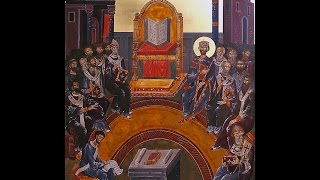
The Nicene Creed is a statement of belief widely used in Christian liturgy. It is called Nicene because it was originally adopted in the city of Nicaea (present day Iznik, Turkey) by the First Council of Nicaea in 325 CE. In 381, it was amended at the First Council of Constantinople, and the amended

form is referred to as the Nicene or the Niceno-Constantinopolitan Creed.
Who was Philo Alexandria?
Philo of Alexandria (20 BC - 50 AD), was a Hellenistic Jewish philosopher who lived in Alexandria, in the Roman province of Egypt. Philo used philosophical allegory to harmonize Jewish scripture, mainly the Torah, with Greek philosophy. His allegorical exegesis was important for some Christian

Church Fathers, but he had very little reception history within the Rabbinic Judaism. Philo adopted allegorical instead of literal interpretations of the Hebrew Bible.
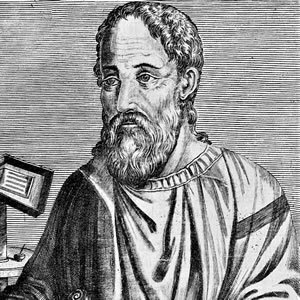
Who was Eusebius?
Eusebius of Caesarea (260-340 AD) was a historian of Christianity, exegete, and Christian polemicist. He became the bishop of Caesarea Maritima about 314 AD. Together with Pamphilus, he was a scholar of the Biblical canon and is regarded as an extremely learned Christian of his time. During the

Council of Antiochia (325) he was excommunicated for subscribing to the heresy of Arius (Arianism), and thus withdrawn during the First Council of Nicaea where he accepted that the Homoousion referred to the Logos. Never recognized as a saint, he became counselor of Constantine the Great, and with the bishop of Nicomedia he continued to polemicize against Saint Athanasius of Alexandria, Church Fathers, since he was condemned in the First Council of Tyre in 335.
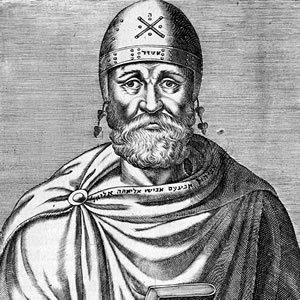
Who was Philo?
Philo of Alexandria (20 BC-50 AD) was a Hellenistic Jewish philosopher who lived in Alexandria, in the Roman province of Egypt. Philo used philosophical allegory to harmonize Jewish scripture, mainly the Torah, with Greek philosophy. His method followed the practices of both Jewish exegesis and

Stoic philosophy. His allegorical exegesis was important for some Christian Church Fathers, but he had very little reception history within the Rabbinic Judaism. He adopted allegorical instead of literal interpretations of the Hebrew Bible. Some scholars hold that his concept of the Logos as God's creative principle influenced early Christology.

Articles on Nicene Creed, Eusebius, Philo (2)

1.Nicene Creed - Council of Nicaea 325 AD
2.Nicene Creed - Foundation of Christianity

Youtube Videos on Nicene Creed, Eusebius, Philo (25)

Video:  How did the Nicene Creed confirm the Trinity? | ReligionForBreakfast   7:35
905 views
Video:  Who was Philo of Alexandria? - Henry Abramson   51:55
369 views
Video:  After Nicaea 325 AD, Constantine had Eusebius determine the earliest New Testament canon - Charles Hedrick   1:48
826 views
Video:  Nicene Creed (Nicaea) - Jim Papandrea   1:06:39
481 views
Video:  Greek: Iesous is not a translation of Hebrew: Yeshua, claimed Josephus, Eusebius, Clement & Cyril. We simply do NOT know Jesus' real name - Mansur Ahmad vs Christian   26:36
822 views
Video:  I am a Jesus Mythicist due to: Philo of Alexandria; Prophecies; and Bible Parallels - Godless Engineer   9:29
380 views
Video:  Philo of Alexandria (20 BC-50 AD) was first to write of God's Trinity   4:49
724 views
Video:  Philo of Alexandria, a Jewish Greek philosopher wrote of a Trinitarian God   2:58
746 views
Video:  Eusebius, an early Church Father loyal to Philo of Alexandria, who added the 'God From God' pagan idea to the Nicene Creed in 325 AD - approvedofGod   2:23
1049 views
Video:  Eusebius (260-340 AD) praised Philo of Alexandria's contribution to Catholicism - approvedofGod   4:18
815 views
Video:  Philo's Trinity: Evidence how Philo of Alexandria designed the Christian Trinity - approvedofGod   4:12
745 views
Video:  Philo of Alexandria, Ignatius & Theophilus pioneered the idea of Trinity - approvedofGod   1:26
827 views
Video:  From Proverbs 8:22, Philo of Alexandria applied a 'feminine' Wisdom (Sophia) in support of Roman Catholic teachings on Trinity - approvedofGod   6:59
979 views
Video:  Philo of Alexandria mixed Greek philosophy with Jewish-Christianity to invent Catholic Christianity & Trinity - approvedofGod   11:51
1651 views
Video:  Is Mark's Gospel based on writings of Philo of Alexandria?   15:46
669 views
Video:  Greek philosophy, John's gospel and Philo of Alexandria were merged at Council of Nicaea in 325 AD - William Lane Craig & approvedofGod   12:38
1103 views
Video:  Homoousios ('same substance') was a confusing and theologically Ambiguous word used by Athanasius, Eusebius and Marcellus - Kegan Chandler   2:39
547 views
Video:  Constantine inserted Homoousios ('same substance') into Christian doctrine, according to Eusebius - Kegan Chandler   3:21
907 views
Video:  Philo of Alexandria (20 BC-50 AD) wrote of 'Two Powers' with One God; creating Christian Trinity - approvedofGod   8:42
1005 views
Video:  Thallus, quoted by Africanus, then Eusebius (d. 340 AD) confirmed Earthquake at Jesus' Crucifixion - TruthSurge   2:40
855 views
Video:  Both Apostle Paul and Philo of Alexandria wrote of Jesus the supreme Archangel in Jewish Angelology - Richard Carrier   2:33
1212 views
Video:  Theophilus of Antioch (d. 183 AD) first wrote of the 'mystery' Trinity, taken from Philo of Alexandria (d. 50 AD) - approvedofGod   6:53
744 views
Video:  Nicene Creed: Eusebius was influenced by Philo of Alexandria   4:01
640 views
Video:  Philo of Alexandria, a Jewish-Greek philosopher wrote of Trinity using mystical, esotericism - approvedofGod   4:26
743 views
Video:  Philo of Alexandria used Greek Philosophy to teach that God was One of Three Trinity - approvedofGod   6:06
633 views

Latest videos  •  6,061 videos  •  0 viewed/24 hour

SUBSCRIBE

Receive the latest news and updates by email - Subscribe Now!
About  |  Q&A  |  Contact Us    •    Terms  |  Privacy  |  Disclaimer  |  Sitemap
Connect:      Facebook  |    Twitter  |    Youtube
MuslimProphets.com is an educational website on the Prophets of God: David, Noah, Abraham, Moses, Jesus and Muhammad, who established the Abrahamic faiths of Judaism, Christianity and Islam. MuslimProphets.com explores contemporary social themes through Scripture, Evidences, Photo, Video, Maps, Current Affairs, Debate and 'alternative' Views held by Theologians, Apologists, Scholars and Street Preachers. Take a Site Tour

In accordance with Islamic etiquette, all prophet names should be followed with 'Peace Be Upon Him (PBUH)'. This is omitted to minimise text.

DISCLAIMER: All website content is for general information and educational purposes only and available in the public domain. Whilst all information comes from sources believed to be reliable, this cannot be guaranteed. External links are provided as a convenience and for informational purposes only. They do not constitute endorsement or approval for any products, services or comments by organizations or individuals. Title and Text links may be edited for external SEO, internal site and keyword search purposes. We bear no responsibility for the accuracy, legality, or content found on any external website or its subsequent links. Unless indicated, all images and content is licensed under a Creative Commons Attribution License distributed by Wikipedia, Wikimedia Commons, Pixabay, Pxhere, Pexels, Unsplash, Flickr and others. All Torah, Psalms, Old and New Testament Bible quotes are from the King James Version (KJV) Holy Bible in the public domain. All Quran quotes are from Taqi-ud-Din al-Hilali/Muhsin Khan English Quran translation.

ALWAYS DO YOUR OWN RESEARCH. If you spot any mistake, error or omission of information, contact us so we can correct it.