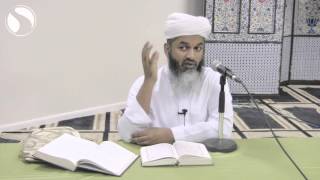
1095 views
·
Last viewed: 2 days ago
Uploaded: 09 Aug 2018 (8 years ago) · Shared: 10 Aug 2018
Duration: 1:58
Uploaded: 09 Aug 2018 (8 years ago) · Shared: 10 Aug 2018
Duration: 1:58
Youtube Description
Richard Rubenstein (born February 24, 1938) is an author and University Professor of Conflict Resolution and Public Affairs at George MasonUniversity, holding degrees from Harvard College, Oxford University (as a Rhodes Scholar), and Harvard Law School.
Link to Richard Rubenstein videos:
http://muslimprophets.com/videos.php?search=Richard+Rubenstein
Link to the original video:
https://www.youtube.com/watch?v=1dOiZQhKU78
DISCLAIMER
We do NOT own the video materials and all credits belong to the respectful owners. In case of copyright issues, please contact us immediately for further credits or clip delete.
COPYRIGHT
Under Section 107 of the Copyright Act 1976, allowance is made for 'fair use' for purposes such as criticism, comment, news reporting, teaching, scholarship and research. Fair use is a use permitted by copyright statute that might otherwise be infringing. Non-profit, educational or personal use tips the balance in favour of fair use.
Explore More
Richard Rubenstein Christianity Constantine Convert ONSSearch Google Search Explore Topics
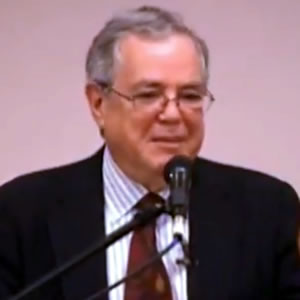 Who is Richard Rubenstein?
Richard Rubenstein (born 1938) is an author and University Professor of Conflict Resolution and Public Affairs at George Mason University. Rubenstein holds degrees from Harvard College, Oxford University (as a Rhodes Scholar), and Harvard Law School.
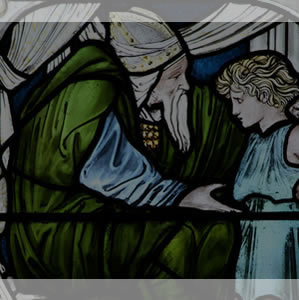 What is Christianity?
Christianity is a global religion centered on the life and teachings of Jesus Christ, who followers believe is the Son of God. It's a monotheistic faith, meaning Christians believe in one God who exists in three co-equal persons: God the Father, God the Son (Jesus Christ), and the Holy Spirit. Christianity is based on the Bible, with the Old Testament and New Testament serving as sacred texts.
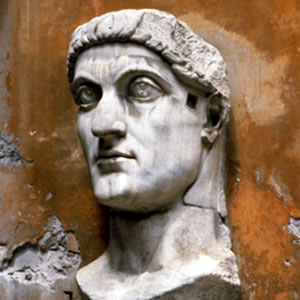 Who was Constantine?
Constantine the Great (27 February 272 AD-22 May 337 AD) was a Roman Emperor who ruled between 306 and 337 AD. Born on the territory now known as Nis, located in Serbia, he was the son of Flavius Valerius Constantius, a Roman Army officer of Illyrian origins. His mother Helena was Greek. His father became Caesar, the deputy emperor in the west, in 293 AD. Constantine was sent east, where he rose through the ranks to become a military tribune under Emperors Diocletian and Galerius. Constantine was the first Roman emperor to convert to Christianity. Although he lived most of his life as a pagan, he joined the Christian faith on his deathbed, being baptised by Eusebius of Nicomedia. He played an influential role in the proclamation of the Edict of Milan in 313, which declared religious tolerance for Christianity in the Roman empire. He called the First Council of Nicaea in 325 AD that produced the statement of Christian belief known as the Nicene Creed.
 What is Convert?
Religious conversion is the adoption of a set of beliefs identified with one particular religious denomination. Thus "religious conversion" would describe the abandoning of adherence to one denomination and affiliating with another. People convert to a different religion for various reasons, including active conversion by free choice due to a change in beliefs, secondary conversion, deathbed conversion, conversion for convenience, marital conversion, and forced conversion.
 Who are ONS?
The Office for National Statistics (ONS) is the official national statistical institute of the United Kingdom.