1085 views
·
Last viewed: 57 mins ago
Uploaded: 24 Feb 2015 (12 years ago) · Shared: 20 Sep 2017
https://instagram.com/ryreeves4/
Website: http://www.gordonconwell.edu/academics/view-faculty-member.cfm?faculty_id=15906&grp_id=8947
For the entire course on 'Church History: Reformation to Modern', see the playlist: https://www.youtube.com/playlist?list=PLRgREWf4NFWY1ZaP-falnLFIR9texgvjR
Infographic of Arius and his teaching: https://blogs.thegospelcoalition.org/ryanreeves/2016/04/30/infographic-everything-you-need-to-know-about-arianism-2/
Uploaded: 24 Feb 2015 (12 years ago) · Shared: 20 Sep 2017
Video Description (from Youtube)
Ryan M. Reeves (PhD Cambridge) is Assistant Professor of Historical Theology at Gordon-Conwell Theological Seminary. Twitter: https://twitter.com/RyanMReeves Instagram:https://instagram.com/ryreeves4/
Website: http://www.gordonconwell.edu/academics/view-faculty-member.cfm?faculty_id=15906&grp_id=8947
For the entire course on 'Church History: Reformation to Modern', see the playlist: https://www.youtube.com/playlist?list=PLRgREWf4NFWY1ZaP-falnLFIR9texgvjR
Infographic of Arius and his teaching: https://blogs.thegospelcoalition.org/ryanreeves/2016/04/30/infographic-everything-you-need-to-know-about-arianism-2/
What is Early Christian?
 Early Christianity, the period of Christianity preceding the First Council of Nicaea in 325 AD. This typically divides historically into the Apostolic Age and the Ante-Nicene Period (from the Apostolic Age until Nicea). The first Christians, as described in the first chapters of the Book of Acts, were all Jews either by birth or conversion and historians refer to them as Jewish Christians. The early Gospel message spread orally, probably originally in Aramaic, and later in Greek. The New Testament's Acts of the Apostles and Epistle to the Galatians record that the first Christian community centered on Jerusalem and that its leaders included Peter, James, the brother of Jesus, and John the Apostle.
What is Christianity?
 Christianity is a global religion centered on the life and teachings of Jesus Christ, who followers believe is the Son of God. It's a monotheistic faith, meaning Christians believe in one God who exists in three co-equal persons: God the Father, God the Son (Jesus Christ), and the Holy Spirit. Christianity is based on the Bible, with the Old Testament and New Testament serving as sacred texts.
Who is Ryan Reeves?
 Ryan Reeves is Assistant Professor of Historical Theology at Gordon-Conwell Theological Seminary. He is also an adjunct professor for Reformed Theological Seminary and teaches summers at Campus Crusade (Cru). Reeves received his PhD from Cambridge University and has two masters from Reformed Theological Seminary. He also was a guest student in theology at the University of Munster and has studied at Notre Dame's Medieval Institute and the Centro Pro Unione in Rome.
Who was Athanasius?
Athanasius of Alexandria (298-373 AD), also called Athanasius the Great, Athanasius the Confessor or Athanasius the Apostolic was the 20th bishop of Alexandria (as Athanasius I). His on-again-off-again episcopate spanned 45 years of which over 17 encompassed five exiles, when his episcopate was replaced on the order of four different Roman emperors. Athanasius was a Christian theologian, a Church Father, the chief defender of Trinitarianism against Arianism, and a noted Egyptian leader of the fourth century. Conflict with Arius and Arianism as well as successive Roman emperors shaped Athanasius' career. In 325 AD, at the age of 27, Athanasius began his leading role against the Arians as a deacon and assistant to Bishop Alexander of Alexandria during the First Council of Nicaea. Roman emperor Constantine the Great had convened the council in August 325 to address the Arian position that the Son of God, Jesus of Nazareth, is of a distinct substance from the Father.Where is Nicaea?
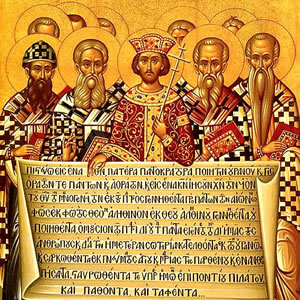 Nicaea or Nicea was an ancient city in northwestern Anatolia. It is primarily known as the site of the First and Second Councils of Nicaea (the first and seventh Ecumenical councils in the early history of the Christian Church), the Nicene Creed (which comes from the First Council), and as the capital city of the Empire of Nicaea following the Fourth Crusade in 1204, until the recapture of Constantinople by the Byzantines in 1261.
Who was Arius?
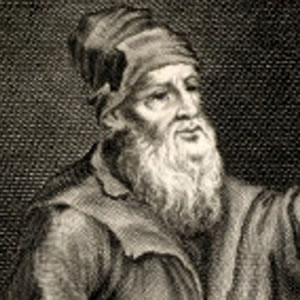 Arius 256-336 AD, was a Christian presbyter and ascetic of Berber origin, and priest in Baucalis in Alexandria, Egypt. His teachings about the nature of the Godhead in Christianity, which emphasized the Father's divinity over the Son, and his opposition to what would become the dominant Christology, Homoousian Christology, made him a primary topic of the First Council of Nicaea, which was convened by Emperor Constantine in 325 AD.
DISCLAIMER
All videos are shared for educational and information purposes only. All videos are hosted and viewable on Youtube servers. Video titles are generated using the original video title; overall content theme including actual dialogue and speech (Transcript); and A.I-based recommendations with a focus on SEO, keyword density, and internal search functions. The video title does not represent the views held by the Youtube video uploader, or any individual, organisation or business.
If you spot any mistake, omission or give feedback, kindly contact us with details
All videos are shared for educational and information purposes only. All videos are hosted and viewable on Youtube servers. Video titles are generated using the original video title; overall content theme including actual dialogue and speech (Transcript); and A.I-based recommendations with a focus on SEO, keyword density, and internal search functions. The video title does not represent the views held by the Youtube video uploader, or any individual, organisation or business.
If you spot any mistake, omission or give feedback, kindly contact us with details