0 views
·
Last viewed: 57 years ago
Uploaded: 20 Nov 2026 (4 days ago) · Shared: 23 Nov 2026
Duration: 21:38 ·
Youtube Description
Join Miracle Academy: https://www.themiracleacademy.com/ In 2006, The New York Times counted fewer than 190,000 Zoroastrians left in the world. For athousand years, this was the most powerful religion on earth.
In this video, I walk through why I believe Zoroastrianism is not just one of the monotheistic religions, it's the one the others copied from. It starts with the Council of Seven: Ahura Mazda at the center and the six Amesha Spenta around him (good mind, devotion, truth, just power, wholeness, immortality). It's a seven-seat divine government, written down about 3,500 years ago in the Gathas, the prophet Zoroaster's own hymns.
From there we trace the code back to Sumer. We look at the Gilgamesh flood, the seed of life with one circle in the middle and six around it, and the seven that shows up in your week, the seals, the churches and the chakras. We cover the sacred fire that has been kept burning, the 12,000-year clock split into four ages, why we're living in the third age (the mixture), and the savior Saoshyant.
Then we follow the kit as it moved. It went from Persia to the Babylonian exile in 539 BCE, to the Magi at the Nativity, and on to Islam. A second rail ran through Mithra, the god of the covenant, and the Roman Mithraic cult with its seven grades of initiation. That leads to the part that changes everything: the covenant is the basis of credit, and credit is the basis of money.
You'll leave seeing the six organs of the code: the seat, the flame, the priests, the contract, the promise and the clock. You'll also see why the savior you've been waiting for was never only outside of you.
Inside Miracle Academy, we practice this work together: self-responsibility, going one layer deeper, and bringing it into everyday life. Join us through the first link above.
CHAPTERS
00:00 190,000 left of the most powerful religion on earth
00:34 What Zoroastrianism actually is
01:32 Not a dead religion, a code
01:47 The Gnostics and what the church did next
02:33 The Council of Seven: the six seats
04:01 Ahura Mazda, the seventh seat
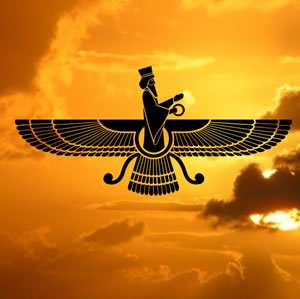
04:18 The Faravahar
04:33 Back to Sumer: Gilgamesh and the flood
05:22 The code of seven
05:50 Two creation stories and the Fravashi
06:43 A religion with seven seats is an operating system
07:17 Not fire worshippers: the light that never goes out
07:47 The 12,000-year clock
08:50 The savior Saoshyant, and the one inside you
09:47 The Chinvat bridge
10:02 Angra Mainyu: the truth against the lie
10:58 The whole kit
11:43 Link one: the Babylonian exile, 539 BCE
12:49 Link two: the Magi at the Nativity
13:31 Link three: Christianity to Islam
13:44 The mystery rail: Mithra and the seven grades
15:13 The covenant is the root of your money
17:08 The six organs of the code
18:53 Why so few are left
19:22 A master doesn't give away the master
20:33 Stop waiting for a savior
If this meant something to you, like, subscribe, and share it with someone you love. Then tell me in the comments: where has the seven been showing up in your life? If you disagree, tell me that too, and let's have the conversation.
Thank you. And I love you.
Explore More
TOPIC Zoroastrianism Zoroastrian ZoroasterSearch Google Search Explore Topics
 What is Zoroastrianism?
Zoroastrianism is an Iranian religion and one of the world's oldest organized faiths, based on the teachings of the Iranian-speaking prophet Zoroaster. It has a dualistic cosmology of good and evil
within the framework of a monotheistic ontology and an eschatology which predicts the ultimate conquest of evil by good. Zoroastrianism exalts an uncreated and benevolent deity of wisdom known as Ahura Mazda (Lord of Wisdom) as its supreme being. Historically, the unique features of Zoroastrianism, such as its monotheism, belief in free will and judgement after death, conception of heaven, hell, angels, and demons, among other concepts, may have influenced other religious and philosophical systems, including the Abrahamic religions.
What is Zoroastrian?Zoroastrianism is an Iranian religion and one of the world's oldest organized faiths, based on the teachings of the Iranian-speaking prophet Zoroaster. It has a dualistic cosmology of good and evil
within the framework of a monotheistic ontology and an eschatology which predicts the ultimate conquest of evil by good. Zoroastrianism exalts an uncreated and benevolent deity of wisdom known as Ahura Mazda (Lord of Wisdom) as its supreme being. Historically, the unique features of Zoroastrianism, such as its monotheism, belief in free will and judgement after death, conception of heaven, hell, angels, and demons, among other concepts, may have influenced other religious and philosophical systems, including the Abrahamic religions.
What is Zoroaster?Zoroastrianism is an Iranian religion and one of the world's oldest organized faiths, based on the teachings of the Iranian-speaking prophet Zoroaster. It has a dualistic cosmology of good and evil
within the framework of a monotheistic ontology and an eschatology which predicts the ultimate conquest of evil by good. Zoroastrianism exalts an uncreated and benevolent deity of wisdom known as Ahura Mazda (Lord of Wisdom) as its supreme being. Historically, the unique features of Zoroastrianism, such as its monotheism, belief in free will and judgement after death, conception of heaven, hell, angels, and demons, among other concepts, may have influenced other religious and philosophical systems, including the Abrahamic religions.





 8:07
95 views · 5 mins ago

 4:39
1047 views · 5 mins ago
 33:15
1500 views · 5 mins ago