20 views
·
Last viewed: 3 hrs ago
Uploaded: 19 Oct 2026 (1 month ago) · Shared: 17 Nov 2026
Duration: 14:08 ·
Uploaded: 19 Oct 2026 (1 month ago) · Shared: 17 Nov 2026
Duration: 14:08 ·
Youtube Description
A one-eyed figure with extraordinary powers, a mysterious man chained on an island, and warnings of a coming deception. These are among the startlingstories told about the Dajjal, or Antichrist. But why does the Quran never mention him? In this episode of The Hadith Question, host Dr. Safiyyah Ally and resident scholar Dr. Shabir Ally examine the hadiths behind this widely held belief, including reports about Ibn Sayyad, a young man whom some of the Prophet Muhammad's companions suspected was the Dajjal. Could these narratives have been influenced by earlier Christian traditions? And when stories about the end times fuel fear, speculation, and conspiracy theories, how should Muslims respond?
If you enjoy this video, please support our work financially by:
Visiting our website http://www.QuranSpeaks.com OR
Sending an etransfer to iGive@QuranSpeaks.com OR
Subscribing monthly at Patreon.com/QuranSpeaks
► DONATE: http://www.quranspeaks.com/
► SUBSCRIBE: https://www.youtube.com/subscription_center?add_user=quranspeaks
Facebook: http://www.Facebook.com/LetTheQuranSpeak
Instagram: http://www.Instagram.com/QuranSpeaks.tv
Twitter: http://www.Twitter.com/Quran_Speaks
Explore More
TOPIC Shabir Ally Antichrist Dajjal Muslim Beast Islam #666Search Google Search Explore Topics
 Who is Shabir Ally?
Shabir Ally is a Canadian Muslim preacher who serves as the president of the Islamic Information & Dawah Centre International in Toronto, Ontario, Canada. Ally is known for promoting a contextual
interpretation of the Quranic verses, but seeks to find their justification in similar expressions within the Christian Bible. He has debated William Lane Craig, David Wood, Nabeel Qureshi, Michael Licona and John Dominic Crossan. He has also debated apologists James White and Jay Smith.
 Who is Antichrist?
The word 'antichrist' combines two roots: anti + Khristos. Anti can mean not only 'against' and 'opposite of', but also 'in place of'. Khristos, translated 'Christ', is Greek for the Hebrew 'Messiah'
Both Christ and Messiah literally mean 'Anointed One', and refer to Jesus of Nazareth in Christian and Islamic theology. In Christianity, antichrist is a term found solely in the First Epistle of John and Second Epistle of John, and often lowercased in Bible translations. In Islamic eschatology, Masih ad-Dajjal is an anti-messiah figure (similar to the Christian concept of a last antichrist), who will appear to deceive humanity before the second coming of Isa, as Jesus is known by Muslims. The concept of an antichrist is absent in traditional Judaism; however, in the medieval diaspora, his inevitable destruction is narrated as the symbol of ultimate victory of good over evil in the Messianic age.
Who is Dajjal?The word 'antichrist' combines two roots: anti + Khristos. Anti can mean not only 'against' and 'opposite of', but also 'in place of'. Khristos, translated 'Christ', is Greek for the Hebrew 'Messiah'
Both Christ and Messiah literally mean 'Anointed One', and refer to Jesus of Nazareth in Christian and Islamic theology. In Christianity, antichrist is a term found solely in the First Epistle of John and Second Epistle of John, and often lowercased in Bible translations. In Islamic eschatology, Masih ad-Dajjal is an anti-messiah figure (similar to the Christian concept of a last antichrist), who will appear to deceive humanity before the second coming of Isa, as Jesus is known by Muslims. The concept of an antichrist is absent in traditional Judaism; however, in the medieval diaspora, his inevitable destruction is narrated as the symbol of ultimate victory of good over evil in the Messianic age.
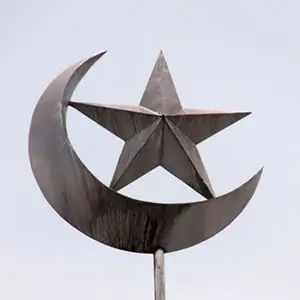 What is Muslim?
One of the major religions of the world, Islam literally translates to "submission," as a follower of Islam (Muslims) devotes their life to that of their God. The religion began with the teachings of
Muhammad in the 7th century. The theology of Islam is based on the Qur'an, which was given to Muhammad by God. Some of the major fundamental principles of Islam include the Five Pillars, which hope to unite all Muslims into a community. Two different factions of Muslims exist - the majority are known as Sunni, with a small percentage known as Shi'a - both predominantly reside throughout the Middle East.<br><br>
<i class="fa fa-calendar"></i> Muhammad died in 632 AD and the religion of Islam formally started after his death. The Quran was formally compiled and finalised in 650 AD, prior to which it was 'memorised' and written across many parchments.
Who is Beast?The word 'antichrist' combines two roots: anti + Khristos. Anti can mean not only 'against' and 'opposite of', but also 'in place of'. Khristos, translated 'Christ', is Greek for the Hebrew 'Messiah'
Both Christ and Messiah literally mean 'Anointed One', and refer to Jesus of Nazareth in Christian and Islamic theology. In Christianity, antichrist is a term found solely in the First Epistle of John and Second Epistle of John, and often lowercased in Bible translations. In Islamic eschatology, Masih ad-Dajjal is an anti-messiah figure (similar to the Christian concept of a last antichrist), who will appear to deceive humanity before the second coming of Isa, as Jesus is known by Muslims. The concept of an antichrist is absent in traditional Judaism; however, in the medieval diaspora, his inevitable destruction is narrated as the symbol of ultimate victory of good over evil in the Messianic age.
What is Islam?One of the major religions of the world, Islam literally translates to "submission," as a follower of Islam (Muslims) devotes their life to that of their God. The religion began with the teachings of
Muhammad in the 7th century. The theology of Islam is based on the Qur'an, which was given to Muhammad by God. Some of the major fundamental principles of Islam include the Five Pillars, which hope to unite all Muslims into a community. Two different factions of Muslims exist - the majority are known as Sunni, with a small percentage known as Shi'a - both predominantly reside throughout the Middle East.<br><br>
<i class="fa fa-calendar"></i> Muhammad died in 632 AD and the religion of Islam formally started after his death. The Quran was formally compiled and finalised in 650 AD, prior to which it was 'memorised' and written across many parchments.
Who is #666?The word 'antichrist' combines two roots: anti + Khristos. Anti can mean not only 'against' and 'opposite of', but also 'in place of'. Khristos, translated 'Christ', is Greek for the Hebrew 'Messiah'
Both Christ and Messiah literally mean 'Anointed One', and refer to Jesus of Nazareth in Christian and Islamic theology. In Christianity, antichrist is a term found solely in the First Epistle of John and Second Epistle of John, and often lowercased in Bible translations. In Islamic eschatology, Masih ad-Dajjal is an anti-messiah figure (similar to the Christian concept of a last antichrist), who will appear to deceive humanity before the second coming of Isa, as Jesus is known by Muslims. The concept of an antichrist is absent in traditional Judaism; however, in the medieval diaspora, his inevitable destruction is narrated as the symbol of ultimate victory of good over evil in the Messianic age.
 7:17
798 views · 41 secs ago
 1:01:20
853 views · 1 min ago

 16:40
219 views · 2 mins ago

 47:42
957 views · 3 mins ago

 1:32:46
 4:43
1028 views · 3 mins ago