0 views
·
Last viewed: 57 years ago
Uploaded: 21 Oct 2026 (1 week ago) · Shared: 29 Oct 2026
Duration: 1:51:15
Uploaded: 21 Oct 2026 (1 week ago) · Shared: 29 Oct 2026
Duration: 1:51:15
Youtube Description
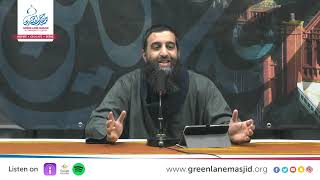
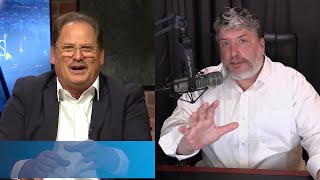
Who is the servant described in Isaiah 42, and does the passage point to Jesus, the Prophet Muhammad ﷺ, or someone else? In this presentation, DrAli Ataie closely examines one of the most discussed prophetic passages in Muslim-Christian dialogue. Drawing on the Hebrew text, biblical context, comparative theology, and the history of interpretation, he explores the identity of the “servant” in Isaiah 42 and asks how the passage has been understood by Jewish, Christian, and Muslim readers.
Particular attention is given to the chapter’s references to the servant’s mission, his relationship to the nations, the spread of justice, and the mention of Kedar, a name associated in the Hebrew Bible with the descendants of Ishmael. Dr. Ataie considers why Muslim scholars have connected these features with the Prophet Muhammad ﷺ, while also engaging Christian interpretations that identify the servant with Jesus.
The discussion also raises broader questions about biblical prophecy, messianic expectation, the prophetic tradition, the relationship between the Bible and the Qur’an, and how later religious communities interpret earlier scripture.
Rather than treating the issue as a simple proof-text, Dr. Ataie approaches Isaiah 42 through the lenses of biblical studies, Hebrew language, historical context, and comparative religion, making this presentation especially useful for those interested in serious Muslim-Christian dialogue.
This video was originally published on June 2, 2026, on the Blogging Theology YouTube channel, hosted by Br. Paul Williams.
I would like to offer a special and sincere thank you to Br. Paul Williams for graciously allowing me to host this presentation on my own channel. I am deeply grateful for his generosity and for the important work he continues to do through Blogging Theology, creating a platform for thoughtful, long-form discussions on Islam, Christianity, Judaism, biblical studies, theology, and comparative religion.
Br. Paul has consistently made space for careful engagement with difficult theological and historical questions, and I greatly appreciate his willingness to allow this discussion to be shared here as well.
Please be sure to support Br. Paul Williams and the Blogging Theology YouTube channel and explore their extensive collection of lectures, interviews, and scholarly conversations.
Dr. Ali Ataie is a scholar of biblical hermeneutics, sacred languages, comparative theology, and comparative literature. He earned an MA in Biblical Studies from the Pacific School of Religion and a PhD in Cultural and Historical Studies in Religion from the Graduate Theological Union. He reads and writes Arabic, Hebrew, and Greek, and his work frequently explores the Qur’an, the Bible, the historical Jesus, prophecy, and Muslim-Christian theological dialogue.
Subscribe for more lectures and discussions on Islam, Christianity, Judaism, the Qur’an, the Bible, biblical prophecy, comparative theology, and interfaith dialogue.
#Isaiah42 #ProphetMuhammad #Jesus #AliAtaie #DrAliAtaie #BloggingTheology #PaulWilliams #Bible #Quran #BiblicalProphecy #Islam #Christianity #ComparativeReligion #BiblicalStudies
Explore More
Paul William Ali Ataie Isaiah MUHAMMAD
JESUS
Search Google Search Explore Topics
 Who is Paul William?
Welcome to Blogging Theology. Our mission is to produce bitesized discussions of academic and scholarly books on Islam, Christianity and Judaism to encourage respectful interfaith dialogue and discussion to have some fun.
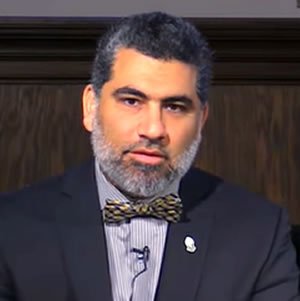 Who is Ali Ataie?
Ali Ataie is a teacher, researcher who specializes in interfaith work. He has been involved in many dialogues and debates with Christian scholars regarding famous topics including the resurrection of Jesus and the Prophethood of Muhammad. As a lecturer and instructor, he visited California Polytechnic State University, California State University East Bay, UC Davis, UC Berkeley, and UCLA.
 What is Isaiah?
Book of Isaiah, or Isaiah is the first of the Latter Prophets in the Hebrew Bible and the first of the Major Prophets in the Christian Old Testament. It is identified by a superscription as the words of the 8th-century BCE prophet Isaiah ben Amoz, but there is extensive evidence that much of it was composed during the Babylonian captivity and later. The consensus through most of the 20th century, that the book comprises three separate collections of oracles: Proto-Isaiah (chapters 1-39), containing the words of Isaiah; Deutero-Isaiah (chapters 40-55), the work of an anonymous 6th-century BCE author writing during the Exile; and Trito-Isaiah (chapters 56-66), composed after the return from Exile. While virtually no scholars today attribute the entire book, or even most of it, to one person, the book's essential unity has become a focus in current research.