3 views
·
Last viewed: 57 mins ago
Uploaded: 23 Oct 2026 (7 days ago) · Shared: 29 Oct 2026
Duration: 1:30:6
Uploaded: 23 Oct 2026 (7 days ago) · Shared: 29 Oct 2026
Duration: 1:30:6
Youtube Description
Donate to our charity partner Baitulmaal here: http://btml.us/thinkingmuslim Tickets - This Is Syria Documentary Screening:https://www.thinkingmuslim.com/syria-documentary
Join us for The Thinking Muslim Conference in London: http://www.thinkingmuslim.com/conference
Help us expand our Muslim media project here: https://www.thinkingmuslim.com/membership
How private is your smartphone? What does WhatsApp encryption protect, and how much can the apps we use reveal about our lives?
Omar Al Zabir, who spent five years as an engineering manager on Meta’s High Severity Harm team, joins Muhammad Jalal on The Thinking Muslim to discuss digital surveillance, online privacy and the risks facing children on social media.
Drawing on his experience tackling severe harms on Messenger and Instagram, Omar examines how platforms collect data and design algorithms to keep us scrolling. The conversation explores what this means for Muslim communities and Palestine activists, including how awareness of surveillance can influence what we feel able to say online.
Muhammad and Omar also discuss smartphone security, WhatsApp and Signal, smart TV tracking, and the limits of VPNs. What should we understand before sharing sensitive information with AI chatbots? How are deepfakes changing what we can trust? And what can parents do to help protect their children from online grooming and harmful content?
Omar shares practical suggestions for reducing screen time and explains why he co-founded Kahf, a technology company developing tools for safer internet use.
Join the conversation
Has this discussion changed how you think about your phone or your family’s internet use? Share what stood out to you in the comments.
Subscribe to The Thinking Muslim for more conversations with Muhammad Jalal.
Lost Screen Memorial website: https://lostscreenmemorial.org
#TheThinkingMuslim #OnlinePrivacy #DigitalSurveillance
Find Omar Al Zabir here:
LinkedIn: https://uk.linkedin.com/in/oazabir
Explore Kahf: https://kahf.co
Become a member here:
https://www.thinkingmuslim.com/membership
Or give your one-off donation here:
https://www.thinkingmuslim.com/donate
Listen to the audio version of the podcast:
Spotify: https://open.spotify.com/show/7vXiAjVFnhNI3T9Gkw636a
Apple Podcasts: https://podcasts.apple.com/gb/podcast/the-thinking-muslim/id1471798762
Purchase our Thinking Muslim mug: https://www.thinkingmuslim.com/merch
Find us on:
WhatsApp: https://whatsapp.com/channel/0029VbDYCfV5PO199ImLqZ34
X: https://x.com/thinking_muslim
LinkedIn: https://www.linkedin.com/company/the-thinking-muslim/
Facebook: https://www.facebook.com/The-Thinking-Muslim-Podcast-105790781361490
Instagram: https://www.instagram.com/thinkingmuslimpodcast/
Telegram: https://t.me/thinkingmuslim
BlueSky: https://bsky.app/profile/thinkingmuslim.bsky.social
Threads: https://www.threads.com/@thinkingmuslimpodcast
Find Muhammad Jalal here:
X: https://twitter.com/jalalayn
Instagram: https://www.instagram.com/jalalayns/
Sign up to Muhammad Jalal's newsletter: https://jalalayn.substack.com
Website Archive: https://www.thinkingmuslim.com
Disclaimer:
The views expressed in this video are those of the individual speaker(s) and do not represent the views of the host, producers, platform, or any affiliated organisation. This content is provided for lawful, informational, and analytical purposes only, and should not be taken as professional advice. Viewer discretion is advised.
Timestamps:
00:00 Introduction
02:25 WhatsApp Security
05:52 Israel and Encryption
09:12 Is Signal Secure?
12:12 Targeted Ads
16:18 Apple Security
17:47 Donate to Baitulmaal
18:30 Introducing Kahf
25:05 Digital Surveillance
28:30 AI and Privacy
32:11 Digital Slaves?
34:30 Ads and Influence
40:56 Social Media Harms
46:29 Countering Brain Rot
49:39 Deepfakes
57:12 Muslim Governments and Surveillance
01:01:23 This Is Syria Trailer
01:03:08 Protecting Your Privacy
01:09:29 Inside Meta
01:18:42 AI and Children
01:21:54 Kahf’s Safety Tools
01:28:10 Supporting Kahf
Explore More
Thinking Muslim Surveillance Slave Islam GODSearch Google Search Explore Topics
 Who are Thinking Muslim?
The Thinking Muslim Podcast explores key issues in depth with esteemed Muslim thinkers, academics and scholars??.
 What is Surveillance?
Surveillance is the monitoring of behavior, activities, or information for the purpose of influencing, managing or directing. This can include observation from a distance by means of electronic equipment, such as closed-circuit television (CCTV), or interception of electronically transmitted information, such as Internet traffic. Surveillance is used by governments for intelligence gathering, prevention of crime, the protection of a process, person, group or object, or the investigation of crime. Surveillance can be viewed as a violation of privacy, and as such is often opposed by civil liberties activists.
 What is Slave?
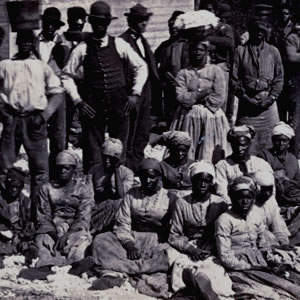
Slavery is any system in which principles of property law are applied to people. Thus allowing individuals to own, buy and sell other individuals, as a de jure form of property. A slave is unable to withdraw unilaterally from such an arrangement and works without remuneration. Slavery began to exist before written history, in many cultures. A person could become enslaved from the time of their birth, capture, or purchase. While slavery was institutionally recognized by most societies, it has now been outlawed in all recognized countries, the last being Mauritania in 2007. Nevertheless, there are an estimated 45.8 million people subject to some form of modern slavery worldwide.
 What is Islam?
One of the major religions of the world, Islam literally translates to "submission," as a follower of Islam (Muslims) devotes their life to that of their God. The religion began with the teachings of Muhammad in the 7th century. The theology of Islam is based on the Qur'an, which was given to Muhammad by God. Some of the major fundamental principles of Islam include the Five Pillars, which hope to unite all Muslims into a community. Two different factions of Muslims exist - the majority are known as Sunni, with a small percentage known as Shi'a - both predominantly reside throughout the Middle East. Muhammad died in 632 AD and the religion of Islam formally started after his death. The Quran was formally compiled and finalised in 650 AD, prior to which it was 'memorised' and written across many parchments.
 Who is GOD?
In monotheism and henotheism, God is conceived as the Supreme Being and principal object of faith. The concept of God as described by theologians commonly includes the attributes of omniscience (infinite knowledge), omnipotence (unlimited power), omnipresence (present everywhere), omnibenevolence (perfect goodness), divine simplicity, and eternal and necessary existence. In theism, God is the creator and sustainer of the universe In deism, God is the creator, but not the sustainer, of the universe Monotheism is the belief in the existence of one God or in the oneness of God In pantheism, God is the universe itself In atheism, God is purported not to exist, while deemed unknown or unknowable within the context of agnosticism.