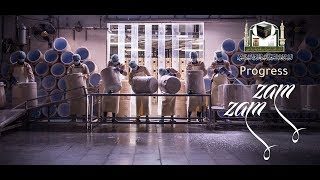
689 views
·
Last viewed: 2 days ago
Uploaded: 12 Mar 2015 (12 years ago) · Shared: 16 Jun 2018
Duration: 23:29 ·
Youtube Description
► 01: Prophet Adam: https://www.youtube.com/watch?v=XFBfOX9HOxo ► 02: Prophet Sheath: https://www.youtube.com/watch?v=FLQkeCRj1s8 ► 03: Prophet Idris:https://www.youtube.com/watch?v=J9CUsrl7AfI
► 04: Prophet Nuh: https://www.youtube.com/watch?v=D0KvuKrkoCQ
► 05: Prophet Hud: https://www.youtube.com/watch?v=FAZ4ara0q-c
► 06: Prophet Salih: https://www.youtube.com/watch?v=twb6pRPIDHI
► 07: Prophet Ibrahim: https://www.youtube.com/watch?v=KWUsz2fcgrs
► 08: Prophet Lut: https://www.youtube.com/watch?v=zQwVIBRB_Kc
► 09: Prophet Ismail: https://www.youtube.com/watch?v=pMByh3-YwhI
► 10: Prophet Ishaaq: https://www.youtube.com/watch?v=x3Bwa1gpoxU
► 11: Prophet Yusuf and Yaqoob: https://www.youtube.com/watch?v=7ENLDycXU_Y
► 12: Prophet Ayyub: https://www.youtube.com/watch?v=CkFlL1-VJjQ
► 13: Prophet Yunus: https://www.youtube.com/watch?v=VlGav7eV3l8
► 14: Prophet Shu'ayb: https://www.youtube.com/watch?v=7cln0kLXDhc
► 15: Prophet Musa part 1: https://www.youtube.com/watch?v=vjQEHpfRK5w&feature=youtu.be
► 16: Prophet Musa part 2: https://www.youtube.com/watch?v=x4xvWcYTXHs
► 17: Prophet Yusha and Hizqeel: https://www.youtube.com/watch?v=BULq0m8cjzI
Praise to Allah , who has granted to me in old age Ishmael and Isaac. Indeed, my Lord is the Hearer of supplication. 14:39
And mention in the Book, Ishmael. Indeed, he was true to his promise, and he was a messenger and a prophet. And he used to enjoin on his people prayer and zakah and was to his Lord pleasing. 19:54-55
And [mention] Ishmael and Idrees and Dhul-Kifl; all were of the patient. 21:85
And remember Ishmael, Elisha and Dhul-Kifl, and all are among the outstanding. 38:48
And [mention] when We made the House a place of return for the people and [a place of] security. And take, [O believers], from the standing place of Abraham a place of prayer. And We charged Abraham and Ishmael, [saying], 'Purify My House for those who perform Tawaf and those who are staying [there] for worship and those who bow and prostrate [in prayer].' 2:125
Explore More
TOPIC IslamicCinema Messenger Prophet Muslim Islam ISHMAEL
Search Google Search Explore Topics
 Who are IslamicCinema?
IslamicCinema is a youtube channel. They produce short, informative, video documentaries. The link is https://www.youtube.com/user/TheIslamicCinema
What is a Messenger?In religion, a prophet is an individual who is regarded as being in contact with a divine being and is said to speak on that entity's behalf. They claim to be serving as an intermediary with humanity
by delivering messages or teachings from the supernatural source to other people. The message that the prophet conveys is called a prophecy. In Islam, all prophetic messengers are prophets (such as Adam, Noah, Abraham, Moses, Jesus, and Muhammad) though not all prophets are prophetic messengers. The primary distinction is that a prophet is required to demonstrate God's law through his actions, character, and behavior without necessarily calling people to follow him, while a prophetic messenger is required to pronounce God's law (i.e. revelation) and call his people to submit and follow him.
What is a Prophet?In religion, a prophet is an individual who is regarded as being in contact with a divine being and is said to speak on that entity's behalf. They claim to be serving as an intermediary with humanity
by delivering messages or teachings from the supernatural source to other people. The message that the prophet conveys is called a prophecy. In Islam, all prophetic messengers are prophets (such as Adam, Noah, Abraham, Moses, Jesus, and Muhammad) though not all prophets are prophetic messengers. The primary distinction is that a prophet is required to demonstrate God's law through his actions, character, and behavior without necessarily calling people to follow him, while a prophetic messenger is required to pronounce God's law (i.e. revelation) and call his people to submit and follow him.
 What is Muslim?
One of the major religions of the world, Islam literally translates to "submission," as a follower of Islam (Muslims) devotes their life to that of their God. The religion began with the teachings of
Muhammad in the 7th century. The theology of Islam is based on the Qur'an, which was given to Muhammad by God. Some of the major fundamental principles of Islam include the Five Pillars, which hope to unite all Muslims into a community. Two different factions of Muslims exist - the majority are known as Sunni, with a small percentage known as Shi'a - both predominantly reside throughout the Middle East.<br><br>
<i class="fa fa-calendar"></i> Muhammad died in 632 AD and the religion of Islam formally started after his death. The Quran was formally compiled and finalised in 650 AD, prior to which it was 'memorised' and written across many parchments.
What is Islam?One of the major religions of the world, Islam literally translates to "submission," as a follower of Islam (Muslims) devotes their life to that of their God. The religion began with the teachings of
Muhammad in the 7th century. The theology of Islam is based on the Qur'an, which was given to Muhammad by God. Some of the major fundamental principles of Islam include the Five Pillars, which hope to unite all Muslims into a community. Two different factions of Muslims exist - the majority are known as Sunni, with a small percentage known as Shi'a - both predominantly reside throughout the Middle East.<br><br>
<i class="fa fa-calendar"></i> Muhammad died in 632 AD and the religion of Islam formally started after his death. The Quran was formally compiled and finalised in 650 AD, prior to which it was 'memorised' and written across many parchments.
 41:11
618 views · 22 secs ago
 6:06
511 views · 27 secs ago
 2:23
124 views · 30 secs ago
 7:49
461 views · 56 secs ago
 31:48
312 views · 1 min ago

 45:47
831 views · 1 min ago
 3:26
440 views · 2 mins ago