644 views
·
Last viewed: 17 hrs ago
Uploaded: 17 Dec 2017 (9 years ago) · Shared: 20 Dec 2017
Duration: 2:47 ·
Uploaded: 17 Dec 2017 (9 years ago) · Shared: 20 Dec 2017
Duration: 2:47 ·
Video Description
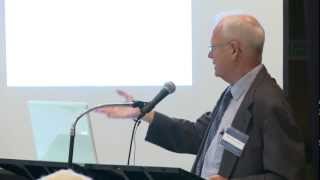
In this insightful biblical analysis, scholar Anthony Buzzard examines the mysterious figure of Melchizedek as described in Hebrews 7:3. Deconstructing long-standing theological debates, Buzzard addresses the compelling question of whether Melchizedek was a divine entity or a symbolic human king-priest rooted in early history. This engaging discussion offers valuable clarity for believers exploring the deeper connections between sacred texts, providing a well-reasoned perspective on biblical monotheism that resonates with students of Scripture and theological history.
By diving into the original context of the Bible, this presentation serves as a thought-provoking resource for anyone seeking profound spiritual reminders and grounded scriptural insights. Whether you are researching Church doctrines, comparing biblical narratives with Abrahamic
Explore More
TOPIC Anthony Buzzard Melchizedek Hebrew GODSearch Google Search Explore Topics
 Who is Anthony Buzzard?
Sir Anthony Farquhar Buzzard, 3rd Baronet, ARCM (28 June 1935), is a biblical scholar, unitarian Christian theologian, author and professor on the faculty of Atlanta Bible College. Buzzard gained a
Diploma in Biblical Hebrew from the University of Jerusalem in 1970. He attended the University of London. He gained a Masters in Theology from Bethany Theological Seminary, Chicago, in 1990. Buzzard taught French and German at The American School in London and taught theology and Biblical languages for 24 years at Atlanta Bible College, McDonough, Georgia.
 What is Melchizedek?
Melchizedek was the king of Salem and priest of El Elyon ("God most high"). He is mentioned in the 14th chapter of the Book of Genesis. He brings out bread and wine and blesses Abram and El Elyon.
What is Hebrew?Hebrew is a Northwest Semitic language within the Afroasiatic language family. A regional dialect of the Canaanite languages, it was natively spoken by the Israelites and remained in regular use as a
first language until after 200 CE and as the liturgical language of Judaism (since the Second Temple period) and Samaritanism. The language was revived as a spoken language in the 19th century, and is the only successful large-scale example of linguistic revival. It is the only Canaanite language still spoken today. It is also one of the only two Northwest Semitic languages with contemporary speakers, the other being Aramaic.
Nearly all of the Hebrew Bible is written in Biblical Hebrew, with much of its present form in the dialect that scholars believe flourished around the 6th century BCE, during the time of the Babylonian captivity.
 Who is GOD?
In monotheism and henotheism, God is conceived as the Supreme Being and principal object of faith. The concept of God as described by theologians commonly includes the attributes of omniscience
(infinite knowledge), omnipotence (unlimited power), omnipresence (present everywhere), omnibenevolence (perfect goodness), divine simplicity, and eternal and necessary existence.
<ul>
<li>In theism, God is the creator and sustainer of the universe</li>
<li>In deism, God is the creator, but not the sustainer, of the universe</li>
<li>Monotheism is the belief in the existence of one God or in the oneness of God</li>
<li>In pantheism, God is the universe itself</li>
<li>In atheism, God is purported not to exist, while deemed unknown or unknowable within the context of agnosticism. </li>
</ul>

 33:15
1482 views · 39 secs ago
 21:18
635 views · 39 secs ago
 1:53
515 views · 40 secs ago
 2:25
1141 views · 44 secs ago