698 views
·
Last viewed: 7 hrs ago
Uploaded: 15 May 2016 (11 years ago) · Shared: 28 Oct 2017
Duration: 8:25 ·
Uploaded: 15 May 2016 (11 years ago) · Shared: 28 Oct 2017
Duration: 8:25 ·
Youtube Description
The main proof of Muhammad’s Prophethood, peace and blessings be upon him, is and forever will be the Miraculous Qur’an which was revealed by God tohim through the Angel Gabriel. God Almighty, out of His mercy for the Jews and Christians (respectfully referred to in the Qur’an as the People of the Book) also provided an additional proof to mankind of his Prophethood. This can be found in their very own scriptures, the Torah and Gospels.
This video discusses the 42nd chapter of the Old Testament Book of Isaiah which clearly foretells the coming of an Arabian Prophet, specifically Prophet Muhammad.
To learn more about Muhammad in the Bible please visit the following website:
http://www.manyprophetsonemessage.com/2014/06/28/muhammad-pbuh-and-madinah-in-the-bible/
Follow us on Facebook:
https://www.facebook.com/ManyProphets...
Please like and share the video to support the dawah.
Explore More
TOPIC Messenger Isaiah 42 Prophet Isaiah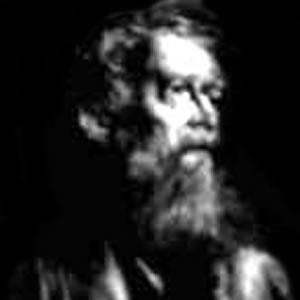 MUHAMMAD
Search Google Search Explore Topics
What is a Messenger?In religion, a prophet is an individual who is regarded as being in contact with a divine being and is said to speak on that entity's behalf. They claim to be serving as an intermediary with humanity
by delivering messages or teachings from the supernatural source to other people. The message that the prophet conveys is called a prophecy. In Islam, all prophetic messengers are prophets (such as Adam, Noah, Abraham, Moses, Jesus, and Muhammad) though not all prophets are prophetic messengers. The primary distinction is that a prophet is required to demonstrate God's law through his actions, character, and behavior without necessarily calling people to follow him, while a prophetic messenger is required to pronounce God's law (i.e. revelation) and call his people to submit and follow him.
 What is Isaiah 42?
Isaiah 42 is the forty-second chapter of the Book of Isaiah in both the Hebrew Bible and the Old Testament of the Christian Bible. This book contains the prophecies attributed to the prophet Isaiah
and is a part of the Books of the Prophets. Chapters 40-55 are known by scholars as 'Deutero-Isaiah' and date from the time of the Israelites' exile in Babylon. Chapter 42 contains a poem known as the first of the "servant songs", concerning a servant whom Rabbinic Jewish tradition holds is either the Israelites themselves or Cyrus the Great. This in contrast to Jewish Christian and later gentile Christian tradition, which holds that the servant is Jesus. Islamic tradition holds that the servant is Muhammad.
What is a Prophet?In religion, a prophet is an individual who is regarded as being in contact with a divine being and is said to speak on that entity's behalf. They claim to be serving as an intermediary with humanity
by delivering messages or teachings from the supernatural source to other people. The message that the prophet conveys is called a prophecy. In Islam, all prophetic messengers are prophets (such as Adam, Noah, Abraham, Moses, Jesus, and Muhammad) though not all prophets are prophetic messengers. The primary distinction is that a prophet is required to demonstrate God's law through his actions, character, and behavior without necessarily calling people to follow him, while a prophetic messenger is required to pronounce God's law (i.e. revelation) and call his people to submit and follow him.
 What is Isaiah?
Book of Isaiah, or Isaiah is the first of the Latter Prophets in the Hebrew Bible and the first of the Major Prophets in the Christian Old Testament. It is identified by a superscription as the words
of the 8th-century BCE prophet Isaiah ben Amoz, but there is extensive evidence that much of it was composed during the Babylonian captivity and later. The consensus through most of the 20th century, that the book comprises three separate collections of oracles: Proto-Isaiah (chapters 1-39), containing the words of Isaiah; Deutero-Isaiah (chapters 40-55), the work of an anonymous 6th-century BCE author writing during the Exile; and Trito-Isaiah (chapters 56-66), composed after the return from Exile. While virtually no scholars today attribute the entire book, or even most of it, to one person, the book's essential unity has become a focus in current research.
 2:34:56
1424 views · 26 secs ago
 45:47
832 views · 52 secs ago
 45:10
446 views · 2 mins ago

 40:47
152 views · 3 mins ago
 10:13
891 views · 3 mins ago
 16:01
70 views · 5 mins ago
 1:02
587 views · 6 mins ago
 49:14
366 views · 6 mins ago
 1:25
393 views · 6 mins ago