What is Gnostic?

GNOSTIC GNOSTICISM 

Gnosticism (from Ancient Greek: gnostikos, "having knowledge") is a modern name for a variety of ancient religious ideas and systems.

Originating in Jewish-Christian milieus in the first and second century AD. These systems believed that the material world is created by an emanation of the highest God, trapping the divine spark within the human body.

Gnosticism is also defined as the belief in, dualism of good and bad and special knowledge for salvation.

Youtube Videos on Gnostic, Gnosticism (21)
Video: The Gospel of Mary Magdalene and Gnostic Spirituality - James Bean The Gospel of Mary Magdalene and Gnostic Spirituality - James Bean   46:40
874 views
Video: Gnostic Christians praise John Gnostic Christians praise John's Gospel as he writes of a 'Salvation' diety coming to Earth - Bart Ehrman   0:47
1,180 views
Video: Trinity (Triune Gods) are found in Gnostic and Kabbalah beliefs dating to Ancient Babylon - approvedofGod Trinity (Triune Gods) are found in Gnostic and Kabbalah beliefs dating to Ancient Babylon - approvedofGod   3:04
853 views
Video: In 367 AD, Athanasius decreed the 27 New Testament books. The Nag Hammadi Gnostic gospels declared illegal | ReligionForBreakfast In 367 AD, Athanasius decreed the 27 New Testament books. The Nag Hammadi Gnostic gospels declared illegal | ReligionForBreakfast   7:48
977 views
Video: What Did Gnostic Christians Believe? | ReligionForBreakfast What Did Gnostic Christians Believe? | ReligionForBreakfast   9:57
711 views
Video: John John's Gospel is different from Mark, Matthew and Luke due to emerging Gnostic ideas - Kegan Chandler   2:28
1,061 views
Video: 2nd century Christians questioned John 2nd century Christians questioned John's Gospel due to Gnosticism - Kegan Chandler   1:58
1,043 views
Video: Gnostic Gnostic 'secret knowledge' of God features in Pagan, Christian & Spiritual teachings - Kegan Chandler   2:05
761 views
Video: Both Gnostic and Trinitarian Christians believe in Jesus Both Gnostic and Trinitarian Christians believe in Jesus' dual nature - Kegan Chandler   2:21
790 views
Video: John John's Gospel is anti-Gnostic. Jesus is made more human-like - Kegan Chandler   1:49
842 views
Video: John John's Gospel wrote a 'multi-level' history to counter Gnostic views on Jesus - Kegan Chandler   1:01
878 views
Video: Irenaeus (130-202 AD): John Irenaeus (130-202 AD): John's Gospel written to refute Gnosticism - Kegan Chandler   0:40
1,064 views
Video: Hermeticism, a pagan form of Gnosticism, believed God is within us all - Kegan Chandler Hermeticism, a pagan form of Gnosticism, believed God is within us all - Kegan Chandler   1:27
653 views
Video: John John's Gospel parallels Gnostic-Pagan-Hermetic ideas (dualism, oneness/son of God, trinity, Father etc.) to promote his Jewish-Christianity - Kegan Chandler   10:06
1,895 views
Video: John John's Gospel depicts 'the right' Jesus; against Judaism, Gnostic-Christianity and Hermetism - Kegan Chandler   2:10
1,433 views
Video: Early Church Fathers & Gnostic Christianity pointed to dualism in Godhead and Nature - Robert Sullivan IV Early Church Fathers & Gnostic Christianity pointed to dualism in Godhead and Nature - Robert Sullivan IV   4:48
984 views
Video: Valentinus (100-160 AD, Gnostic Christian) wrote of Monad, the highest, mysterious, unknowable God; rival to Demiurge (Yahweh, God) - Robert Sullivan IV Valentinus (100-160 AD, Gnostic Christian) wrote of Monad, the highest, mysterious, unknowable God; rival to Demiurge (Yahweh, God) - Robert Sullivan IV   4:43
953 views
Video: Eshmun: Dying & Rising God of Healing (6 BC) preceding Jesus (33 AD) - Gnostic Informant Eshmun: Dying & Rising God of Healing (6 BC) preceding Jesus (33 AD) - Gnostic Informant   15:12
440 views
Video: Are Biblical Prophets based on Ancient Myth Stories? | Robert Price | Gnostic Informant Are Biblical Prophets based on Ancient Myth Stories? | Robert Price | Gnostic Informant   2:52:20
942 views
Video: Edom (Christianity, Rome, Europe, USA) must FALL for Israel to RISE | Adam Green | Gnostic Informant Edom (Christianity, Rome, Europe, USA) must FALL for Israel to RISE | Adam Green | Gnostic Informant   42:00
446 views
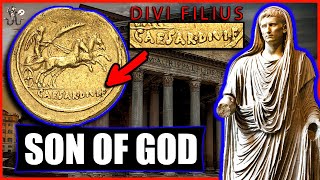
Video: Caesar Augustus (63 BC-14 AD): Saviour of Rome and  Original Son of God | Gnostic Informant Caesar Augustus (63 BC-14 AD): Saviour of Rome and Original Son of God | Gnostic Informant   32:42
223 views

FAQ on Gnostic, Gnosticism (10)

1.How is Prophet Seth viewed across different religious traditions?

Judaism & Christianity: Detailed in the Book of Genesis as a key patriarch whose lineage ('the sons of God') preserved righteousness prior to the Great Flood.

Islam: Honored as the prophet Sheeth, a pivotal receiver of early revelation who governed humanity with justice after the passing of Adam.

Gnosticism: Revered in ancient Sethian Gnostic traditions as a divine illuminator and heavenly progenitor of the spiritual realm.

2.What is the Druze religion?

The Druze religion is a monotheistic, Abrahamic, and highly secretive syncretic faith that emerged during the 11th century in Cairo, Egypt. Adherents, known as the Druze, are a distinct ethnoreligious group primarily living in the Levant. The faith blends the foundational monotheism of Shia Isma'ili Islam with elements of Christianity, Gnosticism, ancient Greek philosophy (such as Neoplatonism and Pythagoreanism), and Hinduism.

3.What is Gnosticism and what are its core beliefs?

Gnosticism is a modern term for a collection of ancient religious and philosophical mystical movements that flourished alongside early Christianity in the 1st and 2nd centuries CE. Unlike mainstream Christianity, which emphasizes faith and salvation through Jesus's crucifixion, Gnosticism teaches that salvation is achieved through Gnosis - a direct, intuitive, and experiential knowledge of the divine spark hidden within the human soul.

4.Is Gnosticism considered an actual religion?

Historically, Gnosticism functioned as a diverse network of mystical sects and religious schools rather than a single, institutionalized religion. Gnostics did not have a central Vatican or unified creed; instead, different teachers (like Valentinus or Basilides) ran independent communities. While early mainstream church authorities condemned them as heretics, modern scholars recognize Gnosticism as a distinct, highly influential branch of esoteric religious thought.

5.What is the difference between Gnosticism and Christianity?

While Christian Gnostics used the same vocabulary as early mainstream Christians, they held fundamentally different views on God, creation, and the material world:

* The Creator: Mainstream Christians worship God as the benevolent creator of the world. Gnostics believe the physical universe was created by an inferior, flawed deity called the Demiurge.

* The Physical World: Christianity views creation as fundamentally good but fallen. Gnosticism views the physical world as a flawed, illusory trap or spiritual prison.

* Salvation: Christians believe salvation comes from faith (pistis) in Jesus Christ and forgiveness of sins. Gnostics believe salvation comes from inner knowledge (gnosis) that wakes the soul from material ignorance.

6.Who is the Demiurge in Gnosticism?

In Gnostic theology, the Demiurge (often named Yaldabaoth or Saklas) is an inferior, arrogant, and blind deity who mistakenly believes he is the supreme God. Gnostics identify the Demiurge as the creator god described in the Old Testament. They argue that because the Demiurge is ignorant of the true, pure spiritual realms above him, he accidentally trapped divine light into flawed material bodies, creating the physical world.

7.Do Gnostics believe in Jesus Christ?

Yes, Gnostics heavily revere Jesus, but they view him as a cosmic teacher of wisdom rather than a sacrificial savior. In Gnostic texts, Jesus is sent from the supreme, transcendent spiritual realm (the Pleroma) to bring secret knowledge to humanity. Furthermore, many Gnostics practiced Docetism, believing that because matter is inherently flawed, Jesus could not have possessed a real, physical flesh-and-blood body; instead, his physical form was a spiritual illusion.

8.What are the Gnostic Gospels?

The Gnostic Gospels are a collection of early texts concerning the life and teachings of Jesus that were explicitly excluded from the canonical New Testament Bible. Unlike the traditional books of Matthew, Mark, Luke and John, these texts focus on secret dialogues and deep esoteric wisdom. The most famous examples include:

* The Gospel of Thomas: A collection of 114 sayings attributed to Jesus, completely lacking a narrative or crucifixion story.

* The Gospel of Mary: Highlights Mary Magdalene as a premier disciple who received secret revelations directly from Jesus.

* The Gospel of Judas: Radically reframes Judas Iscariot not as a traitor, but as Jesus's closest friend acting under divine orders.

9.Who is Sophia in Gnosticism?

Sophia (the Greek word for Wisdom) is a central, tragic figure in Gnostic cosmology and creation myths. She is an Aeon—a divine emanation from the supreme spiritual realm. According to Gnostic myth, Sophia experienced a flawed desire to create a being without the consent of her divine counterpart. This independent act caused a rupture in the heavens, resulting in the accidental birth of the ignorant Demiurge and the subsequent creation of the material world.

10.Does Gnosticism still exist today?

Yes. The only continuously surviving, unbroken lineage of ancient Gnosticism is practiced by the Mandaeans, a small ethnoreligious group natively from Iraq and Iran who revere John the Baptist. Additionally, the modern era has seen a massive resurgence of Neo-Gnosticism. Driven by the mid-20th-century translation of the Nag Hammadi texts, active contemporary Gnostic churches, esoteric orders, and modern 'Spiritual but Not Religious' movements exist globally today.

Topics with Gnostic, Gnosticism (2)
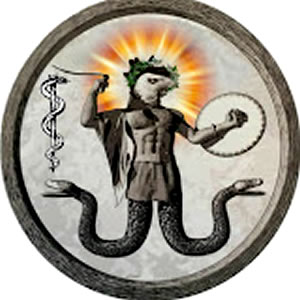
What is Gnostic?

Gnosticism (from Ancient Greek: gnostikos, "having knowledge") is a modern name for a variety of ancient religious ideas and systems. Originating in Jewish-Christian milieus in the first and second century AD. These systems believed that the material world is created by an emanation of the highest God, trapping the divine spark within the human body.

Gnosticism is also defined as the belief in, dualism of good and bad and special knowledge for salvation.
Who is Gnostic Informant? Gnostic Informant
Gnostic Informant is a channel by Neal Sendlak, focusing on History, Mythology, and Comparative Religion.

Articles on Gnostic, Gnosticism (1)

28 Early Christian Sects: Gnosticism, Arianism & More
23,421 views

About  |  Q&A  |  Contact Us    •    Terms  |  Privacy  |  Disclaimer  |  Sitemap
Connect:      Facebook  |    Twitter  |    Youtube
MuslimProphets.com is an educational website on the Prophets of God: David, Noah, Abraham, Moses, Jesus and Muhammad, who established the Abrahamic faiths of Judaism, Christianity and Islam.

MuslimProphets.com explores contemporary social themes through Scripture, Evidences, Photo, Video, Maps, Current Affairs, Debate and 'alternative' Views held by Theologians, Apologists, Scholars and Street Preachers.

In accordance with Islamic etiquette, all prophet names should be followed with 'Peace Be Upon Him (PBUH)'. This is omitted to minimise text.

DISCLAIMER
The historical information provided on this website is for educational and informational purposes only.
History is an ongoing interpretation of past events. Historical accounts are shaped by the perspectives, biases, and cultural influences of their time; therefore, no content on this website should be taken as absolute, 100% factual truth. We encourage readers to approach historical narratives with a critical mind.

All website content is available in the public domain. While all information is gathered from sources believed to be reliable, its absolute accuracy cannot be guaranteed.

EXTERNAL LINKS & SEO
External links are provided as a convenience and for informational purposes only. They do not constitute an endorsement or approval of any products, services, or opinions of any organization or individual. Title and text links may be edited for external SEO, internal site structure, and keyword search purposes. We bear no responsibility for the accuracy, legality, or content found on any external website or its subsequent links.

MEDIA & SOURCE ATTRIBUTIONS
Unless otherwise indicated, all images and content are licensed under a Creative Commons Attribution License distributed by Wikipedia, Wikimedia Commons, Pixabay, Unsplash, and similar platforms. While every effort is made to accurately source all media, contact us if you believe your copyright has been infringed so we can address and resolve the matter promptly.

All videos are hosted on and viewable via YouTube servers. Video titles are generated based on the original video title, the overall content theme (including actual dialogue and transcripts), and AI-based recommendations optimized for SEO, keyword density, and internal search functions. Video titles do not represent the views held by the YouTube video uploader, or any associated individual, organisation, or business.

All Torah, Psalms, and Old/New Testament Bible quotes are from the King James Version (KJV) Holy Bible, which is in the public domain.
All Quran quotes are from the Taqi-ud-Din al-Hilali / Muhsin Khan English Quran translation.

CORRECTIONS
If you spot a mistake, error, or omission of information, please contact us so we can review and correct it.