ALLAH
In the English language, the word generally refers to God in Islam. The word is thought to be derived by contraction from al-ilah, which means 'the god', and is related to El and Elah, the Hebrew and Aramaic words for God. The word Allah has been used by Arabic people of different religions since pre-Islamic times. More specifically, it has been used as a term for God by Muslims (both Arab and non-Arab) and Arab Christians.
Youtube Videos on Allah (47)
 Nimrood, The Tyrant Who Challenged
 Shelakh [Camel Of
 Who is God:
 Jesus A Prophet of
 The Way To
 Escape to
 A Jew explains why
 Let's Call God
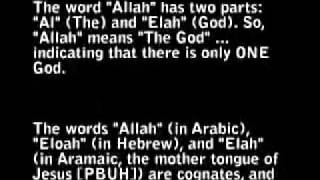 In Aramaic, Jesus called to
 Did Jesus really call God

 GOD vs
 Is God
 Pre-Islamic
 The Word
 In Quran 5:73,
 You're a dirty Sinner. Prove your
 3000 Gods Rejected, but
 3000 Gods Rejected, but
 3000 Gods Rejected, but
 In Quran 3:140,
 In Revelation 13:18, is
 Way To God (

 Jesus called the Father:
 In Genesis 1:1 and John 3:16, '
 God's real name is

 Pre-Islam Pagan Arabs made idols of Hubal (Moon god), Lat, Uzza, and Manat, but never
 Muslims worship
 In Quran 4:171, Jesus is 'Word from
 Names & Attributes of God (
 Jesus, the Christian God can come In & Out of His Creation.
 Do Christians believe in
 Is
 Pre-Islam Arabia was Polytheist with
 'Forgive me Mother. I chose to help my people. May
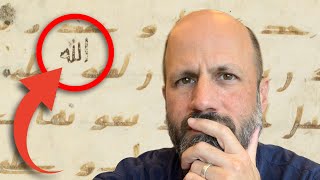 '
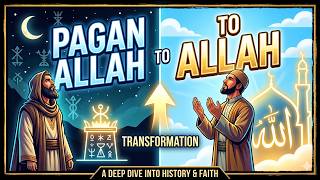 Evolution of The
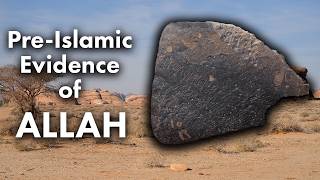 Who was
FAQ on Allah (13)
1.Who is Allah?
Allah is the official Arabic word used to signify God. The title is entirely unique because it has no plural or gendered forms, unlike standard words like gods or goddesses. It simply translates to 'The One and Only True God'. Linguistic origins show variants like 'Elah' or 'Eloh' in the Hebrew Torah, as well as in the original Aramaic language spoken by Jesus.
2.What do I have to do to become a Muslim?
One becomes a Muslim by publicly declaring the shahada, or testimony of faith, acknowledging there is no god but Allah and Muhammad is His messenger.
3.Who built the Kabah in Saudi Arabia?
Prophet Abraham built the Kaaba for people to worship God. While pagan Arabs admitted this fact and even kept the stone where he used to stand to build the Kaaba (Abraham's station), they brought idols to the Kaaba and worshiped them to get closer to Abraham's Lord, Allah, God of gods. Prophet Muhammad came with the monotheistic message of Islam. Arabs defended these idols and refused to give up the religion of their fathers and grandfathers.
4.Is Allah the Moon-God?
No, this is a entirely false claim that originally originated from a Christian pastor named Robert Morey; Islam explicitly refutes this idea, maintaining that Allah is the all-powerful, unique Creator of the entire universe and not a pagan entity or a creation like the moon.
5.Where did the name Allah come from?
The word Allah is the standard Arabic word for God used in all Arabic Bible translations, and its roots are identical to the Aramaic word 'Eloi' used by Jesus on the cross.
It was used in some English translations of the Bible like the original 'Scofield Reference Bible'
In the New Testament, Jesus is believed to cry before his death 'ELOI, ELOI, LAMA SABACHTHANI', Eloi is the exact Arabic word 'Elahi' which comes from the same root as Allah.
6.Do Muslims believe in a God?
Yes, Muslims believe in Allah as the all-powerful, eternal Creator who is separate from creation, has no partners, no gender, and is the absolute sole entity worthy of human worship.
He is transcendent and not a part of his creation. He is all-powerful, absolutely Just and He is First, Last, and Everlasting; He was when nothing was, and will be when nothing else remains. Also, There is no other entity in the entire universe worthy of worship besides Him.
This belief in God is how one becomes a Muslim and is similar to the first commandment of Christianity and Judaism: You shall have no other gods before Me.
Allah the Eternal,Absolute;
He does not beget,not nor is He begotten,
And there is none like Him. [Quran 1:1-4]
7.How did the prophets Moses, Jesus, Abraham etc. call out to God?
Historical and linguistic evidence shows that these prophets spoke ancient Semitic languages, meaning they addressed God using linguistic cognates tightly linked to the Arabic word Allah. Abraham and Moses historically used the Hebrew names El or Elohim, while Jesus addressed God in Aramaic using Elah or Alaha, all of which share identical ancient roots across the Semitic language family tree.
8.How is Elijah connected to Baalbek?
The prophet Elijah is directly associated with Baalbek. According to classical Quranic commentaries and Islamic tradition (such as the writings of Ibn Kathir and Al-Tabari), Prophet Elijah was sent to the region of Baalbek to preach against the worship of the Canaanite storm god, Baal. The city's original ancient name stems from this deity, meaning 'Lord of the Beqaa Valley'.
In Chapter 37 of the Quran (Surah As-Saffat), Elijah's direct confrontation with his idol-worshipping people is mentioned: 'And Elijah was indeed one of the messengers. Remember when he said to his people, 'Will you not fear God? Do you call upon Baal and leave the Best of Creators, Allah...?' (Quran 37:123-126).
While the Biblical text places Elijah's confrontation with the prophets of Baal primarily in the Kingdom of Israel (such as Mount Carmel), early Middle Eastern geographic traditions linked the worship of Baal and Elijah's mission directly to the city of Baalbek. Near the ancient city, local folklore and regional geography still mark sites and traditions referencing Elijah's presence during his hiding and preaching.
9.Who founded the Druze faith?
The Druze religion was founded by Hamza ibn Ali ibn Ahmad, a Persian scholar and mystic who formally proclaimed the faith on May 30, 1017 AD. It arose under the reign of the sixth Fatimid Caliph of Egypt, al-Hakim bi-Amr Allah, whom the Druze revere as a divine figure and the human manifestation of cosmic unity. Following al-Hakim's mysterious disappearance in 1021, Hamza and other early theologians structured the faith's core doctrines.
10.What is Islam and who is a Muslim?
Islam is a major monotheistic Abrahamic religion that originated in the Arabian Peninsula in the 7th century CE. The word 'Islam' is derived from an Arabic root meaning peace and submission to the will of God (Allah). A Muslim is an adherent of Islam, someone who actively follows its teachings and vows to live in accordance with divine guidance.
11.What are the Five Pillars of Islam?
The Five Pillars of Islam (Arkan al-Islam) form the mandatory core framework of a Muslim's spiritual and daily life:
1. Shahada (Faith): Reciting the declaration that there is no god but Allah and Muhammad is His messenger.
2. Salah (Prayer): Performing ritual prayers five times a day facing the Kaaba in Mecca.
3. Zakat (Charity): Giving a fixed percentage (typically 2.5%) of one's accumulated wealth to support the poor.
4. Sawm (Fasting): Abstaining from food, drink, and marital relations from dawn to sunset during the holy month of Ramadan.
5. Hajj (Pilgrimage): Undertaking the sacred pilgrimage to Mecca at least once in a lifetime, if physically and financially able.
12.What are the Six Articles of Faith in Islam?
While the Five Pillars govern outward actions, the Six Articles of Faith (Arkan al-Iman) dictate the core internal theological beliefs required of every Muslim:
1. Belief in Allah as the one and only supreme God.
2. Belief in His angels (such as Gabriel and Michael).
3. Belief in His holy books (including the Torah, Psalms, Gospel and the Quran).
4. Belief in His prophets and messengers (from Adam and Noah to Abraham, Moses, Jesus and Muhammad).
5. Belief in the Day of Judgment and the afterlife (Paradise and Hell).
6. Belief in divine decree or destiny (Qadar), meaning God possesses absolute ultimate knowledge of all events.
13.Is Sikhism a branch of Hinduism or Islam?
No, Sikhism is an entirely independent, distinct world religion with its own unique scriptures, traditions and philosophy. While it originated in a geographical region dominated by Hinduism and Islam and shares some terminology (like karma or allah as names for God), it fundamentally rejects core aspects of both, such as Hindu idol worship, asceticism, and the caste system, as well as Islamic concepts of exclusive salvation or a binary heaven and hell.
Articles on Allah (4)



News on Allah (4)
Scripture Themes on Allah (1)
| 1. Declaration of monotheism and only true God | Quran 18:76 |