TRINITY TRINITARIAN
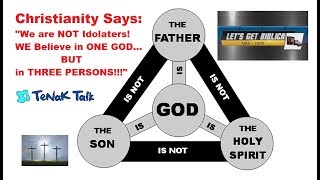
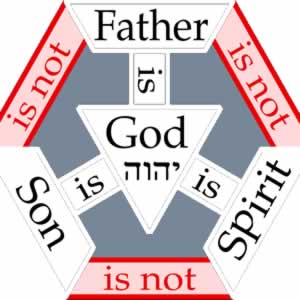
These being the Father, the Son (Jesus Christ), and the Holy Spirit - as "one God in three Divine Persons". The three Persons are distinct, yet are one "substance, essence or nature" (homoousios).
Youtube Videos on Trinity, Trinitarian (159)
 What is God like: Tawhid or
 What is God like: Tawhid or
 You think the
 What is the Jewish view on the Christian
 In 1 Corinthians 15:45, God speaks about the Christian
 Is the Christian
 Is belief in the Christian
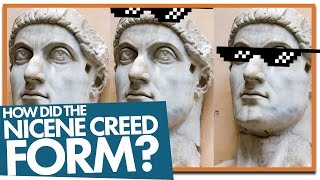 How did the Nicene Creed confirm the
 Mystery of the Christian
 What does the Bible teach about
 Is Jesus God? - The Great
 Is Jesus God? - The Great
 Is the Christian
 Is
 In 1 John 5:8, the Church corrupted the New Testament to support the Christian
 In John 10:30, I and the Father are one - Does this prove the
 Why does Judaism reject the
 History of the Christian
 Are Trinitarian Christians going to Hellfire? - Tovia Singer
 Judaism acknowledges the Christian
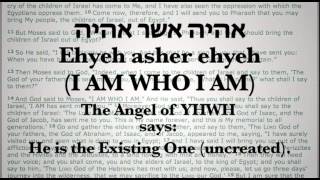 Christian
 The Quran on the Christian
 1 John 5:7 proves the Bible was corrupted and
 Origins of the
 5 Reasons why the Christian
 The
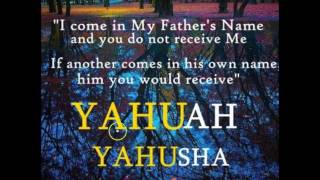 Pagan Origins of Jesus and Christian
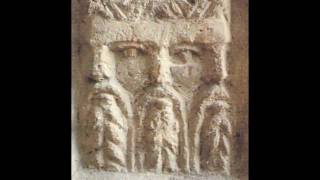 Pagan
 Is the Christian God a
 Are you a Trinitarian, Modalist or Biblical Unitarian?
 Why the Holy Spirit is not God of Jesus? -
 In Isaiah 44:6, The Redeemer was Jesus -
 Building a Triune God is Idolatry -
 Irenaeus, Church Father (202 AD) exposed the
 In Christian
 The
 The
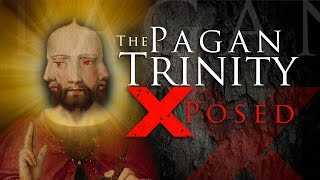
 1 John 5:7 added the
 Early Church Fathers rejected the
 In Quran 5:73, Allah gets the
 Is the Father in the
 The Truth about
 During his life, did Jesus know he was part of a
 God the Father always knew the
 Early Christians did not believe Jesus was God or in the
 In Romans 9:5, Jesus is God over all -
 In John 8:58, Jesus glorified himself as God? -
 In Hebrews 1:8, a Davidic King who lived before Jesus was called God -
 In John 8:58 and Exodus 3:14, Jesus invokes the divine name I AM (Ego eimi) -
 In John 18:6, Jesus said I AM (Ego Eimi) and Soldiers fell to the ground -
 The True God according to Jesus. No
 In John 1:1 - What Beginning was John writing about? -
 In Acts 13:33, Jesus the begotten Son to the Father -
 In Exodus 20, God reveals he is a Jealous God, not a
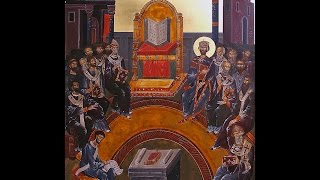 Early Church and
 Show me
 Show me
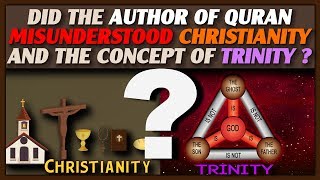 In Quran 5:116, the Christian
 In Psalm 110:1, the LORD sat with Lord, and this supports the Christian
 10 Reasons Why The
 Bones, Flesh and Soul constitute a Human. In the
 In
 In John 1:18, who saw God: the begotten Son, or only Son? -
 In Micah 5:2, the
 In Matthew 28:19, the
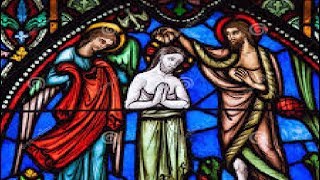 In Matthew 28:19, is not a Trinitarian verse.
 In Genesis 1:26, One God created Man (Monotheism), not Two or Three Gods (
 In Isaiah 9:6, does God approve of


 I believe Jesus is immortal and God. Do not ask me about
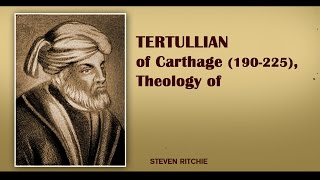 Tertullian (240 AD), first used '



 In Mark 10:18, Jesus explicity denied he was God -
 In 325 AD,
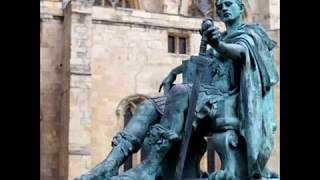 Arguing Bishops at Council of Nicaea voted Pagan rituals into Christianity i.e.
 In 225 AD, Tertullian defined
 Early Christians did not believe
 In 1 John 5:7-8, the
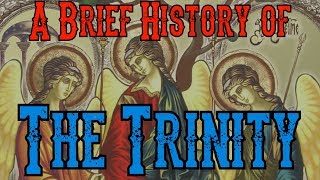 Early Christian History of the
 Early Christians did not worship Jesus as God.
 Early Church advanced Jesus to divinity, and later, to Triune '
 In 1519 AD, Erasmus added 1 John 5:7 (
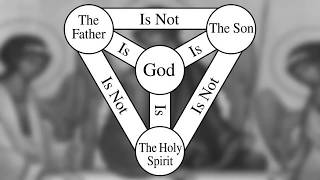 In 500 AD, Athanasius explained
 In Mark 12:29, the Lord our God is One, unitarian (mono-theos), not Trinitarian - Restoration Fellowship
 By 381 AD, the Church had affirmed the
 In Genesis 18, a Jewish version of the 'Christian
 Jesus was a Jew on Unitarian Monotheism, not a Trinitarian - Anthony Buzzard
 In Christianity, the
 Prove the Church Fathers believed in
 If there was more than one Interdependent God (
 Debate: Mono-theism (Tawheed) beats Tri-theism (
 Unitarian Christians believe in One God; oppose
 Evidence for
 In the Old Testament, Elohim is Singular and Plural, but God is One, not
 For Jews, God cannot take on Human form (i.e. Christian
 In Jeremiah 10:3, the Christmas Tree is symbolic of the Christian
 Historical Origins of
 Greek philosophy influenced Early Christianity and re-defined One God into a
 There is only one, true God, a 'Unitarian' Father in New Testament; not a
 In Luke 11:2, Jesus taught his disciples the Lord's Prayer, not
 In 1 Corinthians 8:6, Apostle Paul disproves of the
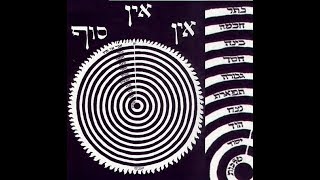
 In Deuteronomy 32:39, God emphasizes his Unique, Oneness.
 Jesus Worship His Father. How can Jesus be The Father? - Unitarian vs Trinitarian
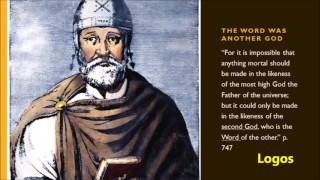 Philo of Alexandria (20 BC-50 AD) was first to write of God's
 Philo of Alexandria, a Jewish Greek philosopher wrote of a Trinitarian God

 In 180 AD, Theophilus of Antioch borrowed Greek philosophy to first define '
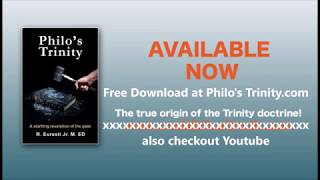 Philo's
 Philo of Alexandria, Ignatius & Theophilus pioneered the idea of
 From Proverbs 8:22, Philo of Alexandria applied a 'feminine' Wisdom (Sophia) in support of Roman Catholic teachings on
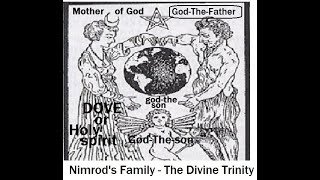
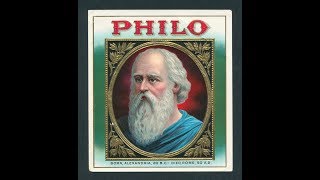 Philo of Alexandria mixed Greek philosophy with Jewish-Christianity to invent Catholic Christianity &
 In Luke 1:35, Jesus is 'Son of God', not God, not
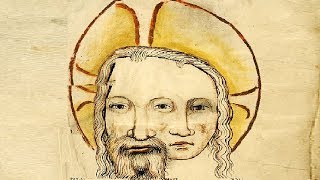 Bible Scholars read 'One God', not 'One Person'. Jesus is not God &
 Jesus was a Jew, not a Trinitarian - approvedofGod
 In 1 John 5:7, the
 God is One. He moves by Spirit. He creates through Spoken Word (
 In Quran 5:73, God refutes all forms of
 Peter Abelard (1142 AD) tried and failed to explain the Christian
 In John 14:28, Jesus clearly said he was lower than Father.
 Polycarp, Justin Martyr, Ignatius, Irenaeus, Tertullian and Origen did NOT believe in
 Jesus is not a
 The Jewish God is Unitarian, not Trinitarian - Jews For Judaism
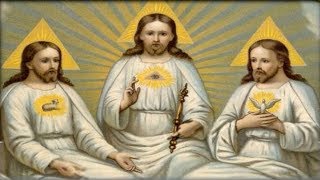
 Jesus Is
 Does Salvation depend on belief in
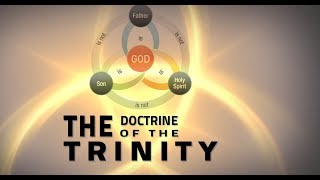
 In Isaiah 48:12, God said the Lord-God and Spirit sent Him.
 Both Gnostic and Trinitarian Christians believe in Jesus' dual nature - Kegan Chandler
 Polycarp, Justin Martyr or Irenaeus never believed in the Christian
 Philo of Alexandria (20 BC-50 AD) wrote of 'Two Powers' with One God; creating Christian
 Apostle Paul was not Trinitarian. His Jesus was 'less' than God (Subordinationism) - Richard Carrier
 Christian
 Theophilus of Antioch (d. 183 AD) first wrote of the 'mystery'
 In 70 AD, Rome destroyed the Jerusalem Church, establishing 'Pagan' Trinitarian Christianity - Hamza Saudi
 Jesus was a Monotheist, Non-Trinitarian Jew - Anthony Buzzard
 The Three-Person God is nowhere in the Bible -
 Philo of Alexandria, a Jewish-Greek philosopher wrote of
 Philo of Alexandria used Greek Philosophy to teach that God was One of Three
 Majority rejected Tertullian's
 The Father is NOT the Holy Spirit. They are One and Same -
 In Mark 12:29, Jesus was an observant Jewish Man, not a Trinitarian - Anthony Buzzard
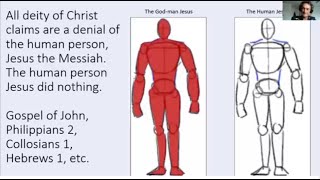 Historical development of Christian
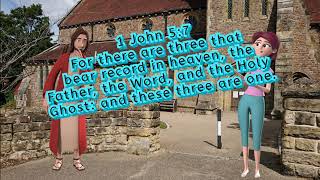 In 1 John 5:7, the Christian
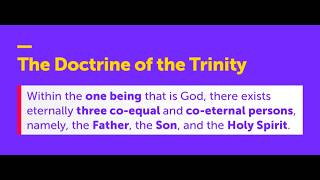 Early Christians rejected the
 Christian
 The Evolution of God from Yahweh to Christian
 Book of Isaiah does NOT prove
 Father-Son-Holy Spirit: Can GOD be identified in The Bible and Christian
FAQ on Trinity, Trinitarian (28)
1.Why did Apostle Paul preach a new religion?
When Rome adopted Christianity with the conversion of the Roman Emperor (4th Century) and his official campaign to repress anyone who refused to conform; to kill those Christians who refused to follow Romes 'Trinitarian Christianity'.
Paul knew that the victors wrote history and in order to win 'he had to be all things to all men' (I Corinthians 9:24-27).
Those who dig their heels in 'beat the air' and refused to compromise any detail of the true faith ended their days as martyrs.
2.Where is Pauline Christianity today?
Pauline Christianity constitutes the majority of modern Christianity, though some scholars question if the early, law-observant Jewish-Christian church was more accurate than Paul's later, Trinitarian-focused theology.
3.How were the Triadic or 'Trinity-like' Pagan Gods presented?
Ancient triadic deities in the Roman Empire were depicted in art and monuments as a single, unified figure featuring three distinct faces or heads to illustrate their triune nature.
4.Does the Christian Trinity come from pagan Triadic dieties?
Yes, the core teachings of modern Trinitarian Christian churches do not come from Jesus, but were pagan three-in-one concepts that existed long before his arrival and were later adopted by Christians to make their doctrine highly appealing to idol-worshipping masses.
5.Jesus is the son of God as he had no Father?
In orthodox Christian theology, the title 'Son of God' refers to Jesus' unique, eternal divine nature within the Trinity rather than a biological process. While his birth without a human father is considered a miracle, his divinity is rooted in being the pre-existent Word of God.
6.Why is the Trinity so difficult to understand?
The Trinity is a complex theological doctrine because it describes God as existing as three distinct Persons: Father, Son, and Holy Spirit who are co-equal and co-eternal, yet remain one single, unified divine Being. It requires balancing the concepts of strict monotheism with the distinct actions and relationships of the three divine Persons as revealed across the New Testament text.
7.What does the Quran say about Jews and Christians?
The Quran recognizes Jews and Christians as 'People of the Book' (Ahl al-Kitab), acknowledging that they were given previous divine revelations through prophets like Moses and Jesus. While it praises the righteous among them, it also critiques their theological developments, specifically rejecting the Christian doctrine of the Trinity and the divine sonship of Jesus.
8.In the beginning was the Word, and the Word was with God, and the Word was God [John 1:1] - An Explanation
John 1:1 declares, 'In the beginning was the Word, and the Word was with God, and the Word was God,' utilizing the philosophical Greek concept of the Logos to establish the eternal pre-existence of Christ before his physical incarnation on Earth. While Trinitarian theology views this text as definitive proof of Jesus' divinity within the Godhead, Unitarian and Islamic scholars argue that the 'Word' refers functionally to God's divine command, creative wisdom, or verbal decree rather than a separate co-equal deity.
9.How did the Christian Trinity come about?
The New Testament gospels show Jesus selecting twelve apostles to lead his immediate followers, but he did not lay down a detailed blueprint for a complex institutional priesthood or administrative hierarchy. The elaborate structures, clerical offices, and distinct liturgical traditions seen in modern churches developed gradually over centuries as the movement adapted to Roman institutional frameworks.
The concept of a dual human and divine nature in the person of Jesus is known as the Hypostatic Union, an essential component of modern Trinitarianism.
Yet it was not until the Council of Chalcedon that we see the emergence of an official doctrine of the Trinity in a form that is recognisable with what Christian Trinitarians believe in today. This took place in the fifth century, over 400 years after Jesus!
The evangelical theologian and Professor Wayne A. Grudem sums this up as follows:
'A precise understanding of how full deity and full humanity' argues Grudem, 'could be combined together in one person was formulated only gradually in the church and did not reach the final form until the Chalcedonian Definition in 451 AD.
10.Whose words did Jesus speak?
In the New Testament gospels, Jesus is portrayed as a faithful messenger who consistently states that his teachings are not his own invention but are delivered directly from God the Father. Mainstream Christian theology interprets this as a reflection of the perfect relational unity within the Trinity, where the Son acts in absolute harmony with the Father. From an Islamic perspective, this text is viewed as clear scriptural evidence that Jesus functioned as a human prophet and messenger (Rasul), receiving and delivering verbal divine revelation (Injeel).
11.Does the Bible support the Trinity (3-in-1) God concept?
Mainstream biblical scholars and historians state that the doctrine of the Trinity is never explicitly laid out as a formal dogma anywhere in the text of the Old or New Testaments. While the New Testament contains early triadic formulas (such as the baptismal command in Matthew 28:19 and apostolic blessings in 2 Corinthians 13:14), the actual systemic theology of a three-in-one God was developed later by early church fathers over centuries. Christian theologians argue that the doctrine is implicitly woven throughout the scriptures, while critics and Islamic scholars point to the lack of clear, direct scriptural definitions to argue it was a later modification of strict biblical monotheism.
12.Was Jesus equal to the Father and the Holy Spirit?
Mainstream orthodox Christianity asserts that Jesus is entirely co-equal and co-eternal with the Father and the Holy Spirit as the second Person of the unified Trinity. However, secular textual critics and Islamic theologians highlight multiple passages in the gospels, such as John 14:28 ('the Father is greater than I') and Mark 13:32, to argue that the historical Jesus openly acknowledged a subordinate role relative to the Almighty Creator. They view these texts as evidence that a formal doctrine of absolute equality within a triune Godhead was a later theological development rather than an original apostolic teaching.
13.Does the Old Testament teach the Christian Trinity?
Mainstream biblical scholars and historians agree that the Old Testament does not explicitly teach the doctrine of the Trinity, nor did ancient Jewish communities possess a concept of a triune Godhead. There is no historical evidence in pre-Christian Jewish literature including the Hebrew text, the Dead Sea Scrolls, or ancient commentaries of a belief in a plurality of divine Persons. While Christian theologians retrospectively interpret certain plural expressions (such as 'Let us make man' in Genesis 1:26) as hints of the Trinity, ancient Judaism strictly maintained a unitarian monotheistic understanding of God.
14.What is the Christian Trinity?
Orthodox Christian theologians define the doctrine of the Trinity as the belief that the Father is God, the Son is God, and the Holy Spirit is God, existing eternally as three distinct Persons within one single, undivided divine Being. These three Persons are considered entirely co-equal in power and co-eternal in time, with the Son being understood as 'eternally begotten' of the Father and existing simultaneously as 100% God and 100% man. The platform notes that many modern Christians mistakenly believe they are practicing Trinitarianism simply by acknowledging the Father, Son, and Holy Spirit, without understanding the complex historical and philosophical mechanics required by the formal church dogma.
15.What do Christian 'Trinity' scholars say about the Old Testament?
Many theologians, including this analysis of Trinity dogma, note that the Old Testament does not explicitly contain the Trinity, which they believe was only fully revealed later.
The distinguished Trinitarian scholar Bertrand de Margerie in his book The Christian Trinity in History writes:
'Contemporary exegetes [Bible teachers] affirm unanimously that the Old Testament did not bring to the Jewish people a clear and distinct Revelation of the existence of a plurality of persons in God. In this they agree with the clear and frequent affirmation of Fathers such as Irenaeus, Hilary, and Gregory of Nazianzus: that the doctrine of the Trinity is revealed only in the New Testament.'
So any person who lived before Jesus' ministry did not have to believe in the Trinity to be saved because the Trinity is not mentioned in the Old Testament.
16.In the time of Jesus, what qualities would identify the Messiah, to the Jews?
First-century Jewish expectations, as discussed in this analysis of Trinity dogma, centered on a human leader, such as a prophet or king from David's line, rather than a divine figure.
A human empowered by God. Not a God-man, a person of the Godhead or part of a Triune God (Trinity)
From the lineage of Abraham (Gen. 22:18)
From the tribe of Judah (Gen. 49:10)
A descendant of David (2 Sam. 7:12)
A Lord under Yahweh, the God of Israel (Ps. 110:1)
From amongst their own people (Jer. 30:21)
17.How did the 1st century Jews view the Holy Spirit?
The Holy Spirit was understood as God's active, divine power, rather than a distinct, third person of a Trinity.
First century Jews believed the Holy Spirit was another name for God, similar to Yahweh, Elohim or El Shaddai - not a separate Person in the Trinity!
There is no record of Jesus ever trying to correct the Jews and prove the Holy Spirit was a third Person in the Trinity.
18.How did Jesus preach salvation and eternal life?
According to this analysis of Trinity dogma, Jesus taught salvation through obedience to the law and commandments within a covenantal framework.
19.What do Christian scholars say about the Trinity?
Mainstream scholars acknowledge that the Trinity is not explicitly defined in the New Testament but was formulated later by combining various verses and theological concepts.
Scholars freely admit that the Trinity is never presented as a complete doctrine in the New Testament, but rather is built from scattered Bible verses.
In the New Testament there is no explicit statement of the doctrine
Evangelical Dictionary of Theology (p. 1112)
It is not a Biblical doctrine in the sense that any formulation of it can be found in the Bible
New Bible Dictionary (p.1221)
The New Testament does not present a systematic presentation of the Trinity. The scattered segments from various writers that appear throughout the New Testament reflect a seemingly accepted understanding that exists without a full-length discussion.
Holman Bible Dictionary (p.1372)
Theologians admit the New Testament does not define the Trinity. Furthermore, there is no clear teaching that salvation depends on the belief in the Trinity.
20.Do Arians and Jehovah Witnesses share the same beliefs?
While Jehovah's Witnesses are often labeled as modern-day Arians due to their shared non-Trinitarian views, the two systems differ significantly in their specific doctrines. Jehovah's Witnesses believe Jesus can fully know the Father, whereas Arius denied this; additionally, Witnesses view the Holy Spirit as an impersonal active force, while Arius considered the Holy Spirit to be a high-ranking angelic person.
Jehovah Witnesses (JW) are often referred to as 'modern-day Arians'. While there are similarities in theology and doctrine, the JW differ from Arians in the following ways:
21.In 325 AD, did Emperor Constantine burn gospels, writings and religious text?
The books of Arius and his followers, after the first Council of Nicaea (325 C.E.), were burned for heresy by the Roman emperors Constantine, Honorius, and Theodosius I, who published a decree commanding that, 'the doctrine of the Trinity should be embraced by those who would be called catholics; that all others should bear the infamous name of heretics'.
22.Is Christian Science the same as Scientology?
No, Christian Science is completely unrelated to Scientology. Despite sharing a similar-sounding name, they have entirely separate origins, scriptures, and core theological beliefs:
* Christian Science: Founded in 1879 by Mary Baker Eddy, it is a Bible-based, non-trinitarian Christian movement focused on the healing ministry of Jesus.
* Scientology: Founded in 1954 by L. Ron Hubbard, it is a secularly derived system of self-improvement and spiritual auditing that does not recognize the Christian Bible or Jesus Christ.
23.Do Muslims believe in Jesus?
Yes, Muslims deeply love and revere Jesus (known in Arabic as Isa). In Islam, Jesus is recognized as one of God's greatest and most critical prophets. The Quran explicitly affirms his virgin birth and credits him with performing numerous miracles, such as healing the sick and raising the dead. However, Islam rejects the Christian doctrine of the Trinity, teaching that Jesus was a purely human prophet rather than the literal Son of God, and that he was not crucified but raised directly to heaven by God.
24.Do Jehovah Witness followers believe in Jesus?
Yes, Jehovah's Witnesses believe in Jesus Christ, but they do not view him the same way traditional mainstream Christians do. They believe Jesus is the Son of God and the Savior of humanity, but they reject the concept of the Holy Trinity. Instead, they believe Jesus is a created being, specifically identifying him as the Archangel Michael in his pre-human existence, and that he is subordinate to God the Father, whose name is Jehovah.
25.What is the difference between a Jehovah Witness and other Christians?
The primary theological differences lie in the nature of God, scripture, and the afterlife. Unlike mainstream Christians, Jehovah's Witnesses:
1. Reject the Trinity (believing God the Father and Jesus are separate entities).
2. Reject the cross as a Christian symbol, teaching that Jesus died on a single upright stake.
3. Utilize their own specific biblical translation, the New World Translation of the Holy Scriptures.
4. Abstain from political affairs, voting, and military service to maintain strict neutrality.
26.Do Mormons believe in the Holy Trinity?
Unlike mainstream Christianity, Latter-day Saints do not believe in the traditional Trinity where God, Jesus and the Holy Ghost are one single, consubstantial spirit essence. Instead, they believe in the Godhead, which consists of three physically distinct and separate beings: God the Eternal Father, His Son Jesus Christ, and the Holy Ghost. They teach that these three are entirely separate entities who are unified perfectly in purpose, mind and glory.
27.What are the core beliefs of Seventh-day Adventists?
Adventists share core Protestant beliefs such as salvation by grace through faith, the Trinity, and the authority of the Bible. Also, they hold unique doctrines:
* The Second Coming: The literal, audible, and visible return of Jesus Christ in the near future.
* The State of the Dead: The belief that the dead are in an unconscious sleep state until the resurrection, rejecting the concept of an immediately immortal soul or an eternally burning hell.
* The Sanctuary Doctrine: The belief that Jesus entered a phase of 'Investigative Judgment' in the heavenly sanctuary in 1844 to review the lives of humanity.
28.Is Unitarian Universalism a Christian religion?
While Unitarian Universalism has historical roots in liberal Christianity, it is no longer considered a strictly Christian denomination. Early Unitarians rejected the traditional doctrine of the Trinity (believing God is one entity), and early Universalists argued against a literal hell, believing a loving God grants universal salvation to all humanity. Today, UU is an independent, pluralistic faith where Christians, Jews, Buddhists, Agnostics, Atheists and Pagans worship together.
Articles on Trinity, Trinitarian (7)


Topics with Trinity, Trinitarian (2)
News on Trinity, Trinitarian (2)
| 1. The Surprising Origins of the Trinity Doctrine | Beyond Today |
| 2. Just How Important Is Belief in the Doctrine of the Trinity? | Patheos |