SECULAR
In political terms, secularism is the principle of the separation of government institutions and persons mandated to represent the state from religious institution and religious dignitaries (the attainment of such is termed secularity). Under a brief definition, secularism means that governments should remain neutral on the matter of religion and should not enforce nor prohibit the free exercise of religion, leaving religious choice to the liberty of the people.
Secularism draws its intellectual roots from Greek and Roman philosophers such as Zeno of Citium and Marcus Aurelius; from Enlightenment thinkers such as Erasmus, John Locke, Denis Diderot, Voltaire, Baruch Spinoza, James Madison, Thomas Jefferson, and Thomas Paine; and from more recent freethinkers and atheists such as Robert Ingersoll, Bertrand Russell, and Christopher Hitchens. It shifts the focus from religion to other 'temporal' and 'this-worldly' things with emphasis on nature, reason, science, and development.
FAQ on Secular (18)
1.How authentic is the Quran historically?
Islamic tradition holds that the text of the Quran has been preserved perfectly since its 7th-century revelation, with oral memorisation and scribal dictation acting as dual tracking methods. Mainstream secular historians and academic textual critics confirm that early surviving fragments (such as the Birmingham Quran manuscript) demonstrate remarkable textual stability, verifying its core compilation dates to within a few decades of the Prophet Muhammad's lifetime.
2.Did Jesus claim to be equal to God?
This is the central point of departure between mainstream Christianity and Islam. Mainstream Christian theology states that Jesus affirmed his equality with God through declarations of essential unity (such as 'I and the Father are one' in John 10:30) and by accepting divine worship. Conversely, secular scholars and Islamic theologians highlight passages showing functional subordination, such as John 14:28 ('the Father is greater than I'), arguing that the historical Jesus viewed himself as an exalted messenger entirely dependent on God's authority.
3.Are Jesus and God the same?
Mainstream Christian orthodoxy, solidified at the Council of Nicaea, dictates that Jesus and God are the same in essence (homoousios), defining Jesus as the pre-existent Word of God who took on human flesh. However, secular historians and Unitarian theologians point out that the Synoptic Gospels make explicit distinctions between Jesus and God, such as when Jesus prays to the Father or denies knowing the timing of the Final Hour. Islamic theology strictly rejects any identification of Jesus with God, viewing the claim as a violation of absolute monotheism (Tawhid).
4.Was Jesus a man?
Both the New Testament and the Quran confirm Jesus' complete humanity through his experience of physical, human emotions and limitations. While traditional Christianity views him as fully divine and human, Islamic theology and secular history affirm him as a human prophet.
5.Did Jesus abolish the Old Testament Law?
In the Synoptic Gospels, Jesus explicitly states in Matthew 5:17 that he did not come to abolish the Law or the Prophets, but to fulfill them. Mainstream Christian theology interprets this 'fulfillment' as Jesus perfectly satisfying the legal and sacrificial requirements of the Mosaic covenant, thereby inaugurating a New Covenant where specific ritual laws are no longer binding on believers. Secular historians and Islamic scholars emphasize that during his life, Jesus operated firmly within first-century Judaism, actively practicing and teaching obedience to the commandments of the Torah.
6.Was Jesus equal to the Father and the Holy Spirit?
Mainstream orthodox Christianity asserts that Jesus is entirely co-equal and co-eternal with the Father and the Holy Spirit as the second Person of the unified Trinity. However, secular textual critics and Islamic theologians highlight multiple passages in the gospels, such as John 14:28 ('the Father is greater than I') and Mark 13:32, to argue that the historical Jesus openly acknowledged a subordinate role relative to the Almighty Creator. They view these texts as evidence that a formal doctrine of absolute equality within a triune Godhead was a later theological development rather than an original apostolic teaching.
7.How important was Jesus' crucifixion to Apostle Paul?
In his surviving epistles, the Apostle Paul demonstrates almost no interest in the day-to-day earthly life, chronological career, or specific moral parables of Jesus of Nazareth. Instead, his extensive theology is completely fixated on the cosmic, atoning meaning of the crucifixion and subsequent resurrection of the figure he addresses as 'the Lord'. Secular historians analyze this focus to illustrate how early Christian theology transformed from an inward-looking Jewish prophetic movement into a universal savior faith.
8.How is Prophet Muhammad viewed across different faith traditions and history?
Islam: Venerated as the final prophet who restored the pure monotheism of Abraham, Moses, and Jesus, serving as the ultimate moral role model for humanity.
Interfaith & Secular History: Evaluated as a revolutionary reformer, statesman, and lawgiver who transformed Arabia, elevated women's legal rights, abolished tribal warfare, and instituted lasting social justice.
9.Is atheism growing or dying out globally?
Global statistics indicate that atheism is expanding rapidly. According to historical data from the WIN-Gallup international polls, non-Muslim and secular countries show substantial rates of disbelief, with countries like China (91%), Japan (87%), Sweden (78%), and the UK (73%) showcasing dominant or massive secular populations. A consensus among online demographic discussions on Quora confirms that despite arguments about differing birth rates, atheism continues to grow largely because many individuals raised in religious households shift toward secularism during adolescence or adulthood.
10.Can an atheist believe in a higher power, spirituality, or a creator?
Strictly speaking, No. If a person explicitly believes in a conscious 'creator' or personal deity, they are classified as a theist or deist rather than an atheist. However, because atheism strictly refers to a rejection of traditional gods, some atheists may still explore secular spirituality, a universal consciousness, or non-theistic philosophy (such as certain traditions within secular Buddhism or Taoism) that do not command worship of a personified creator.
11.How can atheists have morality without God or religious law?
Secular morality is driven by humanism, empathy, social cooperation, and consequentialism rather than divine command. Atheists argue that moral codes evolve naturally within societies to protect well-being, minimize suffering, and ensure survival. This viewpoint asserts that true moral actions are performed because of an intrinsic understanding of human suffering and fairness, rather than the expectation of an eternal reward or fear of divine punishment.
12.What is "New Atheism" and how does it differ from traditional atheism?
Coined in the early 2000s, New Atheism is a distinct, vocal wave of secular criticism popularized by authors like Richard Dawkins, Christopher Hitchens, and Sam Harris. While traditional atheism historically operated as a quiet, passive lack of personal belief, New Atheism asserts that religion should not simply be tolerated but actively countered, criticized, and exposed to rational debate in modern political and educational forums.
13.Are atheists legally protected under international human rights?
Yes, under major frameworks like the Universal Declaration of Human Rights (UDHR) and the International Covenant on Civil and Political Rights (ICCPR), the freedom of thought, conscience, and religion explicitly protects the right not to believe, as well as the right to change one's beliefs. However, legal enforcement varies drastically worldwide. While western secular democracies safeguard these rights, atheists still face intense social discrimination, state-sanctioned persecution, or capital punishment under strict theological regimes globally.
14.Do Christian Science followers celebrate holidays like Christmas and Easter?
Yes, Christian Scientists fully celebrate traditional Christian holidays like Christmas and Easter, but with a distinct spiritual focus. Rather than emphasizing the material aspects or secular traditions, they use these times to deeply contemplate the spiritual meaning of Christ Jesus’ birth, ministry, crucifixion, and resurrection. They do not hold special communion services with physical bread and wine, preferring silent, internal communion with God.
15.Why is the New Age movement criticized?
The movement faces criticism from both secular and religious perspectives:
* From mainstream religions: It is often criticized for being overly self-centered ('me-centered spirituality') and for watering down sacred, centuries-old traditions.
* From the scientific community: Many New Age healing practices, such as crystal therapy or quantum manifestation, are labeled as pseudoscience because they lack empirical evidence.
* Cultural appropriation: Indigenous and Eastern communities frequently critique the commercialization and distortion of their traditional practices (like shamanism or yoga) by Western New Age markets.
16.Is Stoicism a religion or a philosophy?
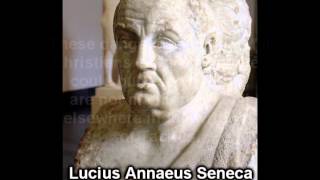
Stoicism is a school of Hellenistic philosophy, not a religion. It lacks traditional religious elements such as a personalized creator god, divine intervention, formal houses of worship, priesthoods, or rigid dogmatic creeds. However, Stoicism offers a comprehensive moral framework and a deeply spiritual view of the universe, leading many modern practitioners to utilize it as a secular alternative to religion.
17.Do Unitarian Universalism followers believe in God or an afterlife?
Because UU is a pluralistic faith, beliefs about God and the afterlife vary completely from person to person within the same congregation. Some members hold a traditional monotheistic belief in God, others hold pantheistic views of a universal life force, and many identify as Atheists or Secular Humanists. Similarly, there is no official doctrine on the afterlife; the religious focus is entirely placed on creating a just, loving world in the present life rather than securing salvation for the next.
18.What is the difference between a Wiccan and a Witch?
While these terms are frequently used interchangeably in popular culture, they represent distinct concepts:
• Wicca: A specific, organized religion complete with its own theological beliefs, deity structures, ethical laws and seasonal holy days.
• Witchcraft: A practice or craft involving the manipulation of natural energies and spellcasting.
Therefore, while almost all Wiccans practice witchcraft as part of their spiritual routine, not all witches are Wiccans; many secular, agnostic, or culturally diverse individuals practice witchcraft without adhering to the Wiccan religion.
 Morality in
 Church of England abandoned me by adopting
 In Numbers 31:18, Child Marriage was encouraged. Today, Christianity is conditioned by liberal,
 No