SCIENCE
The earliest roots of science can be traced to the works of Ancient Egyptians and Mesopotamians, whose contributions entered and shaped Greek natural philosophy of classical antiquity. After the fall of the Western Roman Empire, knowledge of Greek science deteriorated in Western Europe during the Middle Ages but flourished in the Islamic Golden Age. Modern science is typically divided into three major branches that consist of the natural sciences (e.g. biology, chemistry, physics), which study nature in the broadest sense; the social sciences (e.g. psychology, sociology, economics), which study individuals and societies; and the formal sciences (e.g. mathematics, logic, theoretical computer science), which study abstract concepts.
Youtube Videos on Science (22)
 David, Australian
 David, Australian

 Evolution,
 Atheism: The Age of
 I am a Sinner. Logically, if I was a Martyr and donated my body to
 Racial
 Racial
 Racial
 In
 In
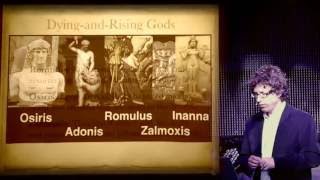 Christianity debunked using
 My Journey from Atheism, Big Bang,
 Can
 Technocracy, a single Government, a global dictatorship led by
 The Golden Age of Islamic
 Replace the 'ABRAHAMIC MATRIX' with '
FAQ on Science (18)
1.Does Islam give any arguments to prove the existence of God?
The Holy Quran gives three kinds of arguments on this point.
Firstly, it refers us to the physical world which shows great order and arrangement, works according to laws, and where everything has a set purpose in the whole scheme of things. There is also immense beauty in nature which attracts man's heart. Science is discovering more and more of these characteristics of the world all the time. So behind this highly purposeful and beautiful working of nature must be One, single Intelligence of great beauty and attraction.
Secondly, the Quran tells us about the close and deep connection between God and the inner nature of every person. There is an in-built desire in each and every person to search for something higher than oneself, and when in difficulties a person instinctively wants to call upon a Hidden Power to help him.
Thirdly, and most convincingly, Prophets and men of God appeared in every nation in the world and showed their people the reality of God through their teachings and works. Just as most of us learn about science not by making all the discoveries ourselves, but by accepting the work and evidence of those who devote themselves to the study of science, similarly the proof of the existence of God is provided by the lives of the great luminaries whom God sent all over the world for this very purpose.
2.What functions do angels perform?
These are of two kinds: their functions in the physical world, and the spiritual development of man.
In the physical world, the working of nature is governed by laws, as science has shown by discovering many of these laws. Islam teaches that these laws have been devised by God, and the angels - the obeying functionaries of God - put them into action.
On the spiritual side, the angels communicate God's revelation to the Prophets and other righteous ones, bring comfort and strength to the hearts of true believers, and inspire noble thoughts in the minds of all persons. They do this, of course, by acting through the spiritual senses of human beings, not their physical senses like the eyes or ears.
3.What is the 'Lazarus Effect' or 'Lazarus Syndrome' in science?
In medicine, this refers to a rare phenomenon where a patient's blood circulation spontaneously returns after CPR has failed and resuscitation attempts have stopped. The patient essentially 'comes back to life.'
4.How do atheists view science and the origin of the universe?
Most atheists rely on a naturalistic worldview that prioritizes the scientific method over supernatural explanations. While science itself is a methodology that neither proves nor disproves the existence of a spiritual creator, atheists typically favor cosmological and biological explanations such as the Big Bang theory and evolutionary biology because they are built on peer-reviewed, falsifiable, and physical evidence rather than subjective faith.
5.What are the main principles of the Bahai Faith?
The core principles focus on global unity and social progress. Main tenets include:
* The oneness of God and the fundamental unity of all world religions.
* The oneness of humanity, leading to the elimination of all forms of prejudice (racial, national, religious).
* The equality of men and women.
* The harmony between science and religion.
* The independent investigation of truth.
6.What is the Christian Science religion?
Christian Science is a nontrinitarian Christian new religious movement founded in New England during the late 19th century. Its official organizational name is the Church of Christ, Scientist. The religion emphasizes the absolute goodness of God and relies on a system of spiritual healing through prayer, viewing the teachings and healings of Jesus Christ as supreme, practical, and scientifically verifiable laws of the universe.
7.Who founded Christian Science?
The Christian Science religion was founded by Mary Baker Eddy in 1879 in Boston, Massachusetts. Eddy established the church following a dramatic personal recovery from a severe spinal injury in 1866, which she attributed to reading a New Testament healing account. In 1875, she published her foundational textbook, Science and Health with Key to the Scriptures, which remains the definitive companion guide to the Bible for all Christian Scientists.
8.What do Christian Science followers believe about medical treatment?
Christian Scientists traditionally choose to rely on systematic prayer rather than modern medical intervention to treat physical and mental illness. They believe that sickness is rooted in a spiritual misunderstanding of reality rather than a purely physical cause. However, the church does not have a formal doctrine of excommunication for seeking doctors; members are free to make their own healthcare decisions, and they routinely obey public health mandates like quarantine laws and vaccinations.
9.What is a Christian Science Practitioner?
A Christian Science Practitioner is a church member who devotes themselves full-time to the ministry of spiritual healing through prayer. They act as professional spiritual healers available to the public, praying specifically for individuals seeking relief from physical disease, emotional distress, or life challenges. Practitioners do not provide medical advice or physical treatments; their work is strictly confined to spiritual, mental treatment based on the teachings of Mary Baker Eddy.
10.Do Christian Science followers believe in medicine or doctors?
While Christian Scientists respect the motives of medical doctors, their religious framework teaches that relying on material medicine can obscure a person's total reliance on spiritual truth. Consequently, they generally abstain from taking drugs, undergoing surgeries, or using standard healthcare services. However, they routinely use non-medical aids that do not introduce drugs into the body, such as eyeglasses, dental work, and orthopedic assistance for broken bones.
11.Is Christian Science the same as Scientology?
No, Christian Science is completely unrelated to Scientology. Despite sharing a similar-sounding name, they have entirely separate origins, scriptures, and core theological beliefs:
* Christian Science: Founded in 1879 by Mary Baker Eddy, it is a Bible-based, non-trinitarian Christian movement focused on the healing ministry of Jesus.
* Scientology: Founded in 1954 by L. Ron Hubbard, it is a secularly derived system of self-improvement and spiritual auditing that does not recognize the Christian Bible or Jesus Christ.
12.Do Christian Science followers celebrate holidays like Christmas and Easter?
Yes, Christian Scientists fully celebrate traditional Christian holidays like Christmas and Easter, but with a distinct spiritual focus. Rather than emphasizing the material aspects or secular traditions, they use these times to deeply contemplate the spiritual meaning of Christ Jesus’ birth, ministry, crucifixion, and resurrection. They do not hold special communion services with physical bread and wine, preferring silent, internal communion with God.
13.What happens during a Christian Science church service?
Christian Science Sunday services are highly unique because they do not have ordained clergy or preaching pastors. Instead, the service is conducted by two elected lay members called Readers. The sermon consists entirely of specific readings from two books: the Holy Bible and Science and Health with Key to the Scriptures. The church also hosts Wednesday evening testimony meetings, where congregants publicly share stories of physical and mental healings they experienced through prayer.
14.Do Christian Science followers believe in heaven and hell?
Christian Scientists do not believe that heaven and hell are literal physical places where souls go after death. Instead, they define heaven and hell as present states of consciousness. Heaven is interpreted as a state of harmony, spiritual understanding, and closeness to God. Hell is viewed as a state of mortal mind dominated by fear, sin, ignorance, and the false belief that life is purely material.
15.Is New Thought a religion or a philosophy?
New Thought is generally considered a spiritual philosophy that is expressed through various religious denominations. While it operates as a loose network of ideas rather than a single, rigid church, it has birthed several organized religious organizations. The most prominent denominations under the New Thought umbrella include Unity (Unity Church), Religious Science (Science of Mind), and Divine Science.
16.Does New Thought reject modern medical science?
Generally, no. While early pioneers in the 19th century relied almost exclusively on mental healing, modern New Thought organizations embrace a holistic approach to health. They view doctors, medicine, and surgeries as extensions of divine intelligence working through human hands. Practitioners typically use spiritual healing and affirmative prayer to complement and accelerate medical treatments rather than completely replace them.
17.What is Scientology and how did it start?
Scientology is a modern religious movement developed in the 1950s by American science fiction author Ron Hubbard. It grew directly out of his 1950 self-help system called Dianetics: The Modern Science of Mental Health. Hubbard officially incorporated the first Church of Scientology in 1954 in Los Angeles, California, framing it as a applied religious philosophy focused on spiritual rehabilitation.
18.What are the Principles and Sources of Unitarian Universalism?
Rather than a fixed doctrine, UU congregations are guided by Shared Values (formerly framed as the Seven Principles) and draw wisdom from Six Sources. The values emphasize the inherent worth and dignity of every person, justice, equity, and a commitment to dismantling racism and systemic oppression. The Sources include:
1. Direct experiences of transcending mystery and wonder.
2. Words and deeds of prophetic people throughout history.
3. Wisdom from the world's major religions (including Judaism, Christianity, Islam, and Eastern faiths).
4. Humanist teachings that counsel us to heed the guidance of reason and science.
5. Earth-centered traditions that celebrate the sacred circle of life.