ROMAN ROME
From the founding of the city of Rome in the 8th century BC to the collapse of the Western Roman Empire in the 5th century AD, encompassing the Roman Kingdom, Roman Republic and Roman Empire until the fall of the western empire. The civilization began as an Italic settlement in the Italian peninsula, dating from the 8th century BC, that grew into the city of Rome and which subsequently gave its name to the empire over which it ruled and to the widespread civilisation the empire developed. The Roman empire expanded to become one of the largest empires in the ancient world, though still ruled from the city, with an estimated 50 to 90 million inhabitants (roughly 20% of the world's population) and covering 5.0 million square kilometres at its height in AD 117.
Youtube Videos on Rome, Roman (107)
 Caesar Messiah: Roman Conspiracy To Invent Jesus - Joseph Atwill
 Constantine and Roman Catholicism - Simcha Jacobovici
 In 200 years, Christianity lost Jesus' Jewish teachings; adopting Greek and Roman Paganism - Yahweh Ministry
 The Roman Catholic Church changed the Sabbath from Saturday to Sunday, not Jesus
 New Testament: Roman Authority - Dale Martin 21/23
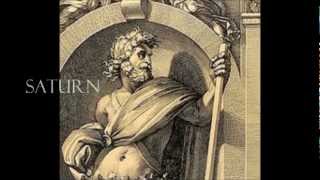 Roman Calendar - Names of days and months explained

 Flavian Roman Conspiracy: Origins of Christianity - Joseph Atwill (Caesar Messiah)
 Flavian Signature: Proof
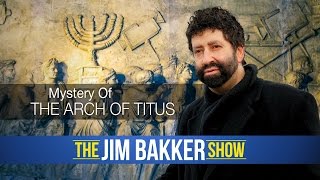 Roman 'Arch of Titus' celebrates destruction of Jewish Temple in 70 AD - Jonathan Cahn
 Seige of Jerusalem:
 New Testament Authors by Roman 'Flavian' Calpurnius Piso - Abelard Reuchlin 1/5
 New Testament Authors by Roman 'Flavian' Calpurnius Piso - Abelard Reuchlin 2/5
 New Testament Authors by Roman 'Flavian' Calpurnius Piso - Abelard Reuchlin 3/5
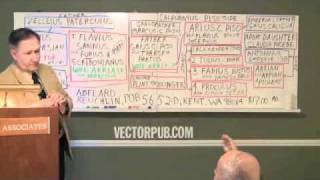 New Testament Authors by Roman 'Flavian' Calpurnius Piso - Abelard Reuchlin 4/5
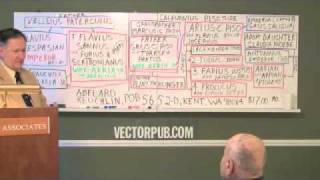 New Testament Authors by Roman 'Flavian' Calpurnius Piso - Abelard Reuchlin 5/5
 Crusades: Roman Catholic Church began the African Slave Trade - John Henrik Clarke
 Siege of Jerusalem and Roman-Jewish Wars - Henry Abramson
 History of Ptolemy, Serapis and Roman Gods unified in 30 BC - Vivian Laughlin
 Eclipsing Empire: Apostle Paul,
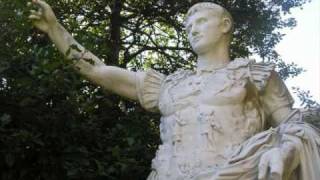 Christianity opposed


 Christianity adopted Graeco-Roman Pagan Gods: Mithras and Apollonius - Peleh Ben Avraham
 The World of Jesus,
 In 48 BC, Roman Emperor, Julius Caeser destroyed 700,000 texts by burning the Library of Alexandria, Egypt
 Secret Societies - History of the Roman Catholic Church, Pope, Jesuits, Freemasonry, Idolatory and Paganism - Amazing Discoveries - Walter Veith
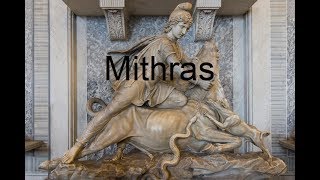 Jesus evolved from Mithras, the Roman pagan God - Fishers Evidence
 Historical records of Jesus' trial and Crucifixion would have been destroyed/lost in the 66-70 AD Judea-Roman war - Fishers Evidence
 Was Christianity influenced by Graeco-Roman Paganism? - Luke Timothy Johnson
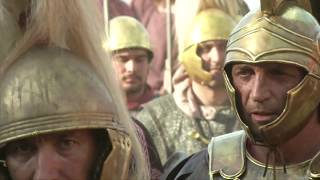 In 70 AD,
 Christian theology is based on decisions made in
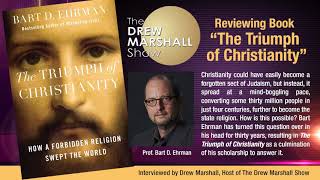 Triumph of Christianity: How
 In 73 AD, Masada was conquered by
 Islam's victory over Byzantine
 Constantine converted to Christianity. Yet remained a blood-thirsty, violent, intolerant Roman Emperor - Doug Michael
 'Christianity converts to
 Jesus, an Aramaic speaking Palestinian. New Testament originally in Greek, language of
 Ancient Roman 'Oral' culture led to the circulation of inaccurate, misleading Jesus Stories - Ehrman
 Apostle Paul evolves from radical, liberal to conservative; de-radicalized and sanitized to appease
 The four Gospels have anonymous authors, as did much Ancient Greek and Roman literature - Richard Bauckham
 Apostle Paul's foundations are in the Greek Hellenistic, Graeco-Roman world - Tovia Singer
 In 382 AD, Council of
 Roman Empire destroyed Christian texts & manuscripts in 'Book burnings' - Michael Kruger
 Theodosius (380 AD) declared Christianity as official state religion of
 From 306 AD, Constantine used Christianity to restore power & glory to
 In 389 AD,
 In 391 AD, Roman Emperor Theodosius outlawed Paganism and destroyed the Library of Alexandria
 In 70 AD,
 Idolatory is praying to Mary or Saints, as Roman Catholics do - RC Sproul
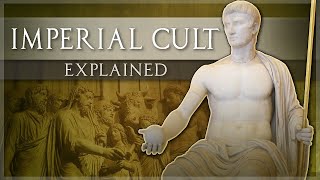
 Roman Imperialism: Before Jesus, was the 'divine' Caesar Augustus - John Dominic Crossan 1/4
 History of The Roman Catholic Church
 Greek Apostate Fathers: Clement, Ignatius, Justin Martyr, Shepherd of Hermas & Polycarp founded the Catholic 'cult' of
 From Proverbs 8:22, Philo of Alexandria applied a 'feminine' Wisdom (Sophia) in support of Roman Catholic teachings on Trinity - approvedofGod
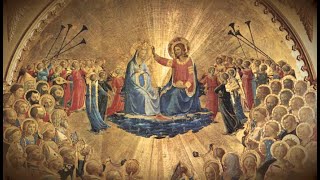 In Council of Ephesus (431 AD), Roman Catholics elevated Mary, to 'Mother of God' aka 'Queen of Heaven' - approvedofGod
 Bar Kokhba and Jesus were both killed by
 Josephus (37-100 AD): Aramaic was language of Jews in Roman Judea
 Pagan
 Christianity is a Graeco-Roman production for Greek
 Early Christians believed Jesus was a Man.
 Early Christians believed Jesus was a Man.
 Early Christians believed Jesus was a Man.
 In 70 AD,
 Suetonius (69-122 AD): Chrestus (Jesus) encouraged Jews to cause disturbance for Roman Authority
 Virgin Births were common in pagan, Graeco-Roman Mythology. Jesus the God-Man was no different! - Tovia Singer
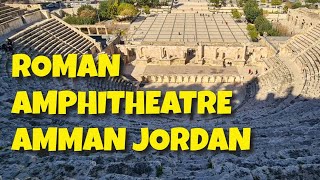 Tour of Roman Amphitheatre, Amman, Jordan - Two Boomers
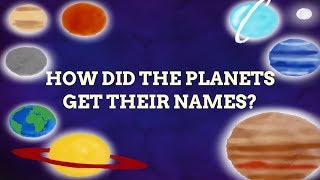 Planets named after Greek Gods by Roman Astronomers
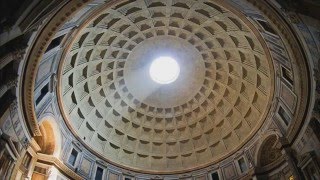 Pantheon, Roman Temple to the Gods and Idols of pagan
 Jesus,
 Jesus Resurrection Written for Greco-Roman Audience | Richard Miller | MythVision
 Protestant Christians rely on Roman Catholic Traditions | Tovia Singer
 Was Apostle Paul a secret Roman Agent? | Thijs Voskuilen | History Valley
 Christianity adopted Roman Traditions. Jesus became The God | Tovia Singer
 Julius Caesar the Roman Emperor was A Divine God before Jesus - Hamza Saudi vs Paperboy SC
 Did
 Sasanian and Roman Empires influenced Islamist Expansion | Khodadad Rezakhani | Skepsislamica
 Greater Israel defeats United States (
 Caesar Messiah EXPOSED: Did
 Edom (Christianity,
 DEBATE: Christianity emerged after the 70 AD Jewish-Roman War | Paul George
 Jesus from a Greco-Roman Perspective | Sean Finnegan
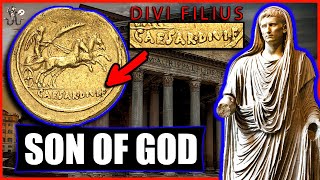 Caesar Augustus (63 BC-14 AD): Saviour of
 Origins of 'Son Of God' & 'Lord' from Pre-Jesus, Roman Emperor Gods cult language | CJ Cornthwaite
 Early Christianity's gradual assimilation into the Roman Empire | ReligionForBreakfast on History Valley
FAQ on Rome, Roman (23)
1.What happened at the Council of Nicaea in 325 AD?
During this historic imperial gathering, the various conflicting Christian factions were officially ordered by Roman authority to accept the unified Athanasian Creed. This political and religious decree formally established the doctrine affirming that Jesus Christ, as the Son of God, was simultaneously 100% human Man and 100% divine God.
2.Why did Apostle Paul preach a new religion?
When Rome adopted Christianity with the conversion of the Roman Emperor (4th Century) and his official campaign to repress anyone who refused to conform; to kill those Christians who refused to follow Romes 'Trinitarian Christianity'.
Paul knew that the victors wrote history and in order to win 'he had to be all things to all men' (I Corinthians 9:24-27).
Those who dig their heels in 'beat the air' and refused to compromise any detail of the true faith ended their days as martyrs.
3.Did Jesus claim to be 'King of the Jews'?
A political placard accusing Jesus of making this claim was nailed to his cross, and this historical artifact can be found today at the Church of Santa Croce in Rome.
4.What books did Apostle Paul write?
Romans
Paul explains how the gospel works and how to respond. Paul wrote this letter before he had visited the Roman church.
1 Corinthians
In 55 A.D., Paul admonished the local church that he had founded in Corinth.
2 Corinthians
Come 56 A.D., the Corinthian church had escalated and then resolved their conflict with Paul. Second Corinthians is Paul's a letter of forgiveness and reconciliation.
Galatians
Someone had misled the churches of Galatia re-subjecting them to the Law of Moses and devaluing God's grace. Paul writes the Galatians an aggressive letter to set them straight on their freedom in Christ.
Ephesians
Paul outlines doctrines of grace, peace, and salvation, and then instructs the church to walk in a manner worthy of Jesus Christ.
Philippians
Even though he's suffering in prison, Paul finds joy in Christ. He writes to the church at Philippi urging them to take on a Christlike attitude.
Colossians
This letter explains to the church at Colossae who they are in Christ.
1 Thessalonians
The church of Thessalonica is setting a great example for other churches, even though they're being persecuted for their faith. Paul encourages them to 'excel still more'.
2 Thessalonians
The affliction just won't let up on the Thessalonian church, so Paul coaches them on standing firm until Jesus return.
1 Timothy
This is Paul's guide to godliness and sound teaching for the young pastor Timothy at Ephesus.
2 Timothy
Paul's death is drawing near, and he charges Timothy to carry on his gospel work.
Titus
Paul had left Titus at Crete to set up order in the churches there. Now he writes Titus instructions for leading a
counter-cultural church.
Philemon
It's a message to Philemon, a leader in the Colossian church.
5.How were the Triadic or 'Trinity-like' Pagan Gods presented?
Ancient triadic deities in the Roman Empire were depicted in art and monuments as a single, unified figure featuring three distinct faces or heads to illustrate their triune nature.
6.Why did Apostle Paul choose to preach to the Gentiles?
Historically, Paul's mission shifted toward non-Jewish Gentiles because the majority of mainstream Jewish communities rejected his messianic doctrines regarding Jesus. In orthodox Christian history, this decision is also framed as a direct divine calling following his conversion, leading him to systematically establish multi-ethnic churches across the Roman Empire.
Paul was a Pharisee and would have been familiar with the knowledge, teachings, methodologies and mistakes of his Pharasaic brothers. Thus, he would have been the best person to preach to them his interpretation of soteriology. Yet he chose not to; leaving this task to James, Peter and the rest, dubbing them as the 'super apostles'.
The real reason why Paul preached to the gentiles is because they were ignorant. They did not know the Torah. They did not possess intimate knowledge of Judaism, its scripture or its doctrine.
Therefore Paul was not presenting his new religion to his own brethren because they would be able to debunk him. Due to this, logically speaking, he preached to those who would find his new faith appealing.
The gentiles would not argue about Christ's deity, or about the new doctrine of salvation, but the Jews would and vehemently so. Thus the path of least resistance is among the gentiles who would eventually see him as an authoritative figure, as opposed to the Jews who would see him as a heretic and shame him.
Yet with the gentiles, he is able to avoid these problems and ascend to power and authority very quickly.
7.And this spake he not of himself: but being high priest that year, he prophesied that Jesus should die for that nation;
John 11:51
In John 11:49-51, the high priest Caiaphas states that it is expedient for 'one man should die for the people,' a political calculation meant to prevent Roman intervention from destroying the nation. Christian theology views this statement as an ironic, divinely guided prophecy that accurately predicted Jesus' execution as a substitutionary sacrifice for the salvation of the world.
8.How was Apostle Paul viewed by the Jews?
Paul was widely viewed by mainstream Jewish communities as a radical apostate and religious heretic because he preached that observance of the Mosaic Torah was no longer required for salvation. This fierce theological conflict frequently resulted in severe public opposition, legal charges before Roman authorities, and physical riots during his travel throughout ancient Mediterranean cities.
9.What did Apostle Paul achieve by his Christian conversion?
By adopting faith in Jesus, Paul effectively expanded a localized, strictly observant Jewish movement into a highly adaptable, universal religion accessible to all cultures. He utilized his unique background as both a learned Pharisee and a Roman citizen to systematically build an expansive network of legal-exempt Christian communities across multiple Roman provinces.
10.Can Jesus wipe away our sins?
During the 4th and 5th centuries, the early church held historic councils (such as Nicaea and Chalcedon) to legally resolve intense theological disputes regarding how Jesus could be both human and divine. These imperial debates aimed to establish a unified orthodoxy and eliminate alternative theological views that threatened the political and religious cohesion of the Roman Empire.
11.How did the Christian Trinity come about?
The New Testament gospels show Jesus selecting twelve apostles to lead his immediate followers, but he did not lay down a detailed blueprint for a complex institutional priesthood or administrative hierarchy. The elaborate structures, clerical offices, and distinct liturgical traditions seen in modern churches developed gradually over centuries as the movement adapted to Roman institutional frameworks.
The concept of a dual human and divine nature in the person of Jesus is known as the Hypostatic Union, an essential component of modern Trinitarianism.
Yet it was not until the Council of Chalcedon that we see the emergence of an official doctrine of the Trinity in a form that is recognisable with what Christian Trinitarians believe in today. This took place in the fifth century, over 400 years after Jesus!
The evangelical theologian and Professor Wayne A. Grudem sums this up as follows:
'A precise understanding of how full deity and full humanity' argues Grudem, 'could be combined together in one person was formulated only gradually in the church and did not reach the final form until the Chalcedonian Definition in 451 AD.
12.Why did early Christians have church synods and councils?
Early Christian bishops organized regional synods and ecumenical councils to systematically define orthodox Christian doctrines and combat widespread heresies. These massive assemblies were essential for creating a unified creed, standardizing the New Testament canon, and establishing clear administrative laws for a rapidly growing global church. Prominent gatherings, like the Council of Nicaea, were often financed and politically mandated by Roman emperors to secure empire-wide religious stability.
13.What is the oldest manuscript of the Bible New Testament?
It is of enormous importance in establishing the biblical text. There are three earliest manuscripts of the Bible New Testament:
1. Codex Alexandrinus is one of the earliest and most important manuscripts of the entire Bible in Greek
2. Codex Sinaiticus is one of the most important books in the world and is kept in the British Library. Handwritten well over 1600 years ago, the manuscript contains the Christian Bible in Greek, including the oldest complete copy of the New Testament.
3. Codex Vaticanus in Rome
14.When did Catholic Christianity become official religion of Rome?
In 380 CE, under the Edict of Thessalonica issued by Emperor Theodosius I, Nicene (Catholic) Christianity officially became the state religion of the Roman Empire, leading to the institutional regulation of religious practices and the formalisation of a calendar of feast days like Christmas and Easter.
15.Did Jesus actually exist?
Virtually all serious modern historians and biblical scholars agree that Jesus of Nazareth was a real historical figure who lived and died in first-century Judea. This consensus is supported not only by Christian writings but by independent non-Christian sources from Roman and Jewish antiquities, including mentions by the historians Tacitus, Suetonius, and Josephus, as well as early Rabbinic traditions.
- Tacitus (Annals I5.44.3) wrote early Christians were blamed by Nero fir the fire in Rome in 64 AD
- Suetonius (Claudius 25.4) wrote debates about how Jesus led to Emperor Claudius expelling Jews from Rome in 49 AD
- Pliny (Letters I0.96) wrote to Emperor Trajan around 111 AD for advice on the people who worship 'Christ as a God' in the Asia Minor region
- Rabbinic Traditions (bSanhedrin 43.a) state Jesus of Nazareth was executed before he practised sorcery
16.What happened to Christians who questioned their creed?
Once Catholicism became the official state religion of the Roman Empire in the 4th century, it became highly dangerous to question or deviate from imperial doctrinal definitions. Imperial authorities enforced a strict monopoly on thought by carrying out systematic book burnings, completely destroying the philosophical refutations written by early critics like Celsus and Porphyry. As a result, modern academic knowledge of these ancient counter-arguments is limited to surviving snippets quoted inside the church's own refutation books.
- Porphyry (3rd century philosopher) wrote a 15-volume refutation of Christianity, the gospels and resurrection
- Celsus (2nd century philosopher) rejected the impossible concept of the resurrection
Once Christianity was established as the state religion, it became dangerous, as a subject of Rome, to question the doctrinal version of events.
17.What happened after Rome chose Christianity as the state religion?
When the Roman authorities officially adopted Christianity in the 4th century CE, they institutionalised the Roman Catholic version of the faith, favoring the universal theological framework of Paul over the localized, law-observant traditions of the original disciples. Mainstream historians emphasize that this political alliance standardized a singular imperial orthodoxy across the Mediterranean world, systematically suppressing alternative theological perspectives.
18.In 325 AD, did Emperor Constantine burn gospels, writings and religious text?
The books of Arius and his followers, after the first Council of Nicaea (325 C.E.), were burned for heresy by the Roman emperors Constantine, Honorius, and Theodosius I, who published a decree commanding that, 'the doctrine of the Trinity should be embraced by those who would be called catholics; that all others should bear the infamous name of heretics'.
19.In the time of Jesus, how were the Jews viewed by the Greeks?
The text suggests that the Greeks perceived Judaism as an insular tradition, weakened by long-term Roman occupation, economic decline, and emigration.
20.What were Prophet Daniel's main prophecies and dreams?
Daniel received visions outlining the rise and fall of major world empires (Babylonian, Persian, Greek, and Roman) and the eventual establishment of God's eternal kingdom. He also interpreted Nebuchadnezzar's famous dreams regarding the statue of four metals and the giant tree.
21.What is the Immaculate Conception versus the Virgin Birth?
Virgin Birth: The shared Christian and Islamic doctrine that Mary conceived Jesus miraculously without a human father.
Immaculate Conception: A specific Roman Catholic dogma stating that Mary herself was preserved from the stain of original sin from the moment of her own conception.
22.What is the Cao Dai hierarchy and structure?
The institutional structure of Cao Dai is closely modeled after the hierarchical organization of the Roman Catholic Church. The administrative governance features a supreme leader known as the Giao Tong (equivalent to a Pope), followed by a legislative body of Cardinals, Archbishops, and Priests who manage the spiritual laws and temple networks. The administrative duties are uniquely divided across distinct branches tasked with judicial oversight, executive functions and mediumship.
23.Does the Mayan religion still exist today?
Yes, the Mayan religion did not disappear and is still practiced today by millions of modern Maya descendants in southern Mexico, Guatemala, Belize and Honduras. While centuries of Spanish colonization introduced Roman Catholicism, the contemporary Maya practice a vibrant syncretic faith. Traditional rituals, prayers to the rain god Chaac, agricultural offerings, and the use of the 260-day Tzolkin spiritual calendar remain actively maintained by modern Mayan shamans and day-keepers.
Scripture Themes on Rome, Roman (9)
| 1. Jesus heals the Roman centurion's servant based on his great faith | Luke 7:1-10 |
| 2. Apostle Paul preaches the kingdom of God under guard in Rome | Acts 28:17-31 |
| 3. Jesus stands trial before Pontius Pilate | John 18:28-40 |
| 4. Peter preaches the gospel to the Roman centurion Cornelius | Acts 10:1-48 |
| 5. Roman soldiers scourge and mock Jesus | Mark 15:15-22 |
| 6. Roman soldiers uncover an underground plot to kill Apostle Paul | Acts 23:12-22 |
| 7. Roman cavalry escort Apostle Paul safely to Caesarea | Acts 23:23-35 |
| 8. Apostle Paul sets sail under guard on his final journey to Rome | Acts 27:1-12 |
| 9. Governor Festus consults King Agrippa regarding Paul's trial | Acts 25:13-22 |