MYTH MYTHICAL MYTHOLOGY
This often featuring gods, goddesses, and heroes. It serves as a lens for interpreting shared human experiences through stories, rituals, and art. Myth is a genre of folklore consisting primarily of narratives that play a fundamental role in a society. For scholars, this is totally different from the ordinary sense of the term myth, meaning a belief that is not true, as the veracity of a piece of folklore is entirely irrelevant to determining whether it constitutes a myth.
Myths are often endorsed by religious and secular authorities, and may be natural or supernatural in character. Many societies group their myths, legends, and history together, considering myths and legends to be factual accounts of their remote past. In particular, creation myths take place in a primordial age when the world had not achieved its later form. Origin myths explain how a society's customs, institutions, and taboos were established and sanctified. National myths are narratives about a nation's past that symbolize the nation's values. There is a complex relationship between recital of myths and the enactment of rituals.
Youtube Videos on Myth, Mythical, Mythology (52)
 Allah in the Bible - Moon God
 The name Jesus is from Greek Zeus mythology
 Jesus
 Apostle Paul worshipped Jesus the
 Jewish view of the Jesus' Resurrection
 Is Christianity and Jesus a
 9/11 The
 All Terrorists Are Muslim
 In Science, happiness is a
 In Science, happiness is a
 9/11, a Terrorism
 Jesus evolved from Zalmoxis, the mythical Greek diety - Fishers Evidence
 Jesus the
 Mythical Jesus, Catholics and Engineering of Dates, Events, Gospels and Epistles (Clement & Barnabas) affirming pre-existant pagan Christ cults - Mike Lawrence (NotoriUK)
 Reverse Construction of Jesus
 Reverse Construction of Jesus
 Reverse Construction of Jesus
 Jesus Christ, the
 Roots of Christian Mythology - David Fitzgerald
 Jesus: Man,
 Mystery Faith: The Historical Mythical Jesus - Richard Carrier 1/2
 Mystery Faith: The Historical Mythical Jesus - David Fitzgerald 2/2
 Different Versions of the Quran
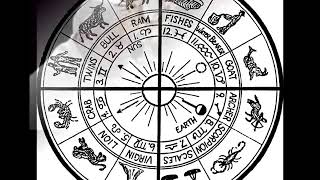 Importance of the Sun God, 12 Zodiac in Solar Mythology and Christianity - Doug Michael
 Christian Gospels are Symbolic Fiction; mythical narratives mined from Jewish texts and Pagan myths. Gospels are not history - Richard Carrier
 In Mark's Gospel, a 'triadic' structure may be evidence for Jesus Christ
 In Matthew's Gospel, an 'onion ring' structure points to the Jesus Christ
 Mark, Matthew & Luke write of Jesus a mythical Jewish Man who did 'mighty deeds' - Charles Hedrick
 Christianity is based on Mythology. Gospels record historically unreliable events of Jesus - Charles Hedrick

 Existence of a Historical or Mythical Jesus - David Fitzgerald
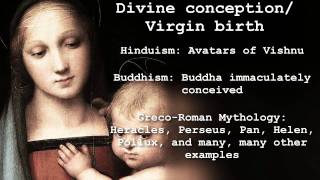 Jesus is too similar to Mythical Pagan Gods: Mithras, Osiris and Heracles. It's no coincidence - Steve Shives
 Was Jesus a
 Was Jesus a
 Homer's Odyssey (800 BC, Greek
 Homer's Odyssey (800 BC, Greek
 Homer's Odyssey (800 BC, Greek
 Homer's Odyssey (800 BC, Greek
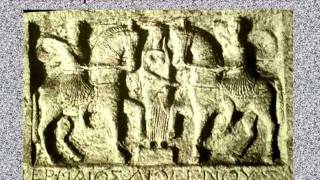 Mark's Gospel casts James & John, Jesus' disciples from Castor & Polydeuces, brothers in Greek mythology - TruthSurge
 Homer's Odysseus (800 BC, Greek
 Virgin Births were common in pagan, Graeco-Roman Mythology. Jesus the God-Man was no different! - Tovia Singer
 Jesus, Mary and others in Biblical Mythology - Dragons In Genesis
 Before Noah: Alternative Mythical Flood Stories | MythVision
 Are Biblical Prophets based on Ancient
 WD Farad Muhammad - The Man,
 Raglan Hero themes shared by Mythical characters: Romulus, Hercules, Dionysus, Zeus, Moses, Elijah and Jesus | Richard Miller | MythVision
 The Judeo-Christian
 Comparing Adam with Earlier, Ancient Mythology | Robert Price | MythVision
 3 Daughters of Zeus | Mythology Explained
 12 Tribes of Israel is a
 Why Adam and Eve are More
FAQ on Myth, Mythical, Mythology (7)
1.When was Christianity born?
After 70 CE, Christianity became a new movement. Western Christian
writings after 70 CE are a product of that transformation. Christianity became a Mithras-type saviour cult whose hero was not a myth but a real man.
Anyone who questioned Jesus' divinity were viewed as ignorant and inferior, including early Jewish-Christians, Jews, Jesus' closest friends and even family.
2.Why are their so many similarities between Jesus Christ and all the pagan Gods?
It is probable the reason why the Church priests burned and destroyed the earlier records of pagan Gods was to hide the evidence for the real origins of their own Christian mythology.
3.How did Christianity start?
The road from Jesus to the Christian religion that finally emerged in the fourth century, with its myth of Jesus as the son of God solidly in place, is a very long and twisty path.
Christianity was not born of an immaculate conception. It was the product of myriad moments of intellectual labor and negotiated social agreements by the people investing in the experiment.
This discovery has been difficult for many Christians to accept. That is because the traditional picture of Christian beginnings starts with a Jesus who knows in advance what is required of him and his disciples in order to establish the Christian religion.
4.Does the Bible tell us to act like slaves?
Historically, the Bible has been used by some to enslave, subjugate and dominate over a people.
The 'Curse of Ham' Myth: Pro-slavery advocates twisted Genesis 9 to claim that people of African descent were divinely cursed to be eternal servants.
Old Testament Legal Protection: Slaveholders cited Leviticus 25 to argue that purchasing foreign bondmen and passing them down as inherited property was biblically sanctioned.
Weaponising Obedience Verses: Plantation owners frequently read verses like Ephesians 6:5 ('Slaves, obey your masters') to religiously brainwash enslaved people against rebelling.
The Redacted 'Slave Bible': British and American authorities physically censored the scriptures, deleting the entire Book of Exodus to hide the narrative of freedom from bondage.
Enforcing Fugitive Slave Laws: Pro-slavery preachers used Paul's letter to Philemon to argue that runaway slaves were legally and spiritually obligated to return to their masters.
5.What does the word "Asatru" mean?
Asatru (historically written as Asatru) is a modern Icelandic term that roughly translates to 'faith in the Asir' or 'being true to the Asir'. The Asir represents the principal pantheon of gods in Norse mythology, including deities like Odin, Thor, Frigg, and Tyr.
6.Do Deists believe in the Bible or Jesus?
Deists reject the Bible as the infallible, divinely inspired word of God, viewing it instead as a historical human document filled with mythology. Consequently, they do not accept Jesus Christ as the divine Son of God, nor do they believe in his resurrection or miracles. However, historical and modern Deists often express profound respect for Jesus as a brilliant moral teacher and philosopher whose ethical instructions on love and compassion are highly valuable.
7.Who is Sophia in Gnosticism?
Sophia (the Greek word for Wisdom) is a central, tragic figure in Gnostic cosmology and creation myths. She is an Aeon—a divine emanation from the supreme spiritual realm. According to Gnostic myth, Sophia experienced a flawed desire to create a being without the consent of her divine counterpart. This independent act caused a rupture in the heavens, resulting in the accidental birth of the ignorant Demiurge and the subsequent creation of the material world.
News on Myth, Mythical, Mythology (4)
Topics with Myth, Mythical, Mythology (2)

Articles on Myth, Mythical, Mythology (2)
400 Old Testament Prophecies Copied Into New Testament Bible: Fact vs Myth

20,512 views
|
Jesus vs Mythical Hero: The Raglan Scale Applied

20,531 views
|