MONOTHEISM MONOTHEIST
A god that created the world, is all-powerful and intervenes in the world. A broader definition of monotheism is the belief in one god. A distinction may be made between exclusive monotheism, and both inclusive monotheism and pluriform (panentheistic) monotheism which, while recognising various distinct gods, postulate some underlying unity.
Search Result on 'Monotheism' (76 total)
Youtube Videos on Monotheism, Monotheist (27)
 You're not a Monotheist! - Muhammad Tawheed vs Christian Rusty 1/2
 Show me Trinity in the Bible. Why show me
 Show me Trinity in the Bible. Why show me
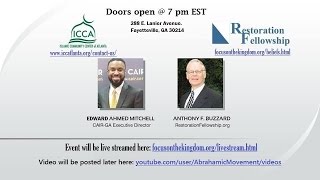 Jesus the Jew was a Unitarian.
 In Genesis 1:26, One God created Man (
 Jewish Rabbis admit Islam is a Monotheist Religion
 Jesus was a Unitary Monotheist - Anthony Buzzard
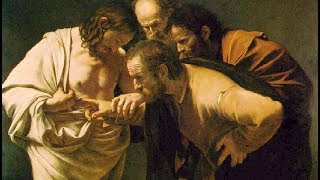 Jesus was a Jew on Unitarian
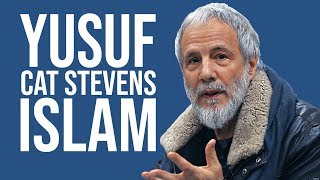 The Oneness of God ('
 Trinity is 'veiled' Tri-theism (Three Gods). Combining of Jewish
 James Dunn: Jesus is not Yahweh. Jesus is a Monotheist reciting his belief in One God - Anthony Buzzard
 Jesus was a Unitarian Monotheist - Anthony Buzzard
 Newton's Law: Isaac Newton, a follower of Arius was a Christian Monotheist - GOI Anime
 Jesus was a 1st century monotheist Jew - Anthony Buzzard
 Christian Trinity is based on 'Unclear, Ambiguous' verses. Why reject the simple, Monotheist 'Shema' verses? - Hamza Saudi vs Paperboy
 All previous Scriptures (Torah, Psalms, Injeel, Quran) preached
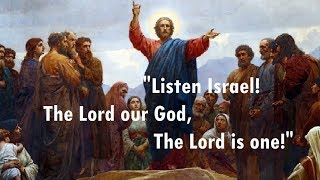 Jesus was a Monotheist, Non-Trinitarian Jew - Anthony Buzzard
 Historical Understanding of God and gods in
 Jesus was a Monotheist Jew - Anthony Buzzard
 The Case for Ancient
 Polytheism to Yahweh-Only
 The Evolution of
 Zoroaster, the first Monotheist Prophet from 1500 BC | Stephans History
 Abraham, the Grandfather of
 Pre-Islam Arabian Evidences point to
 Yahweh The Monotheist God was a Late Development | Francesca Stavrakopoulou
FAQ on Monotheism, Monotheist (27)
1.Why choose the name MuslimProphets.com?
The name reflects that all prophets taught monotheism and the worship of one God, making them all 'in-essence' considered Muslim.
2.How are Noah, Abraham, Moses and Jesus considered Muslim Prophets, when Islam came 600-years after Jesus?
A Muslim is essentially defined as anyone who believes in and submits to one God; because all of these historical prophets consistently preached the message of pure Monotheism and called people to worship the Creator alone, they are considered to be Muslim in-essence regarding their foundational theological beliefs.
3.Why is the Trinity so difficult to understand?
The Trinity is a complex theological doctrine because it describes God as existing as three distinct Persons: Father, Son, and Holy Spirit who are co-equal and co-eternal, yet remain one single, unified divine Being. It requires balancing the concepts of strict monotheism with the distinct actions and relationships of the three divine Persons as revealed across the New Testament text.
4.Are Jesus and God the same?
Mainstream Christian orthodoxy, solidified at the Council of Nicaea, dictates that Jesus and God are the same in essence (homoousios), defining Jesus as the pre-existent Word of God who took on human flesh. However, secular historians and Unitarian theologians point out that the Synoptic Gospels make explicit distinctions between Jesus and God, such as when Jesus prays to the Father or denies knowing the timing of the Final Hour. Islamic theology strictly rejects any identification of Jesus with God, viewing the claim as a violation of absolute monotheism (Tawhid).
5.What did Jesus say was the first and most important commandment?
In Mark 12:29, Jesus quotes the Shema (Deuteronomy 6:4), emphasizing that the foundational, strict monotheism of Judaism, loving God with one's entire being is the supreme commandment.
6.Does the Bible support the Trinity (3-in-1) God concept?
Mainstream biblical scholars and historians state that the doctrine of the Trinity is never explicitly laid out as a formal dogma anywhere in the text of the Old or New Testaments. While the New Testament contains early triadic formulas (such as the baptismal command in Matthew 28:19 and apostolic blessings in 2 Corinthians 13:14), the actual systemic theology of a three-in-one God was developed later by early church fathers over centuries. Christian theologians argue that the doctrine is implicitly woven throughout the scriptures, while critics and Islamic scholars point to the lack of clear, direct scriptural definitions to argue it was a later modification of strict biblical monotheism.
7.What was the most important belief for Jesus?
Jesus adhered to the Shema (Deuteronomy 6:4), stating 'The Lord our God is one Lord' (Mark 12:29), anchoring his ministry in strict biblical monotheism.
8.What was the foundation of the Old Testament?
The foundational belief of the Old Testament is strict monotheism, epitomized by the Shema (Deuteronomy 6:4): 'Hear, O Israel: The Lord our God is one Lord.' This faith was maintained in opposition to surrounding polytheistic practices.
9.Did Jesus preach monotheism?
Yes. Jesus taught the absolute oneness of God within the established Jewish monotheistic tradition, rejecting pagan polytheism.
10.Did Jesus confirm the oneness of God?
Yes. Throughout his ministry, Jesus consistently reinforced that the Creator is a single, unique entity, adhering to the monotheism of the Hebrew prophets.
11.Who was Prophet Abraham, and why is he called the 'Father of Monotheism'?
Abraham was a foundational prophet revered across Judaism, Christianity, and Islam collectively known as the Abrahamic faiths. Born in the ancient Mesopotamian city of Ur, he rejected the idol worship of his society and declared faith in the One True God. His steadfast obedience made him the spiritual patriarch of monotheism and the direct ancestor of numerous prophets through his sons, Isaac and Ishmael.
12.Who was Prophet Elijah in Islamic and biblical history?
Elijah (Ilyas) was a powerful, fearless prophet sent to the Northern Kingdom of Israel during the 9th century BC. He spent his ministry calling the Israelites back to pure monotheism and opposing the widespread idolatry promoted by King Ahab and Queen Jezebel.
13.Who was Prophet Enoch in Islamic and biblical history?
Enoch (Idris) was a righteous patriarch and the seventh prophet in the direct line from Adam. Known for his exceptional devotion, wisdom, and scholarship, he preached monotheism during a pre-flood era of growing wickedness.
14.What role did Prophet Ishmael play in building the Kabah?
As an adult, Ishmael joined his father Abraham to construct the Kabah, the first house of monotheistic worship in Mecca. Together, they raised its physical foundations and prayed for God to make their descendants a righteous nation dedicated to monotheism.
15.What was Japheth's role in preserving early monotheism?
While not traditionally classified as a law-giving prophet with a new scripture, Japheth played a crucial role in carrying Noah's early monotheistic teachings, moral laws, and historical records into newly formed post-flood civilizations.
16.Who was Prophet Jesus in Islamic and biblical history?
Jesus (Isa) is recognized as one of the most prominent prophets, messengers, and divine teachers in human history, sent by God to guide the Children of Israel. Born miraculously to his virgin mother, Mary (Maryam), he preached love, mercy, and pure monotheism.
17.How is Jethro revered across different faith traditions?
Islam: Revering him as the prophet Shoaib, Islamic tradition highlights his eloquence (Khateeb al-Anbiya) and records that his defiant people were destroyed by a sudden earthquake and scorching heat wave after rejecting his call to honesty and monotheism.
Judaism & Christianity: Honored as a righteous priest of Midian whose wisdom and counsel helped organize early Israelite leadership.
Druze Faith: Rebuilt as a central spiritual figure, founder, and chief prophet in Druze tradition, where his tomb at Nabi Shuayb in Horns of Hattin is an annual pilgrimage site.
18.What was the central message and warning Lot brought to Sodom-Gomorrah?
Lot condemned the widespread moral corruption, violence, and transgression in his community. He called the citizens back to divine monotheism, hospitality, and natural moral boundaries, warning them that failure to repent would bring divine judgment upon their cities.
19.What was Methuselah's spiritual role before the Great Flood?
Inheriting the prophetic legacy of his father Enoch, Methuselah served as a spiritual leader and preacher of monotheism. He spent centuries warning an increasingly corrupt human society to repent and return to righteousness, helping preserve sacred knowledge and divine records until his grandson Noah was called to build the Ark.
20.What divine warnings and judgments were sent to the people of Midian?
As the descendants of Midian grew into a prosperous society, many abandoned monotheism and engaged in unethical business practices, such as shortchanging customers and highway robbery. God sent Prophet Jethro to preach honesty and faith, but when they rejected his warning, the corrupt population faced catastrophic divine destruction.
21.How is Prophet Muhammad viewed across different faith traditions and history?
Islam: Venerated as the final prophet who restored the pure monotheism of Abraham, Moses, and Jesus, serving as the ultimate moral role model for humanity.
Interfaith & Secular History: Evaluated as a revolutionary reformer, statesman, and lawgiver who transformed Arabia, elevated women's legal rights, abolished tribal warfare, and instituted lasting social justice.
22.Who was Prophet Noah across major world religions?
Noah (Nuh) is a major prophet and patriarch in Judaism, Christianity, and Islam. Recognized as the 'Second Father of Humanity', he was sent during an era of deep spiritual corruption to call people back to monotheism and righteousness.
23.What was Solomon's connection to the First Temple and the Queen of Sheba?
First Temple (Solomon's Temple): He constructed the legendary Temple in Jerusalem to house the Ark of the Covenant, making the city the spiritual center of the realm.
Queen of Sheba (Bilqis): Upon hearing of the Queen of Sheba's sun-worshiping kingdom, Solomon invited her to his court. Impressed by his divine wisdom and the splendor of his kingdom, she abandoned idolatry and embraced monotheism.
24.How is Prophet Solomon viewed across different faith traditions?
Judaism & Christianity: Revered as the wise king who built the First Temple and presided over the Golden Age of Israel, though biblical texts record his political decline late in life due to foreign alliances.
Islam: Honored as a noble, fully righteous prophet (Sulaiman) who remained completely devoted to God, using his vast kingdom, wealth, and miracles strictly to spread divine monotheism.
25.How is Terah's relationship with Abraham depicted across scriptures?
Hebrew Bible / Old Testament: Depicted as the patriarchal father of Abraham who initiated the family's journey out of Ur toward Canaan before passing away in Haran.
Quran & Islamic Tradition: Highlights the sharp contrast between Terah/Azar's devotion to idol sculpting and Abraham's gentle, respectful attempts to invite his father to divine monotheism, serving as a timeless lesson on personal faith over ancestral traditions.
26.What is the Druze religion?
The Druze religion is a monotheistic, Abrahamic, and highly secretive syncretic faith that emerged during the 11th century in Cairo, Egypt. Adherents, known as the Druze, are a distinct ethnoreligious group primarily living in the Levant. The faith blends the foundational monotheism of Shia Isma'ili Islam with elements of Christianity, Gnosticism, ancient Greek philosophy (such as Neoplatonism and Pythagoreanism), and Hinduism.
27.Is Hinduism polytheistic or monotheistic?
Hinduism is most accurately described as henotheistic or pantheistic, though it contains elements of both monotheism and polytheism. While Hindus worship thousands of distinct deities (devas and devis), the vast majority of practitioners view these individual gods as different forms, facets, or manifestations of a single, supreme cosmic reality known as Brahman.