MECCA
It is also the capital and administrative headquarters of the Makkah Region. The city is located 70 km (43 mi) inland from Jeddah in a narrow valley at a height of 277 m (909 ft) above sea level, and 340 kilometres (210 mi) south of Medina. Its resident population in 2012 was roughly 2 million,
Youtube Videos on Mecca (28)

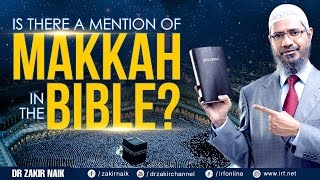 Is Makkah (
 Did Abraham, Moses, Jethro, Midian, Aaron, Isaac and Ishmael do pilgrimage to
 In Genesis 16:11 and Isaiah 60:6, God praises Ishmael and a caravan of Camels from
 Return to
 Dan Gibson: Petra was original Qibla, not
 Was Petra (Jordan) the historical
 Muhammad was expelled from
 Can Dan Gibson prove Early Muslims prayed to Petra, Jordan and not
 In Quran 3:96, Bakkah might not be
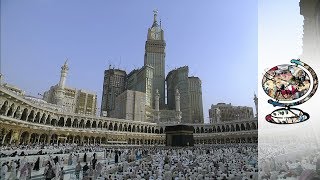 Saudi Arabia: Where Tall Buildings overwhelm
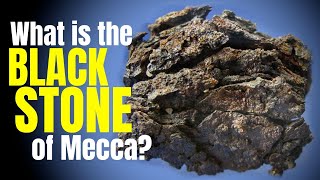 The Black Stone of
 Stories of Prophets: Abraham builds Kabah in
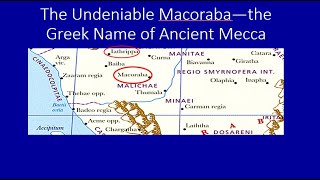 Macoraba is the Greek Name of Ancient
 Abraham took Hagar and Ishmael to
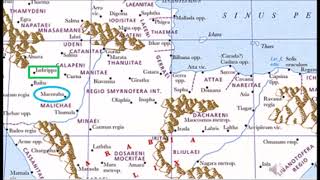 Historical Evidence proves Macoraba is
 Origins of Kabah in Pre-Islam
 Archaeology indicates Polytheism did not exist in Pre-Islamic
 Muhammad - From Peaceful Preacher in
 Walking In Muhammad's Footsteps: 260 mile Hijrah from
 Early Developments in Quran Compilation, Islam & Kabah,
 Muhammad's Conquest of
 Did Hagar really walk 800 Miles from Beersheba to
 Significance of Qibla (prayer direction) changing from Jerusalem to
 Did Early Islam emerge from Petra or
FAQ on Mecca (18)
1.Does the Quran encourage violence against the disbelievers (non-Muslims)?
Academic Islamic scholarship clarifies that verses in the Quran addressing warfare against non-Muslims were historically revealed during active, state-level conflicts with the pagan tribes of Mecca and their military allies. Mainstream historians emphasize that these specific martial passages must be read within their situational context of self-defence and treaty violations, rather than as an open-ended command to attack peaceful non-Muslims.
The historical context is that this Quran verse was revealed at the Battle of Badr, a battle in which the pagans of Makkah traveled over 200 miles to destroy the Muslims of Madinah. The Pagans of Makkah had an army of about 1000 while the Muslims were only 300 followers. Muhammad and his followers had suffered severe persecutions and torture for 13 years in the city of Makkah. Having fled from Makkah to the safety of Madinah, they found that they were once again threatened.
From a historical and textual context this Quran verse does not promote the killing of innocents.
2.Can the Muslims have non-Muslim friends?
Muhammad was kind to the pagans of Mecca and fought them only when they fought him. He made treaties with the Jews of Madinah and honored the treaties until they broke them. He received the Christians of Najran with kindness in Madinah. They argued with him about Islam, but he treated them with honor and respect.
3.What did Sarah, Abraham's wife say about Hagar?
In the biblical text of Genesis 16, Sarah (then Sarai) explicitly suggested that Abraham should take her Egyptian handmaid Hagar to produce an heir because she was barren. However, after Hagar became pregnant, conflict arose, and Sarah later demanded that Abraham completely cast out Hagar and her son Ishmael to ensure Isaac remained the sole primary heir. From an Islamic perspective, the relationship is viewed with greater reverence, framing the journey of Abraham, Hagar, and Ishmael to the valley of Mecca as a fulfilled divine mandate rather than a simple domestic dispute.
4.How is Muhammad connected to Mount of Olives?
In the Night Journey (Isra and Mi'raj), in the Islamic tradition, during his miraculous night journey from Mecca to Jerusalem, Prophet Muhammad passed by the holy sites surrounding Jerusalem, including the Mount of Olives, before ascending to the heavens from the neighboring Temple Mount.
5.How is Muhammad connected to the Damascus Gate in Jerusalem?
In Islamic tradition, during the Isra and Miraj (the Night Journey), Prophet Muhammad traveled from Mecca to the Al-Aqsa Mosque compound in Jerusalem. While the exact gate through which he entered the city walls is not named in the Quran, regional traditions often associate the northern access from the road to Damascus with the historical approaches into the Old City.
6.What miracles and major trials is Prophet Abraham known for?
The Fiery Furnace: When Abraham smashed the idols of his town, King Nimrod ordered him thrown into a roaring fire. God miraculously commanded the flames to become cool and safe for him.
The Sacrificial Test: God tested Abraham's devotion by commanding him to sacrifice his son. Demonstrating absolute submission, Abraham prepared to obey before God stopped him and replaced his son with a ram.
Leaving His Family in the Desert: Abraham followed divine guidance by leaving his wife Hagar and infant son Ishmael in the barren valley of Mecca, which led to the miraculous emergence of the Zamzam water spring.
7.What is Prophet Abraham's connection to the Kabah in Mecca, Saudi Arabia?
Along with his eldest son, Ishmael, Prophet Abraham rebuilt the foundations of the Kaaba in Mecca, establishing it as the world's first house dedicated purely to the worship of God. Key rituals of the Islamic Hajj pilgrimage such as walking between the hills of Safa and Marwa and the symbolic stoning of the devil directly commemorate the actions of Abraham and his family.
8.Where is Prophet Adam believed to have landed on Earth and been buried?
According to classical traditions, Adam made his initial earthly landfall at Peak Adam (Sri Pada) in modern-day Sri Lanka or in the Arabian Peninsula. Traditional burial locations associated with Adam include the Mount Abu Qubays in Mecca, Saudi Arabia, or the Cave of Machpelah (Hebron).
9.What is the story of Ishmael and the Well of Zamzam in Mecca?
Under divine command, Abraham left infant Ishmael and his mother Hagar in the barren valley of Mecca. As Hagar ran between the hills of Safa and Marwah searching for water, God miraculously caused the Zamzam spring to gush forth from beneath young Ishmael's feet, saving their lives and laying the foundation for Mecca.
10.What role did Prophet Ishmael play in building the Kabah?
As an adult, Ishmael joined his father Abraham to construct the Kabah, the first house of monotheistic worship in Mecca. Together, they raised its physical foundations and prayed for God to make their descendants a righteous nation dedicated to monotheism.
11.How long did Prophet Ishmael live, and where is he buried?
Ishmael was born around 1727 BC and lived to be 137 years old. He passed away around 1590 BC and is traditionally buried near the Kabah (within the Hijr Ismail area) in Mecca, Saudi Arabia.
12.Where was Prophet Muhammad born, and how did his early life unfold?
Muhammad was born in Mecca in 570 AD into the noble Hashemite clan of the Quraish tribe. Orphaned at an early age, he was raised by his grandfather and later his uncle Abu Talib. Before receiving his prophetic call, he was known throughout Mecca as Al-Amin ('The Trustworthy') for his exceptional honesty as a merchant.
13.How did Prophet Muhammad receive the revelation of the Quran?
In 610 AD, at age 40, Muhammad was meditating in the Cave of Hira near Mecca when the Archangel Gabriel (Jibril) appeared to him with the first revelation from God. Over the next 23 years, these divine revelations were conveyed orally and recorded, forming the text of the Holy Quran.
14.What was the Migration (Hijrah) to Medina, and why is it important?
Facing severe persecution in Mecca, Muhammad and his early followers migrated to the city of Yathrib (later renamed Medina) in 622 AD. This event, known as the Hijrah, marks Year 1 of the Islamic lunar calendar and allowed Muhammad to establish the first Islamic state based on justice, communal rights, and religious freedom under the Constitution of Medina.
15.Was Prophet Muhammad involved in any Battles or Wars?
The Battle of Badr (624 AD) - Muhammad vs Quraysh - 84 deaths The Battle of Uhud (625 AD) - Muhammad vs Quraysh - 110 deaths The Battle of the Trench (627 AD) - Muhammad vs Confederate allies - 9 deaths The Battle of Khaybar (628 AD) - Muhammad vs Jewish tribes of Khaybar - 111 deaths The Conquest of Mecca (630 AD) - Muhammad vs Quraysh - 30 deaths The Battle of Hunayn (630 AD) - Muhammad vs Hawazin and Thaqif - Unknown deaths The Siege of Ta'if (630 AD) - Muhammad vs Thaqif - Unknown deaths The Expedition of Tabuk (630 AD) - Muhammad vs Byzantine Empire - 0 deaths
16.Who is the founder of Islam?
Muslims believe that Islam does not have a human founder, as it is the eternal truth revealed by God since the creation of the world. However, historically, the religion was revived and formalized by the Prophet Muhammad (born in Mecca around 570 CE). Muslims revere Muhammad not as a divine being or creator, but as the final and ultimate prophet sent to restore the pure monotheistic faith of Abraham, Moses, and Jesus.
17.What are the Five Pillars of Islam?
The Five Pillars of Islam (Arkan al-Islam) form the mandatory core framework of a Muslim's spiritual and daily life:
1. Shahada (Faith): Reciting the declaration that there is no god but Allah and Muhammad is His messenger.
2. Salah (Prayer): Performing ritual prayers five times a day facing the Kaaba in Mecca.
3. Zakat (Charity): Giving a fixed percentage (typically 2.5%) of one's accumulated wealth to support the poor.
4. Sawm (Fasting): Abstaining from food, drink, and marital relations from dawn to sunset during the holy month of Ramadan.
5. Hajj (Pilgrimage): Undertaking the sacred pilgrimage to Mecca at least once in a lifetime, if physically and financially able.
18.What is the Kaaba and why do Muslims pray toward it?
The Kaaba is the black, cube-shaped stone structure located at the center of Islam's most sacred mosque, Masjid al-Haram, in Mecca, Saudi Arabia. Muslims do not worship the Kaaba itself; rather, it serves as the Qibla (direction of prayer). It acts as a physical anchor for global unity, ensuring that over two billion Muslims around the world face a single focal point during daily worship. According to Islam, it was originally built by the Prophet Abraham and his son Ishmael as the first house of monotheistic worship on Earth.
Photos on Mecca (8)


Photo Album on Mecca (6)
Scripture Themes on Mecca (3)
| 1. Abraham's prayer for Mecca's sustenance | Quran 2:126 |
| 2. Abraham prays for Mecca's protection | Quran 14:35 |
| 3. Abraham Prays for Security of Sacred Sanctuary | Quran 14:35 |
News on Mecca (1)
| 1. Mohammed bin Salman Is Making Muslims Boycott Mecca | Foreign Policy |