INDIA
Youtube Videos on India (28)
 Boy with mystery condition worshiped as a Hindu God in
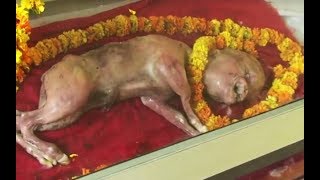 Dead calf with 'human-like' features worshiped as Hindu God in
 Baby born with an 'elephant trunk' worshiped as Hindu God in
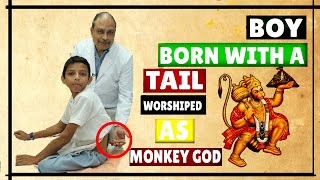 Baby born with Tail worshiped as Monkey Hindu God in
 Amitabh Bachan. Was he a Hate Preacher for defending the 'Mother' of
 Amitabh Bachan. Was he a Hate Preacher for defending the 'Mother' of
 Amitabh Bachan. Was he a Hate Preacher for defending the 'Mother' of
 Aghori Hindus in
 The British Raj in
 1612 British Colonialism 'destroyed'
 What the British did to
 In
 In
 In

 Hindu
 The British Empire policy of 'Divide & Rule' in
 First-ever Gay/Homosexual Pride Parade 2018 in Delhi,
 Coronavirus leads to violence against 'Tablighi Jamaat' Muslims in divided
 Was Abraham from the Indus Valley Civilization in

 Comparing Flood Stories from Israel, Babylon,
 Christian Church Under Attack by Hindutva Hindus in
 Gorehabba Festival,
 Cow Dung celebrations honour Beereshwara Hindu God in
News on India (25)
FAQ on India (8)
1.Is Bon a form of Buddhism?
No, historically Bon is not a branch of Buddhism, but modern Bon shares extensive similarities with Tibetan Buddhism. While Buddhism traces its roots to Gautama Buddha in India, Bonpo followers believe their teachings come from an entirely different enlightened teacher from a land west of Tibet. However, following centuries of political coexistence and mutual cultural absorption, the 14th Dalai Lama recognized Bon as an official, integral Tibetan religious tradition.
2.What is the difference between Bon and Tibetan Buddhism?
While they share many common outer traits, the key distinctions between the two traditions lie in their origins, lineages, and ritual direction:
* Origin: Buddhism stems from India; Bon stems from the ancient empire of Zhang Zhung.
* Lineage & Masters: Buddhists revere the historical Buddha Shakyamuni, whereas Bonpos trace their lineage to Tonpa Shenrab.
* Ritual Movement: Tibetan Buddhists circumambulate stupas and spin prayer wheels clockwise, whereas Bon practitioners do so counter-clockwise.
3.Where is the Bon religion practiced today?
The global hub of the Bon religion is Menri Monastery in Dolanji, India, which was re-established in exile following the Chinese invasion of Tibet in 1959. However, it is actively practiced by an estimated 400,000 Bonpo followers globally, primarily across the Tibetan Plateau, parts of western China, Nepal, and adjacent Himalayan regions. It has also gained a notable following in Western nations through prominent diasporic lamas.
4.What is Buddhism and who founded it?
Buddhism is a major world religion and philosophical tradition founded in ancient India over 2,500 years ago by Siddhartha Gautama, famously known as the Buddha ('the Enlightened One'). Born as a prince in what is now modern-day Nepal, he abandoned his royal life to seek an end to human suffering, ultimately achieving supreme enlightenment under the Bodhi tree.
5.What is the Hare Krishna religion?
The Hare Krishna movement officially named the International Society for Krishna Consciousness (ISKCON) is a monotheistic branch of Hinduism. It belongs to the Gaudiya Vaishnavism tradition, which originated in India during the 16th century. Followers focus their devotion entirely on the Supreme Lord Krishna, and actively promote spiritual consciousness through the chanting of sacred mantras, study of scripture and congregational community living.
6.Who founded the Hare Krishna movement?
The global Hare Krishna movement was founded in New York City in 1966 by A.C. Bhaktivedanta Swami Prabhupada (reverently called Srila Prabhupada). At the age of 69, Prabhupada travelled from India to the United States under the instructions of his spiritual master to introduce the ancient teachings of Bhakti Yoga to the Western world, quickly expanding the movement into a globally recognized spiritual organization.
7.What do Hare Krishna followers believe?
The core beliefs of Hare Krishna are rooted in the ancient Vedic scriptures of India, most notably the Bhagavad-gita. They believe that every living being is an eternal, spiritual soul (atman) rather than a physical body. The ultimate goal of life is to reawaken a dormant love for God (Krishna). Adherents live by the laws of karma and reincarnation, teaching that the soul continuously cycles through births until achieving absolute spiritual liberation.
8.What is Sikhism and how did it start?
Sikhism is the world's fifth-largest organized religion, founded in the late 15th century CE in the Punjab region of South Asia (modern-day India and Pakistan). It was established by Guru Nanak, the first of ten living human Gurus. He traveled extensively teaching a message of love, the oneness of God, and the absolute equality of all human beings regardless of caste, gender or race.
Topics with India (2)
 12:02
 4:54
 1:09:09
 15:45
 25:36

 9:49
 3:23