DEVIL SATAN EVIL
Historically, devils can be defined as personifications of whatever is perceived in society as evil and the depiction consists of its cultural traditions. In Christianity, the manifestation of the Devil is Satan: the primary opponent of God.
Scripture Themes on Devil, Satan, Evil (88)
Youtube Videos on Devil, Satan, Evil (42)
 The Creation of Adam and Satan - Yusuf Estes
 The
 Birth of the
 In Luke 10:18, I saw Satan fall like lightning from heaven - John Schoenheit (BiblicalUnitarian)
 Is Islam from Satan? - Hamza Myatt vs Hebrew Israelite
 The
 Apostle Paul: Satan in the Flesh?
 Can God become the
 Can God become the
 Is Religion Evil? An Interview with Athiesm - Richard Dawkins and Mehdi Hasan - Al-Jazeera
 The Christian Bible was used to justify Evil, the War in Iraq and killings. We have to expunge this mentality - John Spong
 Evil of Dajjal/Antichrist: Our Children become one-eyed, like the Dajjal, when they watch TV and Smartphone - Imran Hosein
 In 2 Corinthians 4:4, Satan is the God of the world. Do Christians follow Satan today? - Hashim vs Christians
 In the Christian gospel, Ascension of Isaiah, Jesus was crucified by Satan in outer Space - Richard Carrier
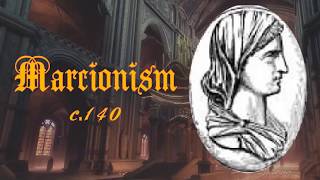 In 140 AD, Marcion rejected the OT Bible, and 'inferior, evil' OT Jewish God - Lorence Yufa | Milwaukee Atheists
 Nation of Islam is about Freedom, Justice & Equality against the evil of White Supremacy - Leo Muhammad (NOI)
 Christmas, December 25th is under the control of the
 In Matthew 4:8, Satan took Jesus (God) willingly up the high mountain; contrary to James 1:13 - Adnan Rashid vs Christian
 Pornography has enslaved Muslim countries. Satan has the Technology to destroy you - Hamza Yusuf
 Jihad is perpetual Warfare with the Evil inside You - Leo Muhammad
 The Anti-Christ (Dajjal) may be Satan - Abu Layth
 The Nation of Islam did not kill Malcolm X. That's the
 Evil forces have turned us into COVID Slaves to a murderous, Godless Great Reset agenda - Raymond Burke
 Great Reset is Satan's Great Opportunity - Robert Altier
 COVID-19 points to Godless New Age, where Satan worship meets self-serving, dark materialism - Sacha Stone
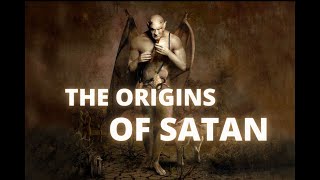 Satan, from Son Of El to Fallen Angel - Atheologica
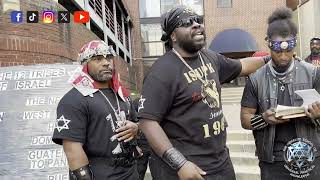 The
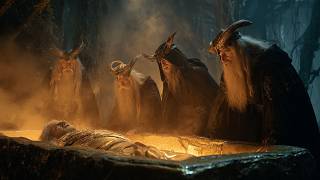 Why did Satan want Moses' body | Unraveling Scriptures
 When Evil Walks Amongst Us | Crow House
 The Evil of Madkhali Islam in Saudi Arabia 2025 | Omar Abdulaziz | Thinking Muslim
 A future where people unite for GOD, not the
 'Evil Israel' bombs Lebanon - 100 targets in 10 minutes. 100+ dead, 1000+ injured AFTER ceasefire | chunkymark
 Did Psychology create Evil and Terrorism? | Predictive History
 Evil, demonic forces turn Pornography, Paedophilia, Incest and Euthanasia into trending social themes | Candace Owens | Neil Oliver
 UK Doctor EXPOSES 'uncivilised, evil Israeli genocide of human animals' | Nick Maynard | Tucker Carlson
 How Lucifer Became Satan | Bible In Nutshell
 Evil is pushing us towards Transhumanism today | Smile2Jannah vs Visitor
 How Satan, Demons, Hell & Evil were found in Christianity | Derreck Bennett on MythVision
 Evil Men have No Compassion for Palestine. Wake Up Black Man | Leo Muhammad
 God is a MAN OF WAR. Disobey Him and He will send Evil Angels | ISUPK
 Joseph - How God Turned Evil to Good | Red Lamb Stories
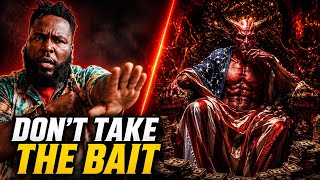 Evil has Taken Control of Your Life | Umar Johnson
FAQ on Devil, Satan, Evil (17)
1.What is a prophet or messenger of God?
A prophet or messenger of God is a human being to whom God gives His guidance and whom He charges with the task of conveying that guidance to the people, so that they may do good and avoid evil.
2.How was 25th December celebrated by pagans?
December 25th was the most important of Sun Festivals, the new
birth of the God, rising three days after 'dying' at the winter
solstice. Today, the celebration continues and its many features
can be witnessed. A few of these include:
* Excessive eating, drinking and merry was commin in Saturnalia
festival
* Father Christmas (Red Man) - who was originally Apollo, the
Sun-God or Thor God depicted as an elderly man, jovial or
friendly, of heavy build with a long white beard who drove a
chariot through the sky
* Fireplace - the fireplace in pagan homes was sacred to Thor
God which he would descend though the chimney
* Giving of gifts - a feature of Saturnalia festival
* Christmas card bearing the cheeky robin bird (with its chest
bearing the flame symbol)
* Snowman - who melts when the Sun comes out (is defeated by
the Sun)
* Fir-tree trinkets and decorations, symbolising life in the
'dead' parts of the world
* Holly - to deflect evil goblins in winter solstice
* Ivy - the female version of the 'male' holly
* Mistletoe - used by pagan druids in their worship
* Yule Log - sacred to the Thor God which is symbolised today as a chocolate cake
3.Who was Dionysus, the Greek God of Wine?
* Dinoysus, the Greek God also known as Bacchus was born on
December 25th
* Dinoysus' mother was a virgin called Demeter
* The world was full of evil, so the GOD of Gods was called on
to save humanity
* The prayer was accepted by Jupiter who declared his Son
would redeem the world from its misery
* Dionysus known as his only begotten-Son, was sent as the
Saviour
* The shedding of Dinoysus' blood was symbolized in his gift
of wine to humanity
4.What is Prophet Abraham's connection to the Kabah in Mecca, Saudi Arabia?
Along with his eldest son, Ishmael, Prophet Abraham rebuilt the foundations of the Kaaba in Mecca, establishing it as the world's first house dedicated purely to the worship of God. Key rituals of the Islamic Hajj pilgrimage such as walking between the hills of Safa and Marwa and the symbolic stoning of the devil directly commemorate the actions of Abraham and his family.
5.Why were Adam and Eve ejected from the Garden of Eden?
God placed Adam and Eve in Paradise with permission to enjoy its gifts, forbidding them from eating the fruit of one specific tree. Influenced by Satan (Iblis), they succumbed to temptation and ate from the tree. As a consequence, they were placed on Earth to live, work, and fulfill their divine purpose. In Islamic tradition, Adam sincerely repented immediately after the mistake, and God completely forgave him.
6.What was Eve's role in the expulsion from the Garden of Eden?
In Islamic theology, Eve and Adam share equal responsibility for eating from the forbidden tree. Satan tempted both of them together, they both succumbed to the temptation, and both sincerely repented to God, who forgave them before placing them on Earth to begin human history.
7.How is the story of Joseph viewed in different holy texts?
Judaism & Christianity: His life is detailed across the final chapters of Genesis in the Hebrew Bible / Old Testament, highlighting God's providence in turning human evil into divine good.
Islam: An entire chapter of the Quran (Surah Yusuf) is dedicated to his life, designated by God as the 'Best of Stories' (Ahsan al-Qasas) to highlight faith, chastity, and patience.
8.How has Zoroastrianism influenced major world religions?
Historians and theologians note that Zoroastrianism deeply influenced Judaism, Christianity, and Islam. Key concepts such as an ultimate good versus evil (God vs. Satan), heaven and hell, a messianic figure, a final judgment, and bodily resurrection originated or were heavily shaped within Zoroastrian thought.
9.What are the primary arguments used to justify atheism?
Philosophical and rational arguments for atheism generally center on the lack of empirical evidence required to support theistic claims. According to philosophical consensus, the top arguments include:
• The Problem of Evil: Questioning how an omnipotent, omnibenevolent deity can co-exist with immense suffering.
• Inconsistent Revelations: The thousands of conflicting religious texts, traditions, and divine revelations throughout history.
• The Argument from Nonbelief: The concept that a loving god desiring a relationship would make their presence clearly known to all people.
10.What is the Epicurean Paradox (The Problem of Evil)?
The Epicurean Paradox is a famous logical riddle regarding the problem of evil and suffering, historically attributed to Epicurus. It argues that if God is all-powerful (omnipotent) and all-good (omnibenevolent), then evil should not exist. The paradox presents four logical dilemmas:
1. If God wants to prevent evil but cannot, he is not all-powerful.
2. If he can prevent evil but chooses not to, he is malevolent (evil).
3. If he can and wants to, then why does evil exist?
4. If he neither can nor wants to, why call him God?
11.What is Diwali and why is it celebrated?
Diwali (or Deepavali) is the most celebrated festival in Hinduism, globally known as the Festival of Lights. Symbolizing the spiritual triumph of light over darkness, knowledge over ignorance, and good over evil, the multi-day celebration is marked by lighting clay lamps (diyas), setting off fireworks, decorating homes, and exchanging sweets. While regional narratives vary, it most famously commemorates Lord Rama's triumphant return to his kingdom after defeating the demon king Ravana.
12.What is the New Thought view on sin, evil, and hell?
New Thought completely rejects the concepts of original sin, a literal devil, and eternal damnation in hell. In this philosophy, 'sin' is simply an old archer's term meaning 'to miss the mark', interpreted as a mistake or ignorance of one's true divine nature. Evil and suffering are not created by a dark cosmic force, but are the natural, shadow results of human beings misusing their creative thoughts and feeling separated from God.
13.Do Wiccans believe in or worship the Devil?
No, Wiccans, Wicca adherents absolutely do not believe in or worship Satan (the Devil). The concept of the Devil is a strictly Abrahamic theological figure (found in Christianity, Islam, and Judaism) representing absolute evil. Because Wicca is a completely non-Abrahamic faith, it does not feature a binary system of pure heaven and absolute hell, nor does it recognize a personified lord of sin.
14.What is the meaning of the Pentacle in Wicca?
The pentacle (a five-pointed star encased in a circle) is the primary sacred symbol of Wicca. Contrary to popular misconceptions popularized by horror films, it has no connection to Satanism or evil. Instead, the five points represent the four classical elements of nature: Earth, Air, Fire, and Water—topped by the fifth element, Spirit. The surrounding circle symbolizes unity, eternity, and the holistic containment of these elemental forces.
15.Who is the main god in Zoroastrianism?
The supreme creator god of Zoroastrianism is Ahura Mazda, which translates to 'Wise Lord'. He is believed to be omniscient, completely benevolent, unchanging, and the source of all cosmic order, truth, and light. Ahura Mazda is not locked in an equal power struggle with evil; rather, Zoroastrian theology teaches that His ultimate goodness will inevitably triumph over darkness at the end of time.
16.What is the fundamental battle between good and evil in Zoroastrianism?
Zoroastrian philosophy is famously dualistic, centering on a continuous moral and cosmic battle:
* Asha (Truth, Order, and Goodness): Directed by Ahura Mazda and supported by the Amesha Spentas (Holy Immortals).
* Druj (Chaos, Deceit, and Evil): Spearheaded by Angra Mainyu (also known as Ahriman), the destructive spirit who introduces suffering, disease, and death into the world.
Human beings are viewed as vital active combatants in this war, possessing free will to choose between light and darkness.
17.Did Zoroastrianism influence Christianity and Judaism?
Yes, Zoroastrianism heavily influenced the theological architecture of Judaism, Christianity, and Islam. Following the Babylonian Exile, when Cyrus the Great of Persia liberated the Jewish people, core Zoroastrian concepts integrated into second-temple Jewish thought. These foundational ideas include a linear view of time, a final judgment day, a cosmic savior figure, a strict binary heaven and hell, and a personified adversary of God (Satan). Furthermore, the biblical 'Magi' who visited the infant Jesus were explicitly Zoroastrian astrologer-priests.