CODEX
The term is now usually only used of manuscript books, with hand-written contents, but describes the format that is now near-universal for printed books in the Western world.
Youtube Videos on Codex (9)

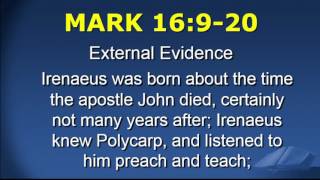 Mark 16:9-20 is missing in the Earliest Bible Manuscripts:
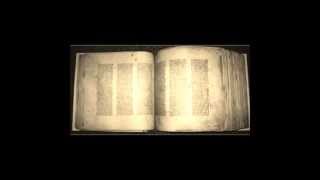
 In Mark 16:9-20,
 How the Bible

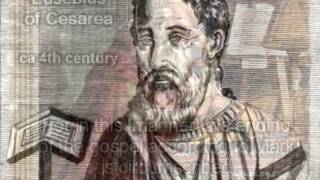 Jesus' Resurrection (Mark 9-20) is missing in earliest Bible Manuscripts,
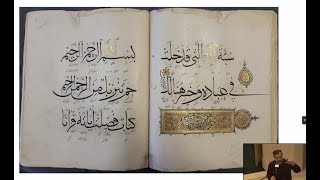 Early Quran history and Importance of
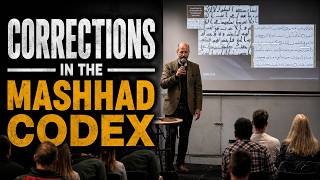 'Textual fluidity' in Mashhad
Articles on Codex (4)


Photo Album on Codex (3)
FAQ on Codex (3)
1.What is the Codex Sinaiticus?
The Codex Sinaiticus is one of the most important books in the world. Handwritten well over 1600 years ago, the manuscript contains the Christian Bible in Greek, including the oldest complete copy of the New Testament
It is a fact of Christian history that the earliest Gospels did not record a resurrection of Jesus Christ, and this fact is supported in the Codex Sinaiticus.
Called the Codex Sinaiticus, or Sinai Bible, the oldest known complete Bible available to mankind today, was named after Mt. Sinai, the location of St. Catherines Monastery where it was discovered in 1859 by Dr Constantine Von Tischendorf (1815-1874).
The discovery of the Sinai Bible provided biblical scholars with irrefutable evidence of wilful falsifications in all modern-day Gospels, and a comparison identified a staggering 14,800 later editorial alterations in modern Bibles.
2.What is the oldest manuscript of the Bible New Testament?
It is of enormous importance in establishing the biblical text. There are three earliest manuscripts of the Bible New Testament:
1. Codex Alexandrinus is one of the earliest and most important manuscripts of the entire Bible in Greek
2. Codex Sinaiticus is one of the most important books in the world and is kept in the British Library. Handwritten well over 1600 years ago, the manuscript contains the Christian Bible in Greek, including the oldest complete copy of the New Testament.
3. Codex Vaticanus in Rome
3.In John 9:38, Jesus is worshipped like a God?
While the verse describes a healed blind man worshipping Jesus, the webpage highlights that this verse is absent from the Codex Sinaiticus, the oldest 4th-century New Testament manuscript . It appears only as a later marginal addition, suggesting a deliberate insertion by a scribe to support the doctrine of Jesus' divinity .
According to verse 38, a blind man is healed by Jesus, and after seeing Jesus he worships him.
In the Codex Sinaticus, the oldest manuscript of John, dated to 330-years after Jesus, verse 38 is not recorded. The entire verse 38 appears as an additional footnote on the side of the Codex Sinaticus.
Verse 38 was inserted into the bible to prove that Jesus was worshipped and that he acknowledged and allowed the people to worship him.
This proves that the early Jewish-Christians did not interpret Johns gospel in the way we do today. At some point a scribe felt so strongly about the divinity of Jesus that he was compelled to include a footnote into the main text as an actual verse.