RASTAFARI RASTA
Followers of the Rastafari believe in Jah, their God who was at one time Emperor of Ethiopia. A Black separatist by the name of Marcus Garvey helped spread the word and teachings of the Rastafari. The religion developed from those trying to reclaim the culture that was stolen from them, as many of their ancestors came to Jamaica as slaves. The movement is known throughout the world, influenced by Bob Marley and others of reggae music fame.
FAQ on Rastafari, Rasta (8)
1.What is Rastafari and how did it start?
Rastafari is a young Abrahamic religious and social movement that developed in Jamaica during the 1930s. It emerged among impoverished Afro-Jamaican communities as a spiritual response to British colonial oppression and the legacy of slavery. The movement was heavily influenced by the Pan-Africanist teachings of Marcus Garvey, who urged Black people to look to Africa for their redemption and king.
2.Who is Haile Selassie I to Rastafari practitioners?
To Rastafari adherents (Rastas), Emperor Haile Selassie I of Ethiopia is revered as the living God incarnate on Earth, often referred to as Jah. When he was crowned Emperor of Ethiopia in 1930, early Rastafari pioneers saw it as the fulfillment of biblical prophecies concerning a king from the Davidic line. He is viewed as the Messiah who will lead the African diaspora out of oppression and back to their homeland.
3.Is Rastafari a Christian religion?
Rastafari is heavily rooted in Christianity and uses the King James Version of the Bible, but it is a distinct religion and not a Christian denomination. Rastas believe that traditional Western Christianity has been corrupted by white colonial powers (referred to as 'Babylon') to suppress Black people. They interpret the Bible through an Afrocentric lens, identifying Black people as the true chosen people of God.
4.What is the role of Cannabis (Ganja) in Rastafari?
For Rastas, cannabis-referred to as ganja, the holy herb, or wisdom weed is a sacred sacrament used for spiritual purposes, not recreational highs. They trace its holy status to biblical verses like Psalm 104:14 ('He causeth the grass to grow for the cattle, and herb for the service of man'). It is smoked or consumed during communal gatherings called 'reasonings' to quiet the mind, enhance meditation, and bring a person closer to Jah.
5.What do the terms "Babylon" and "Zion" mean?
In Rastafari theology, these terms represent two opposing spiritual and physical realities:
* Babylon: The corrupt, materialistic, and oppressive global establishment. It includes colonial history, oppressive governments, white supremacy, and exploitative economic systems.
* Zion: The promised land, paradise, and ultimate spiritual home. Physically, Zion is identified as Ethiopia, or Africa as a whole, representing freedom from Babylon and a return to ancestral roots.
6.What is the significance of the Rastafari colors?
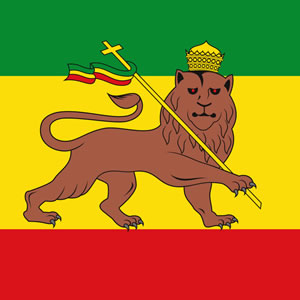
The Rastafari flag features three primary colors each carrying vital symbolic weight:
* Red: Symbolizes the blood of martyrs who died fighting for liberation throughout African history.
* Gold/Yellow: Represents the immense mineral wealth and sunshine of Africa.
* Green: Symbolizes the lush vegetation, natural beauty, and fertile land of the African continent.
(Note: Black is also frequently used to represent the Black people who comprise the movement.)
7.How did Reggae music influence the Rastafari movement?
Reggae music served as the global vehicle for the Rastafari message. In the 1970s, pioneering Rasta musicians like Bob Marley, Peter Tosh, and Bunny Wailer infused their music with Rasta theology, drumming patterns (Nyabinghi), and anti-Babylon lyrics. This transformed Rastafari from a localized Jamaican movement into an internationally recognized global spiritual culture.
8.What do Rastas believe about the afterlife?
Unlike traditional Western religions, Rastafari does not focus on a spiritual heaven or hell after death. Rastas believe in the concept of 'Everliving' - the immortality of the physical and spiritual self through continuous generations. True life is meant to be achieved and perfected here on Earth, specifically through repatriation to Zion, rather than waiting for a reward in a distant spirit world.
 Ali was the next Khalifah - Mansur Ahmad vs Rasta Raspect
 The Trinity becomes even more confusing - Mohammed Hijab vs Rasta Akida 1/2
 The Trinity becomes even more confusing - Mohammed Hijab vs Rasta Akida 2/2