JUDAISM JEWISH JEWS
Judaism is a monotheistic religion, with the Torah as its foundational text (part of the larger text known as the Tanakh or Hebrew Bible), and supplemental oral tradition represented by later texts such as the Midrash and the Talmud. Judaism is considered by religious Jews to be the expression of the covenantal relationship that God established with the Children of Israel.
Judaism includes a wide corpus of texts, practices, theological positions, and forms of organization. Within Judaism there are a variety of movements, most of which emerged from Rabbinic Judaism, which holds that God revealed his laws and commandments to Moses on Mount Sinai in the form of both the Written and Oral Torah.
The Jews are an ethnoreligious group and include those born Jewish and converts to Judaism. In 2012, the world Jewish population was estimated at about 14 million, or roughly 0.2% of the total world population. About 42% of all Jews reside in Israel and about 42% reside in the United States and Canada, with most of the remainder living in Europe.
Youtube Videos on Judaism, Jewish, Jews (357)
 Bridging World Religions: Exploring
 Jewish Rabbi Admits Islam Is The Oldest Religion
 What is the Jewish view on the Christian Trinity - Tovia Singer
 What did Apostle Paul say about keeping the Jewish Law?
 Why does the Quran call the Jews 'Apes'? - Tovia Singer
 Zoroastrianism influenced
 Jesus was Jewish. When did Christianity and
 A Jewish critique of the New Testament Bible - Michael Skobac
 Differences between
 How the Jewish Yeshua became the Christian Jesus - Michael Skobac
 Did Apostle Paul read the Jewish Hebrew Bible? - Tovia Singer
 How the Early Christian Church left its Jewish roots - Hoshana Rabbah
 Jewish Scripture translated from Hebrew to 'Toxic' English - Tovia Singer
 In the Quran, why does God say Jews are more hostile towards Muslims than Christians? - Tovia Singer
 Was Jesus the promised Jewish Messiah? - Craig Evans vs Tovia Singer
 In Christianity, Jesus died for our sins. So are Christians today thankful to Jews for killing Jesus? - Tovia Singer
 Do Jews believe Ezra is the Son of God? - Shabir Ally
 Life of a Jewish Rabbi in Indonesia, the largest Muslim country? - Tovia Singer
 Is Jesus prophesied in Jewish Scripture? - Tovia Singer vs Paul Humbler
 How did Apostle Paul corrupt Jewish scriptures? - Tovia Singer
 Jewish historian on Islam - Moshe Sharon - CBN News
 Jewish historian speech on Islam at Ben Gurion University - Moshe Sharon
 Jewish historian admits all prophets were Muslim Prophets - Moshe Sharon
 In Quran 2:62, does God say Jews and Christians will be saved? - Mansur Ahmad vs Rob 1/2
 A Jewish Rabbi presents Islam to Jews - Reuven Firestone
 In Quran 9:30, God says the Jews took Ezra as the Son of God? - Tovia Singer
 Why did the Jews have Jesus executed? - Dan Gallagher (BiblicalUnitarian)
 Why does
 In Genesis 1:26, Let us make man in our image - How do Jews explain this verse? - Tovia Singer
 Do Jews hate or like Jesus? - Tovia Singer
 Why did Bible Gospel writers corrupt the Jewish scripture? - Tovia Singer
 From
 From
 From
 From
 Why did the Jews invade Palestine? - Shamsi vs Jonathon
 In Quran 2:62, will Jews and Christians go to Heaven? - Shabir Ally
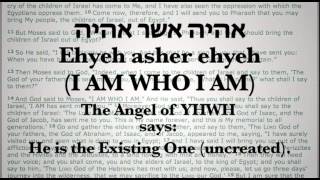 Christian Trinity in the Jewish Scriptures
 Will the Jews consider the Messiah to be God Almighty? - Hashim vs Richard London
 In 200 years, Christianity lost Jesus' Jewish teachings; adopting Greek and Roman Paganism - Yahweh Ministry
 New Testament: Apostle Paul as Jewish Theologian - Dale Martin 13/23
 Siege of Jerusalem and destruction of the Jewish Temple and Jesus' Gospel (70 AD)
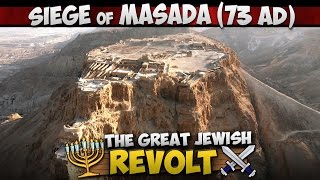 Last Stand of the Great Jewish Revolt - Siege of Jerusalem/Masada (73 AD) 3/3
 Christianity from
 Jesus the Jewish Messiah - Tovia Singer vs Jim Cantelon
 Roman 'Arch of Titus' celebrates destruction of Jewish Temple in 70 AD - Jonathan Cahn
 Seige of Jerusalem: Rome destroys the Jewish Temple (66-70 AD) - HistoryTV
 Are Jews and Christians the 'People of the Book'? - Shabir Ally
 Dead Sea Scrolls:
 Jesus against the Jews (Shaffer Lectures) - Bart Ehrman 3/3
 Siege of Jerusalem and Roman-Jewish Wars - Henry Abramson
 Jews in the Early Islamic Period (7-10th Century) - Henry Abramson
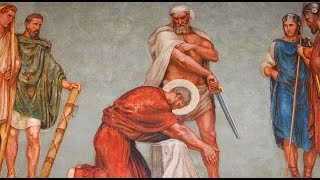 In Matthew 24 and Luke 21, Jesus prophecized destruction of Jewish Temple | Tovia Singer
 How can we live today with 4000-year old Laws? - Hashim vs Jewish Shaun
 In Philippians 3:8, Apostle Paul compares Jewish Law with excrement - Tovia Singer
 The Jewish God is Angry and the Christian God is Loving. Why? - Tovia Singer
 Who is Jesus to the Jews? Who is Hanuman the Monkey God to me? - Tovia Singer
 Jewish view of the Jesus' Resurrection Myth - Peleh Ben Avraham
 Did Jesus exist in the Jewish Talmud? - Tovia Singer
 Shalom. As the President of Pakistan, I would give Jewish people hospitals, security and their own pavement - Mohammed Hijab vs Jewish Rubio
 3 Jews and a Muslim agree God was no Man - Ali Dawah vs Godwin
 Historically, Jews paid less Jizya (Tax) and lived better under Islamic rulership - Mohammed Hijab vs Jewish Nosan
 In Matthew 15:24, Jesus claimed he was only sent to the Jews. But you claim Jesus came for the Gentiles (non-Jews) - Hamza Myatt vs Preacher Paul
 Why do we [Jews] pray like Muslims on Yom Kippur? - Rabbi Mintz
 In Quran 3:65, why do Jews and Christians dispute over Abraham? - Hashim vs Michael
 In Numbers 1:46, the Exodus had 2 Million Jews leave Egypt. Is the Bible historically reliable? - Ken Humphreys
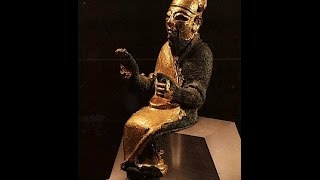 Pagan Origins of
 In Romans 11:26, Apostle Paul misquotes Isaiah 59:20 and distorts the Jewish doctrine on the Redeemer - Michael Skobac
 Jesus the Passover Lamb to Christians; God to Egyptians; and Sacrificial Meal for Jews - Michael Skobac
 Jews are Monotheists. One Creator (God) and His Creation (Man/Jesus) - Michael Lebovic
 In Deuteronomy 18:18, the prophet to come was Joshua (
 From Isaiah 60:3, Matthew copies the Christmas Story. Baby Jesus born to Joseph, a fatherly figure invented to reconcile warring Jewish tribes - John Spong
 Mary, Mother of Jesus was a significant, powerful Jewish figure in Mark - John Spong
 In Mark 7:15, Jesus upheld the Jewish dietary food laws, and forbid consuming swine (pig) - Beyond Today
 Jesus prayed the Jewish Prayer (Amida), like a Muslim
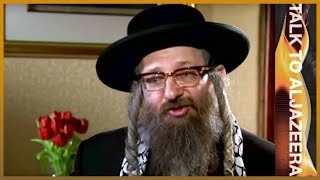 Zionism and
 Torah is the Jewish peoples homeland. No Zionism. No land. No territory. No state - Torah Jews - Yaakov Shapiro
 Jerusalem is a Holy city to the Jews, and a political Capital city to the Zionists, who assault
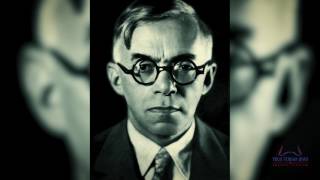 Ben-Gurion saw
 In
 Zionism does not represent Jewish people. Netanyahu is not our Leader - Yaakov Shapiro
 Zionists seek to remove
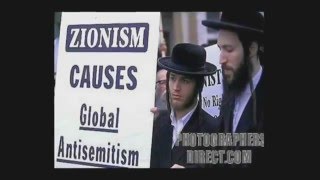 Jews oppose Zionism and Rothschilds. Zionists stole Palestinian land creating 'rivers of blood'
 Apostle Paul was not a religious Jew. He corrupted the Jewish Bible - Tovia Singer
 Do Jews reject Jesus because he was Crucified? - Tovia Singer
 In Noahide Laws, Jews, Muslims and Christians can get to Heaven - Aaron Youtube
 In Jewish Law, it is impossible for God to become a Man - Aaron Youtube
 In Jewish Law, a married Jewish women must wear Hijab (cover her hair) - Aaron Youtube
 In Jewish Law, a Jew can never commit idolatory, worship idol or statue, even if their life is threatened - Aaron Youtube
 Allah is HaShem of the Jewish Torah, not a Moon God - Aaron Youtube
 What can Jews learn from Muslims? - Aaron Youtube
 Conversations with Islam,
 What Jews think of Ishmael and Hagar - Aaron Youtube
 In 70 AD, Rome destroyed Jerusalem and Jewish Temple. Christianity was born and Jesus invented to fulfill ancient prophecy - Paul George
 Homosexuals, Lesbians and Transgenders in Jewish Torah Law - Peleh Ben Avraham
 Jewish Rabbis admit Islam is a Monotheist Religion
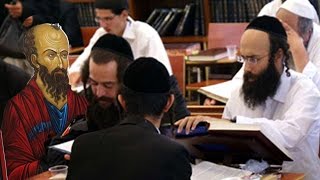 Apostle Paul was not a Pharisee, or student of Rabbi Gamaliel. He persecuted early Jewish-Christians - Tovia Singer
 Similarities between Islam and
 As Jews, we do not understand Homosexuality. We cannot judge - Rav Dror
 Jews can live in Palestine, under Palestinian Rule as they did post-1948 - Shamsi vs Joseph LondonSC
 In 73 AD, Masada was conquered by Rome; 967 Jews killed themselves - HolyLandSite
 Archaeologists discover Yahweh, the Jewish God had a Goddess wife, Asherah | ReligionForBreakfast
 According to the New Testament, Jesus and Apostle Paul died as Jews - Bernard Starr
 El, Baal and Asherah: Israelite Gods of Ancient Jews - Christine Hayes
 Ultra Orthodox: We are not Israelis. We have no connection with Israel. We are Jews - Vice News
 Has Zionism Hijacked
 Early Christianity developed as a Jewish version of various pagan, mystery faiths - David Fitzgerald
 Christianity was created by joining
 Jesus/Joshua was a very common name. 4% of Jewish men were named Jesus - Richard Carrier
 Jews believed in Archangel Jesus as God's celestial high priest. Christians did too? - Richard Carrier
 In Hebrews 9:15, Christians replaced the Jewish Temple sacrificial Lamb with ultimate sacrifice, Jesus Christ - Richard Carrier
 Christian Gospels are Symbolic Fiction; mythical narratives mined from Jewish texts and Pagan myths. Gospels are not history - Richard Carrier
 Jesus was a Jewish prophet who preached the Kingdom of God - Bart Ehrman
 Jesus and his disciples were Jewish. Yet, Jews rejected him as Messiah - Bart Ehrman
 Paul was Jewish, but turned against
 I believe in Love your Father, Love your Neighbour, Love Everybody - Mansur Ahmad vs Jewish Samir
 Paul was 'Apostle to Gentiles' and claimed superiority over Jewish-Christians in Jerusalem Church - Tovia Singer
 In 70 AD, Mark, the earliest Gospel depicts Jesus as suffering & dying Jewish Messiah - Bart Ehrman
 Ebionites believed Jesus was Jewish Messiah sent by Jewish God to Jews fulfilling Jewish Scripture - Bart Ehrman
 Jesus orders greater Jewish Law observance than the Pharisees, religious Jews - Bart Ehrman
 Jesus was a strict Jewish teacher who fully observed Old Testament Jewish Law - Bart Ehrman
 Jesus, a Jew who observed
 For Apostle Paul, Jesus' death & resurrection was key to salvation. Not the Jewish Law - Bart Ehrman
 As Jews rejected Jesus Christ, Christians felt anger and hate towards
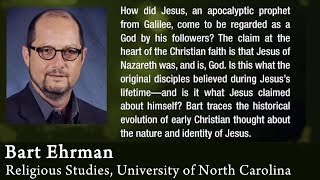 In the ancient world, Jews and pagans believed in many divine beings and Gods - Bart Ehrman
 Pontius Pilate crucified Jesus for Treason, as 'rival' King of the Jews - Bart Ehrman
 Ebionites, early Christians were Jewish, but believed Jesus was the Jewish Messiah - Bart Ehrman
 Ebionites, early Christians required followers to convert to
 For Jews, the Messiah would be great, powerful and defeat God's enemies; Jesus failed! - Bart Ehrman
 Paul preached to majority, gentiles, pagans and idolators, who had no interest in
 Jesus, a Jewish prophet who worshiped the Jewish God. Paul created and spread Christianity - Bart Ehrman
 Apostle Paul preached Jesus' death & resurrection guaranteed Salvation, not observing Jewish Law - Bart Ehrman
 In Galatians, Apostle Paul orders new Christians abandon circumcision/Jewish Law; return to faith in Jesus - Bart Ehrman
 Matthew depicts Jesus as a Jewish Messiah, and emphasizes Jewish Law - Bart Ehrman
 Apostle Paul discovered Jesus in the Jewish Scriptures - NT Wright
 Apostle Paul takes the Jewish Prayer (Shema Yisrael) and finds Jesus inside it - NT Wright
 Jews disobeyed God. Jews lost the Temple Mount (Al-Aqsa) to the Muslims - Ruben Israel vs Jew
 In 1 Corinthians 10:16, Jesus' body/blood are consumed at 'Eucharist'. Human sacrifice is not from Jewish scripture - Tovia Singer
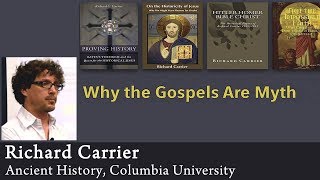 In Mark 11:13, Jesus cursed Fig tree is allegory for God abandoning the Jewish Temple cult - Richard Carrier
 Apostle Paul taught new Christians, ex-pagans, did not have to convert to
 Was Jesus Jewish? Was Abraham Jewish? - Hashim & Hamza Myatt vs Builder Bob
 Apostle Paul did not see Jesus as a real, historical Jewish Man - Charles Hedrick
 Mark, Matthew & Luke write of Jesus a mythical Jewish Man who did 'mighty deeds' - Charles Hedrick
 Muslim Spain protected Jews from extinction for 800 years - Hamza Myatt vs Jewish William
 In 1492 AD, Muslims protected Jews from Catholic Christians in Spain - Shmuley Boteach
 In Genesis 6:6, the Omniscient, All-Knowing Jewish God regretted He created humans - Hashim vs Jew
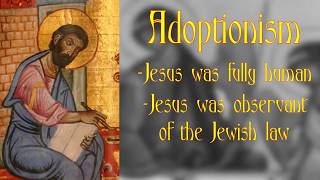 In 75 AD, Adoptionism taught Jesus a Jewish Man was adopted by Father | Lorence Yufa | Milwaukee Atheists
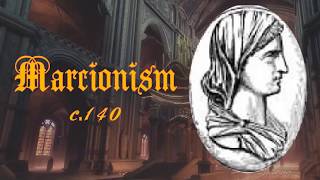 In 140 AD, Marcion rejected the OT Bible, and 'inferior, evil' OT Jewish God - Lorence Yufa | Milwaukee Atheists
 NT Gospels ordered so baby Jesus the Jewish Prophet, grows fully into God - Ken Humphreys
 In Gospels, Jesus is crucified by 'innocent' Pontius Pilate who reluctantly bows to Jewish leaders. In reality, Pilate was a ruthless, sadistic ruler - Mark Goodacre
 Jews disagreed on the Hebrew Bible canon; different canons listed 5,24,39,46 & 94 books - Brant Pitre
 Arius (d. 336 AD) used Reason to define Jesus & Continuity, for Jewish tradition - Richard Rubenstein
 Christian Origins of Antisemitism & Jewish Discrimination - Restoration Fellowship
 In Genesis 18, a Jewish version of the 'Christian Trinity' theologically exists - Benjamin Sommer
 Why I Left Orthodox
 Was Jesus a Jew who followed Jewish Law? Why don't Christians follow him? - Adnan Rashid vs Christians
 I condemn the violence in the Jewish Bible. Do you? - Mohammed Hijab vs Avi Yemeni
 Jews bring people to God. I am happy Sinead O Connor converted to Islam and follows Noahide Laws - Aaron Youtube
 In Jewish and Hebrew Scriptures, God cannot become a Man and walk amongst us - Peleh Ben Avraham
 3 major sins Jews must give up their lives for - Aaron Youtube
 Jews are split between Zionism and
 Alice Bailey, New World Order and Jewish plans for Third Temple
 Jesus was a follower of Moses. He followed the Jewish Law in the Old Testament? - Shamsi vs Luka
 New Testament writers plagarized Jesus' Prophecies from Jewish Torah - Tovia Singer
 For Jews, God cannot take on Human form (i.e. Christian Trinity), nor will the Messiah die and return - Yitzchak Breitowitz
 In Isaiah 53, the Jewish understanding of 'Suffering Servant' and 'Virgin Birth' differs from Christianity - Yitzchak Breitowitz
 Is Jesus the Promised Jewish Messiah? - Tovia Singer vs Carlton McDonald
 Jesus Christ: A pagan Sun God turned into a Jewish Man - Caesar Messiah
 Christians were ordered to 'Render unto Caesar', over Jewish Law - Caesar Messiah
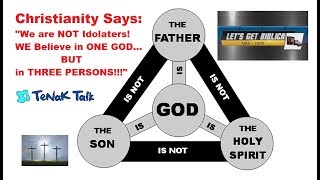 Trinity is a form of Idolatory, in conflict with Jewish Bible - Tovia Singer
 Rabbi Moskoff, Israel's Jewish Third Temple can be built next to Al-Aqsa Mosque - Signs Last Days
 Greek language, philosophy & culture conflicts with
 In Luke 24:19, Jesus of Nazareth is called a man who was a 'Jewish Prophet' - Muhammad Lamin
 The Third Temple will be Jewish and Unholy for Christians - Anthony Buzzard
 Trinity is 'veiled' Tri-theism (Three Gods). Combining of Jewish Monotheism with Pagan Polytheism
 Philo of Alexandria, a Jewish Greek philosopher wrote of a Trinitarian God
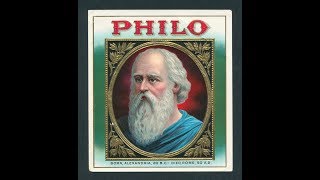 Philo of Alexandria mixed Greek philosophy with Jewish-Christianity to invent Catholic Christianity & Trinity - approvedofGod
 Introduction to Torah and Jewish Law
 How do Jews pray to God (Hashem)? - Aaron Youtube
 King James bible (KJV) translators 'twisted' the Jewish Hebrew verse to make it more 'Christian-like' - Tovia Singer
 In Deuteronomy 13:2, Jews have the criteria to reject Jesus and Christianity, as a false prophet - Julius Ciss
 In Acts 15:13-35, Apostle Paul and James argue over Jewish Law. Jesus' blood/salvation/sacrifice was absent - Adnan Rashid vs Paperboy
 Christian Church claim Jesus' Crucifixion is in the Jewish Talmud/Scriptures is False - Tovia Singer
 Jesus was a Jew. Jesus is Kosher for Jews, Gentiles and the entire world - Michael Brown
 If Moses did not write the Torah,
 Maimonides (1204 AD), a Jewish scholar is proof Muslim civilization protected Jews for 1000 years - Adnan Rashid vs Joseph LondonSC 2/2
 Maimonides (1204 AD), a Jewish scholar is proof Muslim civilization protected Jews for 1000 years - Adnan Rashid vs Joseph LondonSC 1/2
 Were Jewish Bible authors Polytheists for writing of many Gods? - Michael Heiser
 Was Mark's Gospel copied from Josephus 'War of the Jews' after 75 AD? - Fishers Evidence
 Moses was not a Jew who spoke modern Hebrew. Show me '
 How does
 In Daniel 7:13 and Matthew 16:27, 'Son of Man' is the Jewish nation, or Jewish Messiah, but not Jesus - Eli Cohen
 Jewish Tanakh has Muhammad as a Prophet of Arabia, so follow it - Adnan Rashid vs Rabbi
 Self-Appointed Apostle, Paul disagreed with Jesus 12 'Jewish' disciples | TorahCentric
 In Romans 4:5, the 'Faith versus Works' concept goes against Jewish Law and teachings | TorahCentric
 In Galatians 1:12 and 2 Corinthians 3:10, Apostle Paul claims revelation from Jesus & opposed the Jewish Law | TorahCentric
 In Leviticus 20:26, God forbids consuming Pig. As He has 'set the Jewish nation apart to be My own' | TorahCentric
 Based on Exodus 34:15, Jews should avoid eating Halal slaughter meat | TorahCentric
 Jesus did not abolish Jewish Law | TorahCentric
 Apostle Paul, a Pharisee, had a Love-Hate relationship with Jewish Torah | TorahCentric
 In 1 Corinthians 9:20, Paul was self-appointed Apostle to Gentiles; not Rabbi Saul for Jews | TorahCentric
 In 1 Corinthians 7:19, Apostle Paul opposes Circumcision and Jewish Torah | TorahCentric
 The Jewish God is Unitarian, not Trinitarian - Jews For
 Islam raises all Prophets to Jesus' status AND lowers the Christian Jesus-God to Jewish-Prophet status - John Fontain
 Israel supports the LGBTQ community and Jewish identity
 Jews MUST recognize Jesus as Messiah and Lord to be Saved - Michael Brown
 1st century religious Jews spoke Aramaic, not the 'foreign' Hellenized language of Greek
 Josephus (37-100 AD): Aramaic was language of Jews in Roman Judea
 Elijah the Gentile Prophet (not Jewish)
 In 200 AD, Noahide Laws came from the Jewish Talmud; not the Torah - Michael Heiser
 Jesus instructed Jews to worship Yahweh, but instructed Gentiles to worship him? - Hashim vs Paperboy
 Jewish Messiah will die for our Sins? Prove it from the Bible - Paul William vs Rob
 Did Hitler on the Road to Berlin, have a Vision that named him 'Apostle to the Jews'? - Khalid Yasin
 John's Gospel parallels Gnostic-Pagan-Hermetic ideas (dualism, oneness/son of God, trinity, Father etc.) to promote his Jewish-Christianity - Kegan Chandler
 Christianity brought the Jewish God into the World - Robert Barron
 Quran teaches hatred of Jews & Christians? Context.. context.. context - Shamsi vs Lady
 Council of Jerusalem (50 AD) charged Apostle Paul of taking Jews away from established Dietary and Circumcision laws - Abbas London vs Man
 Sadducees, Pharisees, Zealots and Essenes were 4 different types of Jews - Henry Abramson
 On Jewish Law, Jesus was Liberal, but Apostle Paul was a Heretic who abandoned the Law - Nazam44 vs Christian
 In Hebrews 9:22, Apostle Paul requires shedding of Blood. Jews reject this teaching - Julius Ciss
 Josephus' 'Antiquities of Jews' from 94 AD (Book 18, Ch. 3,3) is Unreliable Evidence for Jesus' existence - TruthSurge
 Suetonius (121 AD) wrote of Jewish riots led by Chrestus - TruthSurge
 In Torah, God regret His decision to choose Saul as King. Is this a positive Attribute? - Shamsi vs Jews
 Apostle Paul with a 'Greek Hellenistic Mindset' is not a reliable source for Jewish-Christianity - Robert Eisenman
 Jesus' Jewish man identity is central to Orthodox Christianity - Amy-Jill Levine
 Both Apostle Paul and Philo of Alexandria wrote of Jesus the supreme Archangel in Jewish Angelology - Richard Carrier
 In Acts 21:21, Apostle Paul accused of Apostasy, follows Jewish Law. But encourages others to abandon the same Law - Hamza Saudi vs Christian
 Respect the Jewish Right to not worship a Man as God - Tovia Singer vs Jerusalem Church
 42% of American Jews reject
 Suetonius (69-122 AD): Chrestus (Jesus) encouraged Jews to cause disturbance for Roman Authority
 Was Apostle Paul really Jewish? - Tovia Singer
 Philo of Alexandria, a Jewish-Greek philosopher wrote of Trinity using mystical, esotericism - approvedofGod
 Evangelical Christians 'unfairly' target Israeli Jews using GOD TV media - Tovia Singer
 In Romans 1:16, Apostle Paul urges GOD TV to evangelize Israel's Jews - Tovia Singer
 Original disciples of Jesus were close to Orthodox Jews of today - Tovia Singer
 In Mark 12:29, Jesus was an observant Jewish Man, not a Trinitarian - Anthony Buzzard
 Apostle Paul proclaimed Jewish Law insignificant (dietary, circumcision, divinity etc.) insignificant - James Valliant (MythVision)
 Should Jews be judgemental of Homosexuality? - Rav Dror
 After
 Jews should follow expert medical advice on COVID Vaccine - Chaim Mintz
 Muhammad, a prophet for Muslims, but Torah cannot be challanged - Shamsi vs Orthodox Jews
 Is Christianity against Old Testament teachings? - Jews For
 Can Jews & Christians go to Heaven? - Usuli Institute
 Jesus is not the Jewish Messiah - Tovia Singer
 Orthodox Jews start new life in Germany - DW Documentary
 Why Jews refer to Jesus as 'JC'? - Aaron Youtube
 Astrology in Early
 Why Is Swine Pork Forbidden in
 Fasting in Buddhism, Christianity, Islam,
 POLL: 47% Israeli Jews support IDF Army killing all Palestinian Muslims in Gaza | Muslim Skeptic
 Israel's Racist Genocide will lead to their Own Destruction | Abbas London vs Jewish Zionist
 Why Christian Zionists support Jewish Zionists in their killing of Palestinians? | Blogging Tawheed
 Jews, God's Chosen People are better than Christians? | Jew vs Christian
 Origins of Islam and the Hidden connections to
 Do Muslims hate Jews based on Scriptural Teachings? | Tovia Singer
 Did Muhammad borrow from Christianity &
 Historical Origins and Evolution of Rabbinic
 Believer (Mumin) vs Submitter (Muslim) - Early Islam was Inclusive, Multi-Faith Community of Jews, Christians, and Believers | Javad Hashmi
 Does the Israeli Zionist project protect the Jews? | Abdullah Andalusi | Islam21c
 In 70 AD, 1,000,000 'Jewish' Black Men fled from Jerusalem to Africa | ISUPK
 Israel belongs to Jews. 8M Palestinians are nothing | Cenk Uygur | Al-Arabiya
 Will A.I ChatGPT overtake Islam,
 Jesus, Abraham, Isaac & Jacob were Black Men and Real Jews | ISUPK
 Epstein Files reveal Jewish Superiority (Zionism) over Non-Jews, Gentiles ('Goyim') | Sulaiman Ahmed
 A.I will control the text in Islamic, Christian and Jewish Scriptures | Yuval Harari | NTEB
 72% of Jewish Israelis do not trust Palestinians. What do we do? | TRT World
 Why Early Christians turned Against Jews and Israel? | Tovia Singer
 Relationship between Islam, Christianity and
 Is Jesus the Jewish Messiah? | Tovia Singer vs Michael Williams
 What did Rabbi Throat do for Jews? | ISUPK
 Apostle Paul rejected Jesus Jewish Teachings | Hamza Saudi vs Christian
 'God gave us Israel. All of Jerusalem is Jewish' | The Guardian AGL 1/3
 Walking Tour of Stamford Hill, London's Ultra-Orthodox Jewish Community | Edventures
 Why do Jews reject Jesus as Messiah | Unraveling Scriptures
 Islam is the 'Broom of Israel', Jewish Rabbi claims
 Israel recruits Christian Church Pastors to promote Jewish-positive message | Young Turks
 Jewish Talmud's Controversial Texts | Matt Powell
 Was Jesus the Antichrist to the Jews? | Tovia Singer
 Is
 USA, New Jersey's Jewish Occupation | Tyler Oliveira
 Zionists are 'very Anti-Jewish' | Katie Halper | Yaakov Shapiro
 The Jewish History | Bibis Perspective
 Who is closer to
 Jewish Third Temple concept was invented after 70 AD | Ali Ataie
 Israel quotes 'Amalek' Bible verse after killing of 165 Iranian School Girls on Jewish Purim Festival | Young Turks
 Religious, Anti-Zionist Jews who oppose Israel fail to understand Jewish Scripture | Tovia Singer
 Muhammad's letters to Caesar and Kings - Khaybar Conquest - Jews Tried to Poison Muhammad | Towards Eternity
 The Jewish Messiah (FALSE PROPHET) is Coming in 2026 | Sling-Stone
 Real Jesus - A Jew Preaching
 Lebanon Under Attack - 'Jews must RISE UP and Condemn Zionism' | Free Palestine TV
 Christians face 'spitting and physical attacks' from Jews in Jerusalem, Israel | Oborne Unscripted
 Zionism is not
 How Israeli School textbooks turn Jewish children to hate Palestinians | Nurit Peled-Elhanan
 95% of Israeli Jews say 'not enough' force used on Gaza's Palestinians | Norman Finkelstein
 Why do Jews reject Jesus? | Michael Skobac
 Jewish Talmud, Torah commentary texts are Alarming and Extreme | Matt Powell
 Zionism,
 Who Respects Jesus more? Muslims or Jews? | Daniel Haqiqatjou vs David Wood
 Israel is the Holy Land for Zionists, not Jews | Mario Nawfal | Elhanan Beck
 Jewish Texts & Influences on Islamic History | HistoryUN
 The Gods of Jews and Early Christians | Paula Fredriksen | MythVision
 The Core Themes of
 Jewish Sects in the Time of Jesus | Peter Bolland
 The Late Invention of
 Why does a Jewish Rabbi own Pornhub? | Pornography | Adult Sites
 The Ebionites - Orthodox Jewish Christians | HistoryUN
 USA, UK, Russia, China, Germany, France, Poland will 'go down on their knees', Jewish Rabbi claims
 Christian Church storytelling of Jewish Antisemitism | Tovia Singer
 Turn Antisemitism into expression of Love. Bring Jews back to
 The Invention of
 DEBATE: Christianity emerged after the 70 AD Jewish-Roman War | Paul George
 Early
 Neturei Karta, Ultra-Orthodox Jews protest AGAINST Zionism and Israel | TRT World
 Zionism is
 Is Christianity to blame for Jewish Antisemitism? | Tovia Singer
 In Matthew 23:34, was Jesus antisemitic for stating Pharisees (Jews) persecute and kill God's messengers? | Tovia Singer
 Israeli $730M PR budget to counter 'rockets of disinformation and lies' and protect Jewish people | Owen Report
 Inside the Most Jewish Place in America 2026 | TommyG
 Jesus mocked 'GOD-like' Jewish Rabbis and punished by 'burning in boiling excrement' | Vrillium
 Zionism and
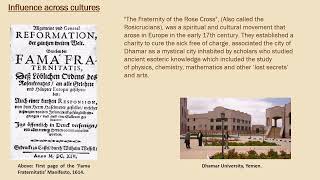 Jews in Pre-Islam Arabia (380-525 AD) worshipped Rahman (Merciful) and ilaahan (God)
 Early Muslims, Jews and Christians were called BELIEVERS in The Quran | Fred Donner
 Quran 'BELIEVERS' is Inclusive of ALL Monotheists: Muslims, Christians and Jews | Fred Donner | Gabriel Reynolds
 NWO Satanism to replace
 Evolution of Heaven & Hell in
 Who is Jesus The Messiah in Islam? How this differs from Jewish and Christian teachings? | Ali Ataie
 Early Christians were 'wholly Jewish', James Dunn writes | Blogging Theology
 In Christianity, Adam & Eve Sinned, so Jesus could Save -
 GOD CHOSE US: '1 Jewish Life equal to 10m (Palestinian Lives)', Israeli lawyer claims | Wally Rashid
 Polytheism in Early
 Astrotheology Connection to Religions,
 Are Christian Evangelicals OR Jews the 'Chosen People'? Schofield Bible & Dual Covenant Decide | Ali Ataie
 Zionism: The 150-Year Old, Anti-Jewish Movement that 'Targets Children' | TRT World
FAQ on Judaism, Jewish, Jews (135)
1.Name the scriptures available today?
Scripture revealed before the coming of Muhammad cannot be found today in their full and original form. However, these scriptures do contain some fragments of the original teachings, although they are mixed up with later additions and interpretations. Some of these scriptures are: the Torah of the Jews, the Gospels of the Christians, the Vedas of the Hindus, and the Zend Avesta of the Zoroastrians.
On the other hand, the latest word of God that came to Muhammad is still intact and completely preserved in the Muslim scripture, which is the Quran.
2.Is the Star and Crescent a symbol of Islam?
The crescent is not a symbol of Islam, but of the Ottoman Empire. The Ottomans are those tribes that moved to Turkey from east and middle Asia. They converted to Islam and built a huge Muslim Empire that ruled the whole Muslim world for centuries. When they took Islam as a religion they started using the lunar calendar, the calendar that was used by Muslims, Jews and early Christians. Even today, the flag of Turkey has a crescent on it. There was no crescent on any mosque built before the Ottomans era.
3.Can Muslims eat swine and pork?
No, the consumption of pork, bacon, and ham is strictly prohibited by divine law, matching historical restrictions found in the Old Testament followed by Jews and certain Christian groups.
4.Do Muslims believe in a God?
Yes, Muslims believe in Allah as the all-powerful, eternal Creator who is separate from creation, has no partners, no gender, and is the absolute sole entity worthy of human worship.
He is transcendent and not a part of his creation. He is all-powerful, absolutely Just and He is First, Last, and Everlasting; He was when nothing was, and will be when nothing else remains. Also, There is no other entity in the entire universe worthy of worship besides Him.
This belief in God is how one becomes a Muslim and is similar to the first commandment of Christianity and Judaism: You shall have no other gods before Me.
Allah the Eternal,Absolute;
He does not beget,not nor is He begotten,
And there is none like Him. [Quran 1:1-4]
5.How did the Early Jewish-Christians practise their religion?
The earliest Jewish-Christians strictly followed traditional Hebrew practices, including daily prayers, circumcision, rituals for purity, fasting, dietary laws, and temple, according to the source material.
6.Did Jesus eat pork or swine meat?
No, because Jesus lived according to the Torah and Jewish law, he did not eat pork or other unclean animals, as noted in the source material.
7.What did early followers of Jesus believe?
The original followers of Jesus, his friends and relatives who knew Jesus most intimately remained faithful to the worship of the one, true God.
They insisted that all Christians observe Jewish Law which God had revealed through many prophets.
They did not regard Jesus as a divine being, but as a chosen Messenger of God.
8.Why did Christians turn away from the original message of Jesus?
By the time the New Testament Gospels (Mark, Matthew, Luke, John) were compiled, there was a growing movement to frame traditional Jewish practices as obsolete, driven by a desire to break free from strict Mosaic laws like circumcision, ritual purity, and dietary codes, which required portraying Judaism as an inferior path for the new faith to flourish.
9.Did Jesus claim to be 'King of the Jews'?
A political placard accusing Jesus of making this claim was nailed to his cross, and this historical artifact can be found today at the Church of Santa Croce in Rome.
10.How was Jesus Jewish?
Jesus fully observed the laws of the Torah, maintained kosher dietary regulations, and never asked his followers to abandon Judaism, as they continued to meet at the Temple and practice circumcision rather than establishing a separate religion or attending a church.
11.What did early Jewish-Christians think of Apostle Paul?
Between 55 and 66 CE, early Jewish-Christian leaders in Jerusalem rejected Paul's teachings and challenged his authority, leading to a significant decline in his popularity.
12.When was Christianity born?
After 70 CE, Christianity became a new movement. Western Christian
writings after 70 CE are a product of that transformation. Christianity became a Mithras-type saviour cult whose hero was not a myth but a real man.
Anyone who questioned Jesus' divinity were viewed as ignorant and inferior, including early Jewish-Christians, Jews, Jesus' closest friends and even family.
13.Were the early Christians Jews?
Yes, Jesus and early followers were entirely Jewish, strictly observing traditional laws and customs.
14.Did Saul kill the early Jewish-Christians?
Before his conversion, Saul actively sought to imprison and execute early Jewish-Christians. Saul believed that he was serving God by finding Christians, throwing them into prison, and even executing them.
2 And devout men carried Stephen to his burial, and made great lamentation over him.
3 As for Saul, he made havock of the church, entering into every house, and haling men and women committed them to prison.
[Acts 8:1-3]
15.How was Apostle Paul's message different to Jesus?
Paul introduced a new theology focusing on Jesus as a divine sacrifice, arguing that Jewish law was unnecessary for salvation and largely disregarding Jesus's earthly teachings.
16.How did the Jews view Apostle Paul?
Faithful Jews viewed Paul's salvation theory as blatant blasphemy because his theological teachings explicitly ridiculed all previous revelations from God, including the sacred Torah, while teaching a doctrine that went against the absolute oneness of God.
17.According to Apostle Paul, why did God give Jews the Torah?
Paul viewed the Torah as a temporary guide, claiming it was given to the Jews until they could be saved through faith in Jesus Christ.
18.How did Apostle Paul differ with the Jewish Rabbis?
The Jewish Rabbis preached a person was saved so long as their intention was to remain within the covenant, and one truly repented and seek forgiveness for their sins.
Paul preached that every person was 'damned' until they was offered salvation. Mans problem was that he was 'in the flesh' in bondage to the Law, sold under Sin, enslaved by the fundamental spirits of the universe (ie. dead).
Paul preached the only cure was liberation from slavery and death by union with Christ, who had conquered death and sin.
19.How did the early Jewish-Christians view Jesus' resurrection?
The earliest Jewish-Christians did not believe that the resurrection meant Jesus was God, but rather that he was a righteous man approved by God through miracles, wonders, and signs. Based on texts like Acts 2:22-24, they maintained the theological view that Jesus had been raised by God, not that he was the Creator himself.
20.Who seperated Christianity from Judaism?
It was Apostle Paul's dramatic conversion and subsequent teachings that directly resulted in the permanent theological separation of Christianity from Judaism. Within mere months of Jesus' departure, the original human-centric and law-abiding message was fundamentally altered into an independent religious system.
21.What did Apostle Paul think of his fellow Gospel writers?
Paul was deeply unyielding toward alternative views of the faith, explicitly writing in Galatians 1:9 that if any person preached a gospel different from the one his followers had received, that individual should be completely accursed. This indicates he aggressively dismissed the legalistic, Jewish-Christian perspectives held by original disciples like James and Peter.
22.How was Apostle Paul viewed in his time?
Paul's controversial doctrine of justification through faith alone made him an implacable enemy of the Jewish population who vehemently refused to accept his arguments. Concurrently, many early Christians viewed him as an outsider and a dangerous theological threat, as his teachings ultimately caused the absolute severance of Christianity from its original Judaism roots.
23.How did Matthew (Gospel) support Apostle Pauline Christian doctrine?
The Gospel of Matthew, aimed at law-abiding Jewish-Christians, did not support Pauline doctrine and actually stood in direct opposition to it.
24.Why was Apostle Paul superior to other Apostles?
Paul insisted that his gospel possessed a superior divine authority because he claimed it was delivered directly by the risen Lord Jesus, rather than the earthly, historical Jesus whom the twelve disciples had trained under in-person; this supposed heavenly origin entitled him to act entirely independently of the original Jewish-Christian beliefs and modify their doctrine.
25.Where is Pauline Christianity today?
Pauline Christianity constitutes the majority of modern Christianity, though some scholars question if the early, law-observant Jewish-Christian church was more accurate than Paul's later, Trinitarian-focused theology.
26.Why Jews do not accept Jesus as the Messiah?
The Bible claims the Messiah will accomplish certain signs:
1. Build the Third Temple (Ezekiel 37:26-28).
2. Gather all Jews back to the Land of Israel (Isaiah 43:5-6).
3. Usher in an era of world peace, and end all hatred, oppression, suffering and disease. As it says: 'Nation shall not lift up sword against nation, neither shall man learn war anymore.' (Isaiah 2:4)
4. Spread universal knowledge of the God of Israel, which will unite humanity as one. As it says: 'God will be King over all the world—on that day, God will be One and His Name will be One' (Zechariah 14:9).
The historical fact is that Jesus fulfilled none of these messianic prophecies.
Christians counter that Jesus will fulfill these in the Second Coming, but Jewish sources show that the Messiah will fulfill the prophecies outright, and no concept of a second coming exists.
27.Who did Jesus preach to?
Jesus primarily focused his earthly ministry on the Jewish population of Judea and Galilee. After his crucifixion, his apostles systematically expanded the message globally to include non-Jewish Gentiles, fulfilling his final instructions.
28.Who were the early Christians?
The earliest followers of Jesus were entirely Jewish individuals who continued to observe traditional Mosaic law and temple customs. They did not immediately form a new religion, but were initially viewed as a messianic sect within Judaism.
29.What does the Quran say about Jews and Christians?
The Quran recognizes Jews and Christians as 'People of the Book' (Ahl al-Kitab), acknowledging that they were given previous divine revelations through prophets like Moses and Jesus. While it praises the righteous among them, it also critiques their theological developments, specifically rejecting the Christian doctrine of the Trinity and the divine sonship of Jesus.
30.What was the message preached by Apostle Paul?
Paul's theology centered on the message that salvation is a gift from God obtained through faith in the death and resurrection of Jesus Christ, rather than through performing the works of the Mosaic law. He argued that Christ's sacrifice fulfilled the ultimate requirements of the law, opening the path to redemption and righteousness for both Jews and Gentiles globally.
31.Why did Apostle Paul choose to preach to the Gentiles?
Historically, Paul's mission shifted toward non-Jewish Gentiles because the majority of mainstream Jewish communities rejected his messianic doctrines regarding Jesus. In orthodox Christian history, this decision is also framed as a direct divine calling following his conversion, leading him to systematically establish multi-ethnic churches across the Roman Empire.
Paul was a Pharisee and would have been familiar with the knowledge, teachings, methodologies and mistakes of his Pharasaic brothers. Thus, he would have been the best person to preach to them his interpretation of soteriology. Yet he chose not to; leaving this task to James, Peter and the rest, dubbing them as the 'super apostles'.
The real reason why Paul preached to the gentiles is because they were ignorant. They did not know the Torah. They did not possess intimate knowledge of Judaism, its scripture or its doctrine.
Therefore Paul was not presenting his new religion to his own brethren because they would be able to debunk him. Due to this, logically speaking, he preached to those who would find his new faith appealing.
The gentiles would not argue about Christ's deity, or about the new doctrine of salvation, but the Jews would and vehemently so. Thus the path of least resistance is among the gentiles who would eventually see him as an authoritative figure, as opposed to the Jews who would see him as a heretic and shame him.
Yet with the gentiles, he is able to avoid these problems and ascend to power and authority very quickly.
32.How was Apostle Paul viewed by the Jews?
Paul was widely viewed by mainstream Jewish communities as a radical apostate and religious heretic because he preached that observance of the Mosaic Torah was no longer required for salvation. This fierce theological conflict frequently resulted in severe public opposition, legal charges before Roman authorities, and physical riots during his travel throughout ancient Mediterranean cities.
33.What did Apostle Paul achieve by his Christian conversion?
By adopting faith in Jesus, Paul effectively expanded a localized, strictly observant Jewish movement into a highly adaptable, universal religion accessible to all cultures. He utilized his unique background as both a learned Pharisee and a Roman citizen to systematically build an expansive network of legal-exempt Christian communities across multiple Roman provinces.
34.When was the Torah written?
Mainstream biblical scholarship tracks the composition of the Torah (the first five books of the Bible) through a gradual process starting from traditional Mosaic oral codes to written records compiled during the mid-to-late 1st millennium BCE. While early fragments exist in ancient archaeological discoveries like the Dead Sea Scrolls, the authoritative text was systematically finalized and preserved by Jewish scribes over centuries of scriptural copy transmissions.
35.Jesus saith unto him, I am the way, the truth, and the life: no man cometh unto the Father, but by me [John 14:6] - An Explanation
In mainstream Christian theology, this declaration is interpreted as an absolute statement of Jesus’ unique and exclusive role as the divine mediator through whom humanity achieves spiritual reconciliation with God the Father. Non-Christian perspectives and comparative religion commentators frequently analyze the passage to understand how early church doctrines gradually distinguished the Christian faith from traditional, law-observant Judaism.
36.Is Muhammad mentioned in the Bible?
Mainstream Christian and Jewish biblical scholars state that Muhammad is not mentioned anywhere in the Hebrew Bible or New Testament, as these texts predate Islam by centuries. However, Islamic theology interprets specific biblical passages as prophecies of his coming, most notably Deuteronomy 18:18 (a prophet 'from among their brothers') and the promised 'Comforter' (Paracletos) in John 14-16, which Muslims believe refers to Muhammad rather than the Holy Spirit.
37.How did Jesus tell people to reach God?
In the Synoptic Gospels, Jesus frequently instructs his Jewish audience that the path to God requires loving God completely and strictly upholding the ethical weight of the Mosaic Law (as seen in Matthew 19:17, 'if you want to enter life, keep the commandments'). In the later Gospel of John, the theological focus shifts to a personal, saving faith in Jesus himself as the exclusive mediator to the divine, summarized in John 14:6: 'I am the way, the truth, and the life.'
38.What did Jesus say was the first and most important commandment?
In Mark 12:29, Jesus quotes the Shema (Deuteronomy 6:4), emphasizing that the foundational, strict monotheism of Judaism, loving God with one's entire being is the supreme commandment.
39.What did Jesus tell the person who asked for eternal salvation?
In the Synoptic Gospels (such as Matthew 19:16-17, Mark 10:17-18, and Luke 18:18-19), when a rich young ruler explicitly asks Jesus what good deed he must do to inherit eternal life, Jesus directly answers: 'If you want to enter life, keep the commandments.' He then proceeds to list foundational moral laws from the Mosaic Torah, such as prohibitions against murder, adultery, and theft. Academic historians emphasize that this shows the historical Jesus operated firmly within a 1st-century Jewish framework, instructing his followers to achieve salvation by keeping the covenantal laws of God.
40.What is the difference between Uniterian, Binaterian and Triniterian?
These terms define distinct theological frameworks regarding the nature of the Godhead.
Unitarianism is the strict monotheistic belief that God exists as only one single divine Person (the position held by Judaism, Islam, and certain non-mainstream Christian groups).
Binitarianism is the belief that the Godhead is comprised of exactly two divine Persons, typically the Father and the Son, acting in complete unity.
Trinitarianism is the orthodox, mainstream Christian doctrine defining God as one absolute divine Being who exists eternally and simultaneously as three co-equal, co-eternal Persons: the Father, the Son, and the Holy Spirit.
41.Does the Quran tell Jews and Christians to refer to their Scriptures (Torah and Bible)?
Yes, the Quran references previous scriptures in passages like Surah Al-Ma'idah (5:47), which tells the followers of the Gospel to judge by what God has revealed in it. From an academic perspective, this reflects the historical context of 7th-century Medina, where Jews and Christians were recognized as 'People of the Book' who possessed divine laws. While Islamic theology holds that modern biblical texts have suffered from textual corruption (tahrif), the Quran historically appeals to the core monotheistic truths remaining in those scriptures to validate Muhammad's message.
42.What did Moses command his people to do?
In the text of the Hebrew Bible (the Torah), Moses explicitly commanded the Israelites to strictly observe the covenantal laws, moral statutes, and civil judgments given by God at Mount Sinai, summarized in Deuteronomy 6:4-5. Historical-critical scholars emphasize that Moses' mission was to establish a highly structured, law-observant community that rejected ancient polytheism and maintained a unique identity through dietary codes (Kosher), Sabbath observance, and sacrificial rituals. Both Jewish and Islamic traditions view Moses as a lawgiver whose primary instruction was obedience to divine law.
43.Did Jesus abolish the Old Testament Law?
In the Synoptic Gospels, Jesus explicitly states in Matthew 5:17 that he did not come to abolish the Law or the Prophets, but to fulfill them. Mainstream Christian theology interprets this 'fulfillment' as Jesus perfectly satisfying the legal and sacrificial requirements of the Mosaic covenant, thereby inaugurating a New Covenant where specific ritual laws are no longer binding on believers. Secular historians and Islamic scholars emphasize that during his life, Jesus operated firmly within first-century Judaism, actively practicing and teaching obedience to the commandments of the Torah.
44.What did James say of the Old Testament Law?
In the New Testament Epistle of James, the author strongly emphasizes that faith without accompanying righteous deeds is dead and notes that stumbling at just one point makes a person guilty of breaking the entire Law (James 2:10). Early church records and historical scholarship depict James the Just (the brother of Jesus) as a deeply traditional, law-observant leader of the Jerusalem Church. He maintained that Jewish believers should strictly adhere to traditional Mosaic customs, which later created a significant theological tension with Apostle Paul's ministry to the Gentiles.
45.Was Jesus circumcised?
According to Luke 2:21, Jesus was physically circumcised on the eighth day after his birth in strict accordance with the foundational Abrahamic covenant outlined in Genesis 17. This undisputed historical event confirms that Jesus was fully integrated into the ancient Jewish community from infancy. It demonstrates that his entire earthly life and ministry were legally bound to the specific requirements of the Law of Moses.
46.Do all Christians believe Jesus was God or Son of God?
The early Jewish-Christians such as the Ebonites, the Cerinthians, the Basilidians, the Capocratians, and the Hypisistarians. The Arians, Paulicians and Goths also accepted Jesus as a prophet of God.
Even in the modern age there are churches in Asia, in Africa, the Unitarian church, the Jehovah's witnesses, and even the majority of todays Anglican Bishops do not worship Jesus as God.
47.Jesus was God as he had the power to forgive sin. Was he God?
Historical-critical scholars note that in 1st-century Jewish thought, a prophet or messianic figure could act as a uniquely authorized agent of the divine king, possessing the delegated authority to declare God's forgiveness on Earth without being God Himself.
Islamic theology maintains that the absolute power to forgive sins belongs exclusively to the Creator; therefore, any historical accounts of a prophet pronouncing forgiveness are understood as an announcement of God's mercy rather than a claim to personal divinity.
48.Can the Muslims have non-Muslim friends?
Muhammad was kind to the pagans of Mecca and fought them only when they fought him. He made treaties with the Jews of Madinah and honored the treaties until they broke them. He received the Christians of Najran with kindness in Madinah. They argued with him about Islam, but he treated them with honor and respect.
49.Did Muhammad really kill 800 men from the tribe of Banu Qurayza?
Mainstream historians note that after the Siege of the Trench, the men of the Jewish tribe of Banu Qurayza were executed for violating their mutual defense treaty and collaborating with the invading Meccan coalition. Traditional early Islamic biographies (like Ibn Ishaq) estimate the casualties between 400 and 900 men based on a legal verdict delivered by an arbiter using biblical laws of warfare. However, modern critical revisionist scholars question these high numbers, arguing that the accounts were compiled generations later and likely exaggerated the scale of the execution.
50.Did Jesus eat a kosher diet?
Yes, as a first-century Jew living in Judea and Galilee, Jesus observed the biblical dietary laws (Kashrut) outlined in Leviticus 11 and Deuteronomy 14. Mainstream historical scholars and theologians affirm that his earthly ministry operated entirely within a traditional Jewish framework, meaning he and his immediate twelve disciples completely abstained from foods designated as unclean, such as pork or shellfish.
51.Does the Old Testament teach the Christian Trinity?
Mainstream biblical scholars and historians agree that the Old Testament does not explicitly teach the doctrine of the Trinity, nor did ancient Jewish communities possess a concept of a triune Godhead. There is no historical evidence in pre-Christian Jewish literature including the Hebrew text, the Dead Sea Scrolls, or ancient commentaries of a belief in a plurality of divine Persons. While Christian theologians retrospectively interpret certain plural expressions (such as 'Let us make man' in Genesis 1:26) as hints of the Trinity, ancient Judaism strictly maintained a unitarian monotheistic understanding of God.
52.What do Christian 'Trinity' scholars say about the Old Testament?
Many theologians, including this analysis of Trinity dogma, note that the Old Testament does not explicitly contain the Trinity, which they believe was only fully revealed later.
The distinguished Trinitarian scholar Bertrand de Margerie in his book The Christian Trinity in History writes:
'Contemporary exegetes [Bible teachers] affirm unanimously that the Old Testament did not bring to the Jewish people a clear and distinct Revelation of the existence of a plurality of persons in God. In this they agree with the clear and frequent affirmation of Fathers such as Irenaeus, Hilary, and Gregory of Nazianzus: that the doctrine of the Trinity is revealed only in the New Testament.'
So any person who lived before Jesus' ministry did not have to believe in the Trinity to be saved because the Trinity is not mentioned in the Old Testament.
53.In the time of Jesus, what qualities would identify the Messiah, to the Jews?
First-century Jewish expectations, as discussed in this analysis of Trinity dogma, centered on a human leader, such as a prophet or king from David's line, rather than a divine figure.
A human empowered by God. Not a God-man, a person of the Godhead or part of a Triune God (Trinity)
From the lineage of Abraham (Gen. 22:18)
From the tribe of Judah (Gen. 49:10)
A descendant of David (2 Sam. 7:12)
A Lord under Yahweh, the God of Israel (Ps. 110:1)
From amongst their own people (Jer. 30:21)
54.How did the 1st century Jews view the Holy Spirit?
The Holy Spirit was understood as God's active, divine power, rather than a distinct, third person of a Trinity.
First century Jews believed the Holy Spirit was another name for God, similar to Yahweh, Elohim or El Shaddai - not a separate Person in the Trinity!
There is no record of Jesus ever trying to correct the Jews and prove the Holy Spirit was a third Person in the Trinity.
55.Did Jesus preach monotheism?
Yes. Jesus taught the absolute oneness of God within the established Jewish monotheistic tradition, rejecting pagan polytheism.
56.Did Jesus actually exist?
Virtually all serious modern historians and biblical scholars agree that Jesus of Nazareth was a real historical figure who lived and died in first-century Judea. This consensus is supported not only by Christian writings but by independent non-Christian sources from Roman and Jewish antiquities, including mentions by the historians Tacitus, Suetonius, and Josephus, as well as early Rabbinic traditions.
- Tacitus (Annals I5.44.3) wrote early Christians were blamed by Nero fir the fire in Rome in 64 AD
- Suetonius (Claudius 25.4) wrote debates about how Jesus led to Emperor Claudius expelling Jews from Rome in 49 AD
- Pliny (Letters I0.96) wrote to Emperor Trajan around 111 AD for advice on the people who worship 'Christ as a God' in the Asia Minor region
- Rabbinic Traditions (bSanhedrin 43.a) state Jesus of Nazareth was executed before he practised sorcery
57.Did Jesus have brothers, sisters and wife?
Jesus may have married because first-century Jews viewed procreation as a sacred duty, and point to non-canonical writings like the Gospel of Philip which allege a romantic connection with Mary Magdalene. However, mainstream historical-critical scholarship and Christian tradition emphasize that there is no verified historical or biblical evidence to support the claim that Jesus married, concluding he practiced lifelong celibacy. The New Testament does explicitly verify that Jesus had brothers and sisters, though theologians debate whether they were biological siblings, step-siblings, or cousins.
Jesus' brothers were married. It is likely that Jesus had a wife for the following reasons:
- Pious 1st century Jews took God's commandment to Adam and Eve to 'multiply' seriously
- No evidence to suggest Jesus was celibate
- As a future king of Israel, Jesus would never have been celibate
- He was close to his companion Mary Magdalene - Gospel of Philip has Jesus kissing Mary on the lips
58.How important was Jesus' crucifixion to Apostle Paul?
In his surviving epistles, the Apostle Paul demonstrates almost no interest in the day-to-day earthly life, chronological career, or specific moral parables of Jesus of Nazareth. Instead, his extensive theology is completely fixated on the cosmic, atoning meaning of the crucifixion and subsequent resurrection of the figure he addresses as 'the Lord'. Secular historians analyze this focus to illustrate how early Christian theology transformed from an inward-looking Jewish prophetic movement into a universal savior faith.
59.What life did Apostle Paul lead before his miraculous conversion to Christianity?
Before his conversion, Paul was known as Saul and operated as a strict Pharisee and enforcer hostile toward early followers of Jesus. Academic historians note that he worked under the authority of the high priestly administration in Jerusalem to systematically suppress the growing messianic movement, believing he was protecting traditional Judaism from a dangerous heresy
60.Why did James allow Apostle Paul to preach a new religion?
It is suggested James tolerated Paul's expansive missionary activities because the financial collections Paul raised from wealthy Gentile communities directly supported the impoverished Jerusalem mother church. Critical historians clarify that this financial collection, detailed across Paul's letters, was an official diplomatic agreement meant to preserve a fragile unity between Paul's Gentile converts and James' law-abiding Jewish-Christian community.
61.Who was the founder of Christianity?
The platform asserts that Jesus was not the actual founder of Christianity as an independent world religion, noting that the vast majority of the New Testament text does not directly focus on the historical Jesus but is defined by Paul. Academic critical scholars agree that while Jesus initiated the original localized movement within Judaism, it was Paul's theological letters and universal missionary blueprint that systematically institutionalized the faith globally.
62.How did Apostle Paul view Jesus' teachings?
According to the source text, Paul's theology effectively relegated Jesus' specific earthly, Jewish ethical teachings to a position of secondary importance, prioritizing instead a cosmic message centered entirely on the crucifixion and resurrection for salvation. Textual analysis demonstrates that Paul's letters rarely quote Jesus' parables or earthly sermons, focusing almost exclusively on his identity as a divine savior figure.
63.Did Jesus ever preach Christianity?
No. Neither Jesus nor his twelve disciples had any intention of founding a new, separate religion, as they operated entirely within the confines of traditional Judaism. Mainstream historians and biblical scholars affirm that the historical Jesus viewed his messianic mission as a internal renewal of Israel's covenant, continuing to follow the Mosaic Torah and temple rituals rather than building a separate world religion.
64.How did James, leader of the Jerusalem Church, view Apostle Paul?
Paul's new doctrine met with disapproval from the Jewish-Christians of the Jerusalem Church led by James, who regarded the substitution of Jesus' atoning death for the observance of the Torah as a lapse into paganism.
Paul was duly summoned to Jerusalem by the leaders James, Peter and John to explain his doctrine in 50 AD.
65.Who wrote John's gospel?
The author of the fourth gospel is believed to be a Greek convert with limited knowledge of traditional Judaism, who frequently uses 'the Jews' as an antagonistic term over 60 times in the Gospel of John alone.
66.Jesus claimed to be God. The Jews must have understood this, as they accused him of blasphemy and were ready to stone him?
The platform asserts that Jesus did not claim divinity in this instance, and that his mention of Psalm 82:6 in John 10:34 was a defense noting that human judges are called 'gods' in scripture, thus challenging the accusation of blasphemy.
67.Who instigated the crucifixion of Jesus?
There is no doubt the Jewish religious leaders of Israel were responsible for Jesus' death. The Romans carried out the actuall crucifixion under the authority of Pontius Pilate.
68.When was the word 'Christian' first ever used?
When Paul was joined in his missionary by Peter, Antioch became the first outreach centre for the Gentiles; it was here the term 'Christian' was first used.
The author of Acts (Luke, the companion of Paul) is assigning the term Christian to the disciples, all of whom were observant and respectful of Jewish Law.
69.What did James do after Jesus' crucifixion?
In Jerusalem, the disciple James, who acted as the primary leader of Jesus' immediate followers, strongly believed that their movement's future lay as a distinct religious group operating firmly within the confines of the traditional Judaism religion.
70.What did Jesus' 12 disciples do after his crucixion?
After Jesus' crucifixion, his disciples remained in Jerusalem to continue their active preaching and missionary work almost exclusively among their fellow Jewish population.
71.Was Jesus a Catholic Christian?
Historically, Jesus was a practicing Jew, and the original Jesus movement was a reform movement within Judaism . Conversely, the Catholic Church views Jesus' mission as universal, intended for the entire world, not just the Jewish people .
72.In John 9:38, Jesus is worshipped like a God?
While the verse describes a healed blind man worshipping Jesus, the webpage highlights that this verse is absent from the Codex Sinaiticus, the oldest 4th-century New Testament manuscript . It appears only as a later marginal addition, suggesting a deliberate insertion by a scribe to support the doctrine of Jesus' divinity .
According to verse 38, a blind man is healed by Jesus, and after seeing Jesus he worships him.
In the Codex Sinaticus, the oldest manuscript of John, dated to 330-years after Jesus, verse 38 is not recorded. The entire verse 38 appears as an additional footnote on the side of the Codex Sinaticus.
Verse 38 was inserted into the bible to prove that Jesus was worshipped and that he acknowledged and allowed the people to worship him.
This proves that the early Jewish-Christians did not interpret Johns gospel in the way we do today. At some point a scribe felt so strongly about the divinity of Jesus that he was compelled to include a footnote into the main text as an actual verse.
73.Why do Jews let the hair grow on the sides of there head?
In the text of the Torah (Leviticus 19:27), God explicitly forbids cutting or rounding off the corners of the hair on the sides of the head and marring the edges of the beard.
74.In Bukhari Hadith, did Muhammad recommend consuming Camel Urine?
The Talmud (Oral Jewish Law) recommends drinking urine to treat ailments in general (Shabbat 110a), 40-day-old urine as treatment for wasp stings, scorpion stings and to even cure witchcraft (Shabbat 109b), donkey urine to treat jaundice (Bechorot 7b), children feces to treat scurvy (Shabbat 14d) and white dog feces as helpful for pleurisy (Gittin 69b).. Historically, ailments and cures were found in nature.
75.How did Jews view the Greek Bible (Septuagint)?
The Jewish community regarded the Septuagint only as a translation of the original Hebrew, never as an independent or authoritative scripture.
76.In the time of Jesus, how were the Jews viewed by the Greeks?
The text suggests that the Greeks perceived Judaism as an insular tradition, weakened by long-term Roman occupation, economic decline, and emigration.
77.In the past, how were the Christians viewed?
Paul's Christianity had a universal ambition; it aspired to bring salvation to the world.
Christianity had to reject the Hebrew representation of scripture, written in the obscure, provincial tongue only the Jews spoke, and to announce the miraculous new revelation of Septuagint, the eternal bible reincarnated in a language that everyone understood.
78.How is Zechariah connected to Mount of Olives?
Zechariah prophesied that on the Day of the Lord, God's feet will stand upon the Mount of Olives, causing the mountain to split in half from east to west (Zechariah 14:4). Because of this prophecy, the mountain became a primary location for Jewish burial, including the traditional Tomb of Zechariah.
79.How is Abraham connected to Dome of the Rock?
Judaic, Christian, and Islamic traditions connect the rock underneath the dome to Mount Moriah, where God tested Abraham by asking him to sacrifice his son (Isaac in Jewish/Christian tradition; Ishmael in Islamic tradition) before intervening.
80.How is Solomon connected to the Zedekiah Cave?
The site is widely known as Solomon's Quarries. Jewish, Christian, and Masonic traditions attribute the origin of the cave to King Solomon, holding that stone was quarried from this underground site to construct the First Temple in Jerusalem.
81.Where is Haggai, the Old Testament prophet buried?
At the Tomb of the Prophets (Qubur al-Anbiyya). This is a burial site located on Mount of Olives. By Jewish and Christian tradition, it is believed to hold the remains of the Old Testament prophets Haggai, Zechariah, and Malachi.
82.Where is Zechariah, the Old Testament prophet buried?
At the Tomb of the Prophets (Qubur al-Anbiyya). This is a burial site located on Mount of Olives. By Jewish and Christian tradition, it is believed to hold the remains of the Old Testament prophets Haggai, Zechariah, and Malachi.
83.Where is Malachi, the Old Testament prophet buried?
At the Tomb of the Prophets (Qubur al-Anbiyya). This is a burial site located on Mount of Olives. By Jewish and Christian tradition, it is believed to hold the remains of the Old Testament prophets Haggai, Zechariah, and Malachi.
84.What was Aaron's role and title in Islam and biblical tradition?
In Islamic tradition, Aaron is revered as a noble prophet appointed by God to assist Moses. In biblical and Jewish tradition, he is celebrated as the very first High Priest of Israel (Kohen Gadol), establishing the hereditary priesthood (Levitical priesthood).
85.Who was Prophet Abraham, and why is he called the 'Father of Monotheism'?
Abraham was a foundational prophet revered across Judaism, Christianity, and Islam collectively known as the Abrahamic faiths. Born in the ancient Mesopotamian city of Ur, he rejected the idol worship of his society and declared faith in the One True God. His steadfast obedience made him the spiritual patriarch of monotheism and the direct ancestor of numerous prophets through his sons, Isaac and Ishmael.
86.Is Prophet Adam mentioned in the Quran and the Bible?
Yes, Adam is a central figure in Judaism, Christianity, and Islam. In the Quran, he is mentioned by name 25 times and is highlighted as God's Khalifah (vicegerent or steward) on Earth. In the Bible, his creation, life in Eden, and initial command from God are detailed in the Book of Genesis.
87.Is Aram considered a prophet?
Strictly speaking, Aram is not recognized as a formal prophet in major Jewish, Christian, or Islamic traditions. Instead, he is known as a patriarch and a major ancestral figure in sacred genealogy.
88.Who was Prophet Daniel in Islamic and biblical history?
Daniel was a noble prophet, divine visionary, and high-ranking statesman who lived during the 6th-century BC Babylonian captivity of the Jewish people. Known for his exceptional wisdom and ability to interpret dreams, he served in the royal courts of both Babylonian and Persian rulers.
89.When did Prophet Ezekiel live, and where is he buried?
Ezekiel was born around 622 BC in Jerusalem, taken into exile in Babylon in 597 BC, and died around 570 BC at approximately 52 years old. His traditional tomb is located in Al-Kifl, Iraq, a historic site revered by Jews, Christians, and Muslims alike.
90.How is Jethro revered across different faith traditions?
Islam: Revering him as the prophet Shoaib, Islamic tradition highlights his eloquence (Khateeb al-Anbiya) and records that his defiant people were destroyed by a sudden earthquake and scorching heat wave after rejecting his call to honesty and monotheism.
Judaism & Christianity: Honored as a righteous priest of Midian whose wisdom and counsel helped organize early Israelite leadership.
Druze Faith: Rebuilt as a central spiritual figure, founder, and chief prophet in Druze tradition, where his tomb at Nabi Shuayb in Horns of Hattin is an annual pilgrimage site.
91.Who was Prophet Job across major world religions?
Job (Ayyub) is universally recognized across Judaism, Christianity, and Islam as a righteous, wealthy patriarch and prophet renowned for his unwavering faith, righteousness, and legendary patience (Sabr) during extreme suffering.
92.How is Prophet Job revered in different religious traditions?
Judaism & Christianity: His story is recorded in the Book of Job in the Old Testament/Hebrew Bible, celebrating his integrity and wrestling with deep questions about divine justice.
Islam: Revered as the prophet Ayyub in the Quran (Surah Al-Anbiya and Surah Sad), praised by God as an excellent, patient servant who constantly turned back to the Creator.
93.How is Prophet Jonah viewed across different faith traditions?
Judaism: His story is read annually on Yom Kippur during the Mincha (afternoon) service to emphasize the power of sincere repentance and divine forgiveness.
Christianity: Jesus references the 'Sign of Jonah' in the New Testament Gospels, comparing Jonah's three days in the whale's belly to His own three days in the tomb before resurrection.
Islam: Revered as Yunus (and Dhu'n-Nun, 'Companion of the Fish') in the Quran, where an entire chapter (Surah Yunus) is named after him, celebrating his heartfelt prayer of repentance.
94.How is the story of Joseph viewed in different holy texts?
Judaism & Christianity: His life is detailed across the final chapters of Genesis in the Hebrew Bible / Old Testament, highlighting God's providence in turning human evil into divine good.
Islam: An entire chapter of the Quran (Surah Yusuf) is dedicated to his life, designated by God as the 'Best of Stories' (Ahsan al-Qasas) to highlight faith, chastity, and patience.
95.Who was Prophet Joshua in religious and historical tradition?
Joshua (known as Yusha' ibn Nun in Islam and Yehoshua in Judaism) was a courageous military general, prophet, and the chosen successor to Moses. Born in Egypt during the Israelites' bondage, he led the Twelve Tribes across the Jordan River to conquer Canaan and fulfill the promise of entering the Holy Land.
96.Where does the name 'Jew' and 'Judaism' come from?
The terms 'Jew' and 'Judaism' are directly derived from Judah's name (Yehudah). Following the fall of the Northern Kingdom of Israel, the southern Kingdom of Judah preserved the heritage, faith, and culture of the Israelite people.
97.How is Judah viewed across different monotheistic faiths?
Judaism: Revered as a central founding patriarch whose tribe held the royal and messianic lineage.
Christianity: Honored as a direct ancestor of Jesus Christ, who is referred to in the New Testament as the 'Lion of the Tribe of Judah'.
Islam: Recognized as one of the twelve sons of Jacob (Asbat) mentioned in the Quran, whose life demonstrates themes of repentance, family responsibility, and divine reconciliation.
98.How is Levi viewed across different faith traditions?
Judaism: Honored as the ancestral father of the Levites and the Kohanim (the priestly class), establishing a legacy of religious service and devotion.
Christianity: Recognized as a key Old Testament patriarch whose lineage prepared the priestly backdrop for the New Testament ministry, including John the Baptist.
Islam: Respected as one of the twelve sons of Jacob (Asbat) recognized in the Quran, whose family ultimately established a noble line of guidance and faith.
99.How is Prophet Lot viewed across different faith traditions?
Judaism & Christianity: His story is recorded in the Book of Genesis, highlighting his hospitality toward the angels, his survival from Sodom's overthrow, and his status as a righteous man vexed by the surrounding lawlessness (2 Peter 2:7).
Islam: Honored as a noble, steadfast prophet (Lut) who remained devoted to God despite extreme isolation and resistance from his community, praised in the Quran across multiple chapters.
100.How is Prophet Methuselah viewed across different faith traditions?
Judaism & Christianity: Revered in the Book of Genesis as a righteous patriarch whose immense lifespan represented God's patience with humanity before sending judgment.
Islam: Honored in traditional Islamic histories and scholarly commentaries (such as those by Ibn Kathir) as a noble, monotheistic patriarch and link in the ancestral chain of prophets between Adam and Noah.
101.How is Midian viewed across different faith traditions?
Judaism & Christianity: Detailed in Genesis and Exodus as a vital branch of Abraham's family tree, serving as both a place of shelter for Moses and later a kingdom that clashed with the Israelites during the Judges era.
Islam: Referenced in the Quran as Madyan, a prominent historical region associated with the mission of Prophet Shoaib and the early life of Musa (Moses).
102.Who was Prophet Moses across world religions?
Moses (Musa) is one of the most pivotal prophets, lawgivers, and religious leaders in history.
In Judaism, he is the supreme prophet who led the Israelites out of Egyptian slavery and received the Torah on Mount Sinai.
In Christianity, he is a major Old Testament prophet and foreshadower of Christ.
In Islam, he is revered as Musa, an Ulul 'Azm (resolute) messenger and the most frequently mentioned prophet in the Quran.
103.Who was Prophet Noah across major world religions?
Noah (Nuh) is a major prophet and patriarch in Judaism, Christianity, and Islam. Recognized as the 'Second Father of Humanity', he was sent during an era of deep spiritual corruption to call people back to monotheism and righteousness.
104.How is Prophet Noah honored in different faith traditions?
Judaism & Christianity: Detailed in the Book of Genesis, he is revered as a righteous man who 'walked with God' and established the Seven Laws of Noah (Noahide Laws) for all humanity.
Islam: Reverted as Nuh, one of the five Ulul Azm (Arch-Prophets of Firm Resolve), with an entire chapter of the Quran (Surah Nuh) dedicated to his mission and steadfast faith.
105.How is Phinehas viewed across different religious traditions?
Judaism: Revered as a legendary High Priest, hero of righteous indignation, and central figure of an entire weekly Torah portion (Pinchas). Rabbinic tradition frequently associates his zealous spirit with the Prophet Elijah.
Christianity: Honored as a faithful leader whose decisive actions demonstrated the power of intercession and faith under the Old Covenant.
Islam: Recognized through classical historical and scriptural commentaries as a noble figure from the priestly line of Harun (Aaron) who helped preserve monotheistic guidance among the Children of Israel.
106.How is Prophet Samuel revered across different faith traditions?
Judaism: Honored as one of the greatest biblical prophets, often grouped alongside Moses and Aaron for his spiritual integrity and leadership (1 & 2 Samuel).
Christianity: Celebrated as a crucial Old Testament prophet who prepared the royal line of David from which Jesus descended.
Islam: Recognized as a noble prophet (Samu'il) who restored faith, anointed Saul (Talut), and laid the groundwork for David's prophethood and kingdom.
107.How is Prophet Seth viewed across different religious traditions?
Judaism & Christianity: Detailed in the Book of Genesis as a key patriarch whose lineage ('the sons of God') preserved righteousness prior to the Great Flood.
Islam: Honored as the prophet Sheeth, a pivotal receiver of early revelation who governed humanity with justice after the passing of Adam.
Gnosticism: Revered in ancient Sethian Gnostic traditions as a divine illuminator and heavenly progenitor of the spiritual realm.
108.How is Prophet Shem viewed across different faith traditions?
Judaism: Revered in the Book of Genesis as a blessed son of Noah whose lineage preserved godliness; rabbinic tradition frequently identifies him with Melchizedek, the righteous King of Salem.
Christianity: Honored as a direct, foundational patriarch in the Old Testament genealogy of Jesus Christ.
Islam: Honored in classical historical texts (such as those by Al-Tabari and Ibn Kathir) as the noble, monotheistic son of Nuh from whom the prophets of the Middle East descended.
109.Who was Prophet Solomon across world religions?
Solomon (known as Sulaiman in Islam) was a legendary king of Israel, prophet, and the son of King David. Celebrated for his unprecedented wisdom, immense wealth, and vast kingdom, he is honored across Judaism, Christianity, and Islam as a uniquely empowered monarch and divine messenger.
110.How is Prophet Solomon viewed across different faith traditions?
Judaism & Christianity: Revered as the wise king who built the First Temple and presided over the Golden Age of Israel, though biblical texts record his political decline late in life due to foreign alliances.
Islam: Honored as a noble, fully righteous prophet (Sulaiman) who remained completely devoted to God, using his vast kingdom, wealth, and miracles strictly to spread divine monotheism.
111.Who was Prophet Zechariah in religious and historical tradition?
Zechariah (known as Zakariyya in Islam) was a high priest, prophet, and spiritual leader of the Children of Israel. Descended from the priestly line of Aaron, he served in the Second Temple in Jerusalem and is revered in Judaism, Christianity, and Islam for his unyielding faith, devotion, and role as the father of John the Baptist (Yahya).
112.How is Zechariah related to John the Baptist?
Zechariah (known as Zakariyya in Islam) was a high priest, prophet, and spiritual leader of the Children of Israel. Descended from the priestly line of Aaron, he served in the Second Temple in Jerusalem and is revered in Judaism, Christianity, and Islam for his unyielding faith, devotion, and role as the father of John the Baptist (Yahya).
113.How is Prophet Zechariah viewed across different faith traditions?
Judaism: Recognizes historical prophets named Zechariah, most notably the author of the Book of Zechariah, who encouraged the rebuilding of the Second Temple and foretold messianic prophecies.
Christianity: Honored in the Gospel of Luke as a righteous priest whose prophetic song, the Benedictus, celebrated the coming of the Messiah and the role of his son, John the Baptist.
Islam: Revered as Zakariyya, a noble prophet praised in the Quran (notably in Surah Maryam and Surah Al-Imran) for his patience, devotion, and guardianship of Maryam.
114.Was Prophet Muhammad involved in any Battles or Wars?
The Battle of Badr (624 AD) - Muhammad vs Quraysh - 84 deaths The Battle of Uhud (625 AD) - Muhammad vs Quraysh - 110 deaths The Battle of the Trench (627 AD) - Muhammad vs Confederate allies - 9 deaths The Battle of Khaybar (628 AD) - Muhammad vs Jewish tribes of Khaybar - 111 deaths The Conquest of Mecca (630 AD) - Muhammad vs Quraysh - 30 deaths The Battle of Hunayn (630 AD) - Muhammad vs Hawazin and Thaqif - Unknown deaths The Siege of Ta'if (630 AD) - Muhammad vs Thaqif - Unknown deaths The Expedition of Tabuk (630 AD) - Muhammad vs Byzantine Empire - 0 deaths
115.How has Zoroastrianism influenced major world religions?
Historians and theologians note that Zoroastrianism deeply influenced Judaism, Christianity, and Islam. Key concepts such as an ultimate good versus evil (God vs. Satan), heaven and hell, a messianic figure, a final judgment, and bodily resurrection originated or were heavily shaped within Zoroastrian thought.
116.Is the Bahai Faith a sect of Islam?
No, it is a distinct, independent religion. While it emerged out of a Muslim context in Persia similar to how Christianity emerged out of Judaism, the Bahai Faith features its own unique laws, administration, and expansive volume of sacred scriptures revealed by Baha'u'llah.
117.What is the difference between the Torah and the Talmud?
The Torah is the primary, foundational text of Judaism, consisting of the first five books of the Hebrew Bible (the Written Law) given to Moses on Mount Sinai. The Talmud is the comprehensive compilation of ancient rabbinic debates, commentaries, and discussions (the Oral Law) that interpret and explain how to apply the Torah's laws to everyday life.
118.Is Judaism a religion, a culture, or an ethnicity?
Judaism is a unique combination of all three, often described as an 'ethnoreligion.' A person can be Jewish by practicing the religion of Judaism, or they can be culturally and ethnically Jewish through ancestry and heritage without actively practicing the religion.
119.What do Jews believe about Jesus?
Judaism views Jesus as an ordinary historical figure, teacher, or preacher. Judaism does not recognize Jesus as the Messiah, the son of God, or a divine being, as these concepts contradict the core Jewish theological belief in the absolute unity and non-human form of God. Jews believe the true Messiah has not yet come.
120.What do Jews believe about the afterlife?
Judaism is primarily focused on this world and actions taken in the present life (Olam Ha-Zeh). While there is a firm belief in an afterlife where the soul returns to God (Olam Ha-Ba), the Hebrew Bible contains very few specific descriptions of it. There is no definitive concept of a permanent physical hell like in other Western religions.
121.What are the main branches or denominations of Judaism?
The four primary branches of modern Judaism are:
* Orthodox: Observes traditional Jewish law (Halakha) strictly, viewing it as divine and unchanging.
* Conservative: Seeks to conserve Jewish tradition while allowing for historical evolution and adaptation.
* Reform: Views Jewish laws as ethical guidelines rather than binding rules, prioritizing personal choice and autonomy.
* Reconstructionist: Views Judaism as an evolving religious civilization rather than just a religion.
122.What does it mean for food to be "Kosher"?
Food that is Kosher conforms to Jewish dietary regulations (Kashrut) outlined in the Torah. Core requirements include prohibiting the consumption of certain animals (like pigs and shellfish), requiring specific humane slaughtering methods, and strictly forbidding the mixing of meat and dairy products in the same meal.
123.Why do Jews call themselves the "Chosen People"?
The term 'Chosen People' does not imply racial or spiritual superiority. In Judaism, it refers to a covenant (a sacred agreement) between God and the ancient Israelites. It means Jews were 'chosen' or volunteered to take on the heavy burden of additional commandments (mitzvot) and serve as a moral example to the world.
124.What is the significance of the Shabbat (Sabbath)?
Shabbat is the Jewish day of rest, observed from Friday evening at sundown until Saturday night. It commemorates God's day of rest after creation. Observant Jews refrain from creative or constructive work (such as driving, using electronics, or cooking) to focus entirely on family, community, prayer and rest.
125.Are there 10 Commandments or 613 Commandments in Judaism?
While the Ten Commandments given at Mount Sinai are highly famous foundations of law, traditional Judaism actually counts 613 Commandments (mitzvot) in the Torah. These commandments govern every aspect of life, covering ethical behavior, prayer, agricultural rules, civil laws and ritual purity.
126.Can someone convert to Judaism?
Yes, anyone can convert to Judaism. The formal process of conversion is called Giyyur. While Judaism is not a proselytizing religion and does not actively seek out converts, sincere individuals who study Jewish history, texts, and law, accept the commandments, and undergo ritual immersion (in a mikvah) are fully welcomed as Jews.
127.Is Unitarian Universalism a Christian religion?
While Unitarian Universalism has historical roots in liberal Christianity, it is no longer considered a strictly Christian denomination. Early Unitarians rejected the traditional doctrine of the Trinity (believing God is one entity), and early Universalists argued against a literal hell, believing a loving God grants universal salvation to all humanity. Today, UU is an independent, pluralistic faith where Christians, Jews, Buddhists, Agnostics, Atheists and Pagans worship together.
128.What are the Principles and Sources of Unitarian Universalism?
Rather than a fixed doctrine, UU congregations are guided by Shared Values (formerly framed as the Seven Principles) and draw wisdom from Six Sources. The values emphasize the inherent worth and dignity of every person, justice, equity, and a commitment to dismantling racism and systemic oppression. The Sources include:
1. Direct experiences of transcending mystery and wonder.
2. Words and deeds of prophetic people throughout history.
3. Wisdom from the world's major religions (including Judaism, Christianity, Islam, and Eastern faiths).
4. Humanist teachings that counsel us to heed the guidance of reason and science.
5. Earth-centered traditions that celebrate the sacred circle of life.
129.Can you be an Atheist or Buddhist and a Unitarian Universalist?
Yes, you can absolutely hold dual religious identities within Unitarian Universalism. Because the faith values the 'free and responsible search for truth', congregations explicitly welcome Religious Humanists, Jewish UUs, Christian UUs, Buddhist UUs, and Earth-centered Pagans. Members are encouraged to draw from whatever spiritual, scientific, or philosophical paths bring them the most profound moral clarity and personal peace.
130.Do Wiccans believe in or worship the Devil?
No, Wiccans, Wicca adherents absolutely do not believe in or worship Satan (the Devil). The concept of the Devil is a strictly Abrahamic theological figure (found in Christianity, Islam, and Judaism) representing absolute evil. Because Wicca is a completely non-Abrahamic faith, it does not feature a binary system of pure heaven and absolute hell, nor does it recognize a personified lord of sin.
131.What is Zoroastrianism and how did it start?
Zoroastrianism is one of the world's oldest continuously practiced monotheistic religions, originating in ancient Persia (modern-day Iran) roughly 3,500 years ago. It was founded by the prophet Zoroaster (Zarathustra), who rejected the existing polytheistic Iranian religions after receiving a series of divine visions. He taught that there is only one supreme, benevolent creator god, radically shaping the development of future Abrahamic religions like Judaism, Christianity, and Islam.
132.Did Zoroastrianism influence Christianity and Judaism?
Yes, Zoroastrianism heavily influenced the theological architecture of Judaism, Christianity, and Islam. Following the Babylonian Exile, when Cyrus the Great of Persia liberated the Jewish people, core Zoroastrian concepts integrated into second-temple Jewish thought. These foundational ideas include a linear view of time, a final judgment day, a cosmic savior figure, a strict binary heaven and hell, and a personified adversary of God (Satan). Furthermore, the biblical 'Magi' who visited the infant Jesus were explicitly Zoroastrian astrologer-priests.
133.Why are Alice Bailey's writings controversial?
Alice Bailey's work attracts controversy from multiple fronts. Orthodox religious groups frequently label her teachings as heretical or satanic due to her use of occult terminology and her early use of the name "Lucifer". Secular and academic critics have raised concerns regarding passages in her books that touch on racial evolution and the Jewish race, which have been criticized as antisemitic, though her defenders argue these views were symbolic expressions of her era's esoteric frameworks.
134.Did Jesus claim to be God when He said Before Abraham was I AM?
In Trinitarian Christian theology, yes. In John 8:58, Jesus uses 'Ego Eimi' in a timeless present tense contrasted with Abraham's beginning in time ('was born'). By claiming eternal pre-existence, He deliberately invoked the character of the divine name, which is why the Jewish religious leaders immediately picked up stones to execute Him for blasphemy.
135.How does the channel address the concept of shared Abrahamic history?
The Kandari Chronicles features structural video essays demonstrating how Judaism, Christianity, and Islam share an interconnected lineage of prophets, theology, and historical narratives, emphasizing the theological overlaps and shared history of the three major monotheistic faiths.
News on Judaism, Jewish, Jews (55)
Articles on Judaism, Jewish, Jews (12)







Topics with Judaism, Jewish, Jews (6)



Photo Album on Judaism, Jewish, Jews (1)
Scripture Themes on Judaism, Jewish, Jews (1)
| 1. Exiles return to Jerusalem under Ezra's guidance | Ezra 1-2 |