Was Jesus Christ, a Christian God invented by Rome to replace multiple Pagan Gods worshipped at the time?
A comparison between Jesus Christ, Serapis Christus and multiple Pagan gods highlight the potential for a transitory relationship between the various gods. This was highly likely given the Roman Emperors with there political influence, god-like persona and desire to unify and control their subjects.| Pagan | Graeco-Egyptian | Jesus |
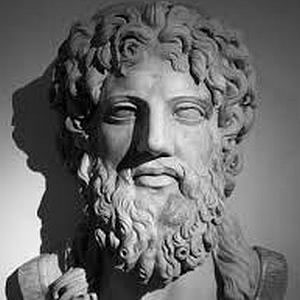
Pagan Gods (7)Osiris, Apis, Zeus, Dionysus, Helios, Hades and Asclepius3000 BC - 305 BC |
Graeco-Egyptian GodsSerapisChristus 305 BC - 325 AD |

Christian GodJesus Christ(formerly Iesous Christos) 325 AD - Today |
| Paganism is a term first used in the 4th century, by the early Christian community, for populations of the Roman world who worshipped many gods. Amongst the many pagan gods worshipped across the world were seven: Osiris, Apis, Zeus, Dionysus, Helios, Hades and Asclepius. |
Serapis Christus (Σέραπις, Attic/Ionian Greek) or Sarapis (Σάραπις, Doric Greek) is a Graeco-Egyptian God
Serapis was a combination of the traditional Egyptian gods Osiris and Apis, sprinkled with the attributes of the Hellenistic gods Zeus, Helios, Dionysus, Hades and Asklepius. |
Iesous Christos (Christian God of Triune, equal, subordinate Jesus (/ˈdʒiːzəs/ JEE-zuss; Greek: Ἰησοῦς, translit. Iesous; Hebrew: ישוע, translit. Yēšū́aʿ;
In 1524 AD, the letter J was invented and Iesous Christos was renamed to Jesus Christ. |
| Creation | ||
| The original pagans were followers of an ancient religion that worshiped several gods (polytheistic). Often the gods were in the form of idols and statues. | In 283 BC, Ptolemy I Soter became the first European Pharaoh of Egypt through military force led by Alexander the Great. Ptolemy I had to take measures to solidify his rulership, authority and unite the Greek and Egyptian people and the many gods into one. In 305 BC*, Ptolemy I created Serapis, a Greco-Egyptian god, Greek in appearance, but with Egyptian features to be worshipped by both Greeks and Egyptians. Definition: Soteriology
* Although there is evidence Serapis pre-existed 305 BC, Ptolemy I was the first ruler to officially recognize and glorify Serapis at state level.Soteriology (/səˌtɪəriˈɒlədʒi/; Greek: σωτηρία sōtēria "salvation" from σωτήρ sōtēr "savior, preserver" and λόγος logos "study" or "word") is the study of religious doctrines of Salvation. In particular, the study of salvation through belief in Jesus Christ. |
Jesus, a Jewish preacher and religious leader who later became the central figure of Christianity lived between 4 BC - 33 AD. |
| Appearance | ||
| The worship of idols or statues constitutes idolatory. This includes worship to cult images of the deity, an outdoor altar, statues, animals, nature and votive offerings to the gods, and even nature such as sacred trees, springs, seasons, sun, moon etc. | Greek images of Serapis depict a man with an elaborate Greek hairstyle wearing Greek style robes and a long beard. Serapis often wears a corn modius or sheaf on his head. He is seated on a throne with the three-headed dog of Hades, Cerberus, at his feet. Egyptian images of Serapis show him as a mummified human with the bead of a bull. He is crowned with the crescent moon and two plumes. |
Jesus is depicted as a caucasian man, with long hair, short beard. He often wears a woven crown of thorns on his head (from his crucifixion) and has a 'Sun Disc' or sun-like Halo behind his head. |
| Partner | ||
| Pagan Gods were often partnered with a female counterpart. This introduced balance to the godhead. | Serapis consort was Isis, the wife of Osiris and the most popular goddess during the Ptolemaic Period. | Jesus' consort was his mother, Mary. Today, Roman Catholics deify Mary as the 'Mother of God' much like a Roman goddess. |
| Future | ||
| Today, Modern Paganism or Neopaganism are groups of new religious movements influenced by the various historical pagan beliefs of pre-modern Europe, North Africa and the Near-East. | The Serapis god was later forced on the black people across Africa. This process was initiated by Ptolemy but continued after him. | The Roman (Catholics) forced Jesus the God-Man on people and nations across the world through violent crusades, wars and missionary activity. |
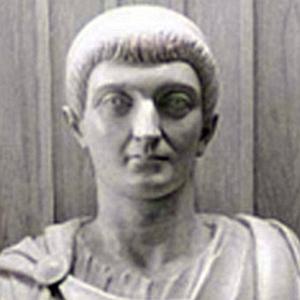 Council of Nicaea 325 AD
 At the Council of Nicaea, under Emperor Constantine and Bishop Hosius of Corduba, Serapis Christus, the Greaco-Egyptian god became Iesous Christos, the Christian god (In 1524 AD, Iesous Christos was renamed to Jesus Christ). It was officially declared that Jesus Christ was equal to God, from the substance of God, begotten, god from god; and the new undeclared replacement for Serapis Christus. | ||
| Pagan Gods to Jesus | ||
1. OSIRISEGYPTIAN2000 BC - 305 BC Osiris is an Egyptian god, identified as the god of the afterlife, the underworld, and the dead, but more appropriately as the god of transition, resurrection and regeneration. Dying & Rising Gods Biblical, Greco-Roman mythology and Christianity cite gods who die and later return to life. Examples include Osiris, Dionysus, Jesus Christ, Tammuz, Adonis and Attis. |
SERAPISGRAECO-EGYPTIAN305 BC - 325 AD Serapis was a supreme god of divine majesty and united the minor gods: |
JESUSCHRISTIAN325 AD - Today Jesus' Crucifixion Christian doctrine requires belief that Jesus: Dying & Rising Gods Biblical, Greco-Roman mythology and Christianity cite gods who die and later return to life. Examples include Osiris, Dionysus, Jesus Christ, Tammuz, Adonis and Attis. |
2. APISEGYPTIAN3100 BC - 305 BC Apis was a sacrificial bull of Memphis, who was annually sacrificed for the sins of Egypt. |
SERAPISGRAECO-EGYPTIAN305 BC - 325 AD Serapis was a supreme god of divine majesty and united the minor gods: |
JESUSCHRISTIAN325 AD - Today Sacrificial Lamb Jesus is the sacrificial lamb. Jesus' crucifixion (sacrifice) is annually celebrated during the Easter period. |
3. ZEUSGREEK1200 BC - 305 BC Zeus (/ˈzjuːs/;[3] Greek: Ζεύς Zeús [zdeǔ̯s])[4] is the sky and thunder god in ancient Greek religion, who ruled as king of the gods of Mount Olympus. King of the gods, God of the sky, lightning, thunder, law, order, and justice. |
SERAPISGRAECO-EGYPTIAN305 BC - 325 AD Serapis was a supreme god of divine majesty and united the minor gods: |
JESUSCHRISTIAN325 AD - Today The Christian Trinity reinforces that Jesus is equal to God, of the same substance of God, and was created before 'time' itself. Christianity declares Jesus as having absolute sovereignty over all previous gods (Greek, Egyptian or otherwise) |
4. DIONYSUSGREEK1500 BC - 305 BC Dionysus (/daɪ.əˈnaɪsəs/; Greek: Διόνυσος Dionysos) is the god of the grape harvest, wine-making and wine, of ritual madness, fertility, theatre and religious ecstasy in ancient Greek religion and myth. Wine played an important role in Greek culture, and the cult of Dionysus was the main religious focus for its unrestrained consumption. |
SERAPISGRAECO-EGYPTIAN305 BC - 325 AD Serapis was a supreme god of divine majesty and united the minor gods: |
JESUSCHRISTIAN325 AD - Today Eucharist/Holy Communion Jesus' Eucharist /ˈjuːkərɪst/ (also called Holy Communion or the Lord's Supper) is a Christian rite that is considered a sacrament in most churches. Jesus Christ in his Last Supper gave his disciples bread and wine during the Passover mea and commanded to "do this in memory of me"; the bread as "my body and wine as my blood. |
5. HELIOSGREEK450 BC - 305 BC Helios (/ˈhiːli.ɒs/; Ancient Greek: Ἥλιος Hēlios; Latinized as Helius; Ἠέλιος in Homeric Greek) was the personification of the Sun. Helios was described as a handsome Titan crowned with the shining aureole of the Sun, who drove the chariot of the sun across the sky. |
SERAPISGRAECO-EGYPTIAN305 BC - 325 AD Serapis was a supreme god of divine majesty and united the minor gods: |
JESUSCHRISTIAN325 AD - Today Sun of God Sol Invictus was the sun god of the Roman Empire. The birthday of the Sun-god, Sol Invictus was celebrated on 25 December. Jesus inherited numerous Sun god features including the label 'Son of God', shining Sun halo behind his head in images, and the pagan festival Christmas to mark his birth date. |
6. HADESGREEK470 BC - 305 BC Hades (/ˈheɪdiːz/; Greek: ᾍδης Háidēs) was the ancient Greek chthonic god of the underworld. Hades was the oldest son of Cronus and Rhea. He and his brothers Zeus and Poseidon defeated their father's generation of gods, the Titans, and claimed rulership over the cosmos. Hades received the underworld, Zeus the sky, and Poseidon the sea, with the solid earth. |
SERAPISGRAECO-EGYPTIAN305 BC - 325 AD Serapis was a supreme god of divine majesty and united the minor gods: |
JESUSCHRISTIAN325 AD - Today Eschatology The Christian doctrine of the afterlife requires Christians to believe in Jesus Christ who came to live and die for our sins. Jesus is the God of absolute salvation in the Hereafter. The Afterlife is the ultimate destination for anyone who believes in Jesus Christ as their God and saviour. |
7. ASCLEPIUSGREEK800 BC - 305 BC Asclepius (/æsˈkliːpiəs/; Greek: Ἀσκληπιός, Asklēpiós [asklɛːpiós]; Latin: Aesculapius) was a hero and god of medicine. He represents the healing aspect of the medical arts. |
SERAPISGRAECO-EGYPTIAN305 BC - 325 AD Serapis was a supreme god of divine majesty and united the minor gods: |
JESUSCHRISTIAN325 AD - Today Jesus' Healing In the Bible, Jesus performs 40 individual healing events. These include healing the sick, blind, leper and raising the dead |
Evidence linking Serapis Christus to Jesus Christ
Egypt, which you commended to me, my dearest Servianus, I have found to be wholly fickle and inconsistent, and continually wafted about by every breath of fame. The worshipers of Serapis (here) are called Christians, and those who are devoted to the god Serapis (I find), call themselves Bishops of Christ.
Emperor Hadrian correspondence to Servanius 134 AD refers to Alexandrian worshippers of Serapis
Quoted by Dr Giles vol. ii p.86
They are there [in Egypt] Christians who worship Serapis and devoted to Serapis are those who call themselves Bishops of Christ. Hebrew and Christian Records, Giles vol. ii p.86. London 1877
The Egyptians describe themselves as Christians, and Christian worship by those claiming to worship Serapis, worshiping the Sun In His Name by E. Christopher Reyes p.88
The land of Egypt, the praises of which you have been recounting to me, my dear Servanius, I have found to be wholly light-minded, unstable and blown about by every breath of rumour. There those who worship Serapis are, in fact, Christians, and those who call themselves Bishops of Christ are, in fact, devotees of Serapis Augustan History, Firmus et al. 8
Flavius Josephus mentions there was a Sacred Temple of Isis in Rome, at the time of Pontius Pilate: In Plutarch's own town [Chaeronea, Boeotia] .. Have been found two dedications to Serapis, Isis and Anubis. Frank C. Babbit
Under the foundations of the Temple of Serapis at Alexandria, Egypt are discovered a Cross and various phallic emblems which cause the shocking murder of Hypatia by Saint Cyril's monks. In His Name by E. Christopher Reyes p.125
Quoted by Dr Giles vol. ii p.86
They are there [in Egypt] Christians who worship Serapis and devoted to Serapis are those who call themselves Bishops of Christ. Hebrew and Christian Records, Giles vol. ii p.86. London 1877
The Egyptians describe themselves as Christians, and Christian worship by those claiming to worship Serapis, worshiping the Sun In His Name by E. Christopher Reyes p.88
The land of Egypt, the praises of which you have been recounting to me, my dear Servanius, I have found to be wholly light-minded, unstable and blown about by every breath of rumour. There those who worship Serapis are, in fact, Christians, and those who call themselves Bishops of Christ are, in fact, devotees of Serapis Augustan History, Firmus et al. 8
Flavius Josephus mentions there was a Sacred Temple of Isis in Rome, at the time of Pontius Pilate: In Plutarch's own town [Chaeronea, Boeotia] .. Have been found two dedications to Serapis, Isis and Anubis. Frank C. Babbit
Under the foundations of the Temple of Serapis at Alexandria, Egypt are discovered a Cross and various phallic emblems which cause the shocking murder of Hypatia by Saint Cyril's monks. In His Name by E. Christopher Reyes p.125
CREDIT
http://www.bbc.co.uk/news/magazine-35120965
http://www.ancient.eu/Ptolemy_I/ http://www.egyptianmyths.net/serapis.htm
http://www.touregypt.net/serapis.htm
http://www.touregypt.net/featurestories/serapis.htm
http://www.ancientegyptonline.co.uk/serapis.html
http://www.ancient-origins.net/myths-legends-africa/serapis-god-fertility-and-afterlife-united-greeks-and-egyptians-004084
103-jesus-serapis
| Author: Guest • Updated: 04 Sep 2026 • 42,063 views | 14 hrs ago |
Explore More
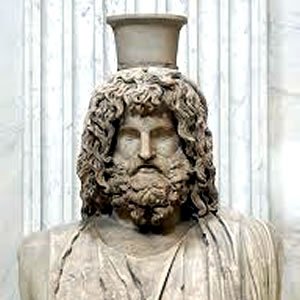 Who was Serapis?
Serapis is a Graeco-Egyptian deity. The cult of Serapis was introduced during the third century BC on the orders of Pharaoh Ptolemy I Soter of the Ptolemaic Kingdom as a means to unify the Greeks and Egyptians in his realm. A serapeum was any temple or religious precinct devoted to Serapis. The
cultus of Serapis was spread as a matter of deliberate policy by the Ptolemaic kings, who also built the immense Serapeum of Alexandria. Serapis continued to increase in popularity during the Roman Empire, often replacing Osiris as the consort of Isis in temples outside Egypt. Serapis was depicted as Greek in appearance but with Egyptian trappings, and combined iconography from a great many cults, signifying both abundance and resurrection.
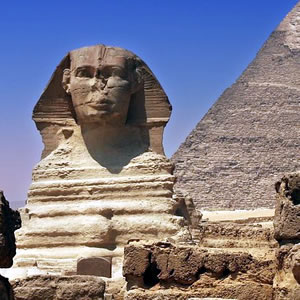 What is Egypt?
Egypt, officially the Arab Republic of Egypt, is a country spanning the northeast corner of Africa and southwest corner of Asia by a land bridge formed by the Sinai Peninsula. Egypt is a Mediterranean country bordered by the Gaza Strip and Israel to the northeast, the Gulf of Aqaba and the Red Sea
to the east, Sudan to the south, and Libya to the west. Across the Gulf of Aqaba lies Jordan, across the Red Sea lies Saudi Arabia, and across the Mediterranean lie Greece, Turkey and Cyprus, although none share a land border with Egypt.
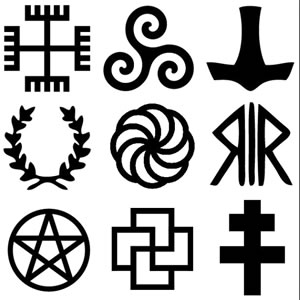 What is Pagan?
Paganism is a term first used in the fourth century by early Christians. It was applied on populations of the Roman Empire who practiced polytheism, either because they were increasingly rural and provincial relative to the Christian population or because they were not milites Christi (soldiers of
Christ). Alternate terms in Christian texts for the same group were hellene, gentile, and heathen. Pagan and paganism were pejorative terms for the same polytheistic group, implying its inferiority. Paganism has broadly connoted the "religion of the peasantry", and for much of its history was a derogatory term. Both during and after the Middle Ages, pagan was a pejorative term that was applied to any non-Abrahamic or unfamiliar religion, and the term presumed a belief in false god(s).
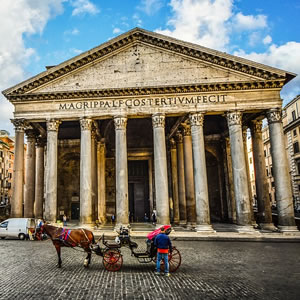 What is Roman?
In historiography, ancient Rome is Roman civilization. From the founding of the city of Rome in the 8th century BC to the collapse of the Western Roman Empire in the 5th century AD, encompassing the Roman Kingdom, Roman Republic and Roman Empire until the fall of the western empire. The civilization
began as an Italic settlement in the Italian peninsula, dating from the 8th century BC, that grew into the city of Rome and which subsequently gave its name to the empire over which it ruled and to the widespread civilisation the empire developed. The Roman empire expanded to become one of the largest empires in the ancient world, though still ruled from the city, with an estimated 50 to 90 million inhabitants (roughly 20% of the world's population) and covering 5.0 million square kilometres at its height in AD 117.
 Who are BIN?
 Who is GOD?
In monotheism and henotheism, God is conceived as the Supreme Being and principal object of faith. The concept of God as described by theologians commonly includes the attributes of omniscience (infinite knowledge), omnipotence (unlimited power), omnipresence (present everywhere), omnibenevolence
(perfect goodness), divine simplicity, and eternal and necessary existence.
In theism, God is the creator and sustainer of the universe
In deism, God is the creator, but not the sustainer, of the universe
Monotheism is the belief in the existence of one God or in the oneness of God
In pantheism, God is the universe itself
In atheism, God is purported not to exist, while deemed unknown or unknowable within the context of agnosticism.