And who is more unjust than one who invents about Allāh a lie or denies His verses? Those will attain their portion of the decree1 until, when Our messengers [i.e., angels] come to them to take them in death, they will say, "Where are those you used to invoke besides Allāh?" They will say, "They have departed from us," and will bear witness against themselves that they were disbelievers.
QURAN 7:37
Messengers of Death Question Polytheists at Decease
Examine the terrifying final cross-examinations as the Messengers of Death question defiant polytheists at the exact moment of their passing in 7:37. Angel of Death: Until when Our sent messengers, [meaning (the Angel of Death)'s extractors], come to them to take them in death, they ask, "Where are those you used to invoke besides God?" 14 views · Last view: 4 days ago
Examine the terrifying final cross-examinations as the Messengers of Death question defiant polytheists at the exact moment of their passing in 7:37. Angel of Death: Until when Our sent messengers, [meaning (the Angel of Death)'s extractors], come to them to take them in death, they ask, "Where are those you used to invoke besides God?" 14 views · Last view: 4 days ago
Explore More
Polytheism ProphetSearch Google Search Explore Topics
 What is Polytheism?
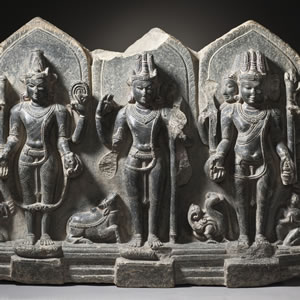
Polytheism is the worship of or belief in multiple deities, usually as a pantheon of gods and goddesses. In most religions which accept polytheism, the different gods and goddesses are representations of forces of nature or ancestral principles, and can be viewed either as autonomous or as aspects or emanations of a creator deity or transcendental absolute principle (monistic theologies), which manifests immanently in nature (panentheistic and pantheistic theologies). Most of the polytheistic deities of ancient religions, with the notable exceptions of the Ancient Egyptian and Hindu deities, were conceived as having physical bodies. Polytheism is a type of theism. Within theism, it contrasts with monotheism, the belief in a singular God, in most cases transcendent. Important polytheistic religions practiced today include Chinese traditional religion, Hinduism, Japanese Shinto, and various neopagan faiths.
 What is a Prophet?
In religion, a prophet is an individual who is regarded as being in contact with a divine being and is said to speak on that entity's behalf. They claim to be serving as an intermediary with humanity by delivering messages or teachings from the supernatural source to other people. The message that the prophet conveys is called a prophecy. In Islam, all prophetic messengers are prophets (such as Adam, Noah, Abraham, Moses, Jesus, and Muhammad) though not all prophets are prophetic messengers. The primary distinction is that a prophet is required to demonstrate God's law through his actions, character, and behavior without necessarily calling people to follow him, while a prophetic messenger is required to pronounce God's law (i.e. revelation) and call his people to submit and follow him.