925 views
·
Last viewed: 10 hrs ago
Uploaded: 18 Jul 2018 (8 years ago) · Shared: 19 Jul 2018
Duration: 1:48
Uploaded: 18 Jul 2018 (8 years ago) · Shared: 19 Jul 2018
Duration: 1:48
Youtube Description
Charles Hedrick (born 11 April 1934) is a distinguished Professor Emeritus at Missouri State University whose research interests include ChristianOrigins, Jesus of Nazareth, New Testament Introduction, Parables, Gnosticism etc. He has written books in the areas of Gospels, Nag Hammadi, Gnosticism, the Graeco-Roman world and related topics.
Link to Charles Hedrick videos:
http://muslimprophets.com/videos.php?search=Charles+Hedrick
Link to the original video:
https://www.youtube.com/watch?v=CB3bQkxqP_g
DISCLAIMER
We do NOT own the video materials and all credits belong to the respectful owners. In case of copyright issues, please contact us immediately for further credits or clip delete.
COPYRIGHT
Under Section 107 of the Copyright Act 1976, allowance is made for 'fair use' for purposes such as criticism, comment, news reporting, teaching, scholarship and research. Fair use is a use permitted by copyright statute that might otherwise be infringing. Non-profit, educational or personal use tips the balance in favour of fair use.
Explore More
Charles Hedrick New Testament Constantine Eusebius NicaeaSearch Google Search Explore Topics
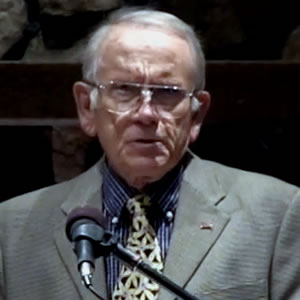 Who is Charles Hedrick?
Charles Hedrick (born 1934) is a distinguished Professor Emeritus at Missouri State University. Hedrick's research interests include Christian Origins, Jesus of Nazareth, New Testament Introduction, Parables, Gnosticism etc. He has written books in the areas of Gospels, Nag Hammadi, Gnosticism, the Graeco-Roman world and related topics.
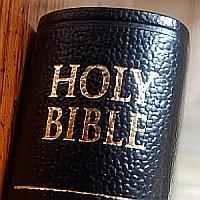 What is New Testament?
The New Testament is the second part of the Christian biblical canon. The first part being the Old Testament, based on the Hebrew Bible. The New Testament discusses the teachings and person of Jesus, as well as events in first-century Christianity. Christians regard both the Old and New Testaments together as sacred scripture. The New Testament (in whole or in part) has frequently accompanied the spread of Christianity around the world. It reflects and serves as a source for Christian theology and morality.
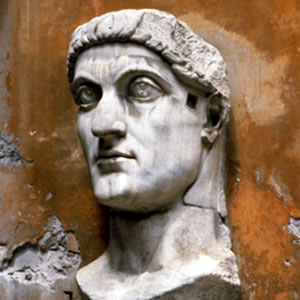 Who was Constantine?
Constantine the Great (27 February 272 AD-22 May 337 AD) was a Roman Emperor who ruled between 306 and 337 AD. Born on the territory now known as Nis, located in Serbia, he was the son of Flavius Valerius Constantius, a Roman Army officer of Illyrian origins. His mother Helena was Greek. His father became Caesar, the deputy emperor in the west, in 293 AD. Constantine was sent east, where he rose through the ranks to become a military tribune under Emperors Diocletian and Galerius. Constantine was the first Roman emperor to convert to Christianity. Although he lived most of his life as a pagan, he joined the Christian faith on his deathbed, being baptised by Eusebius of Nicomedia. He played an influential role in the proclamation of the Edict of Milan in 313, which declared religious tolerance for Christianity in the Roman empire. He called the First Council of Nicaea in 325 AD that produced the statement of Christian belief known as the Nicene Creed.
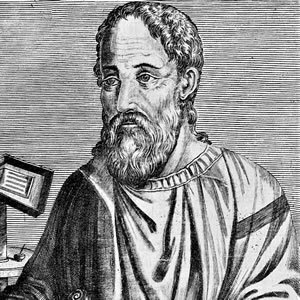 Who was Eusebius?
Eusebius of Caesarea (260-340 AD) was a historian of Christianity, exegete, and Christian polemicist. He became the bishop of Caesarea Maritima about 314 AD. Together with Pamphilus, he was a scholar of the Biblical canon and is regarded as an extremely learned Christian of his time. During the Council of Antiochia (325) he was excommunicated for subscribing to the heresy of Arius (Arianism), and thus withdrawn during the First Council of Nicaea where he accepted that the Homoousion referred to the Logos. Never recognized as a saint, he became counselor of Constantine the Great, and with the bishop of Nicomedia he continued to polemicize against Saint Athanasius of Alexandria, Church Fathers, since he was condemned in the First Council of Tyre in 335.
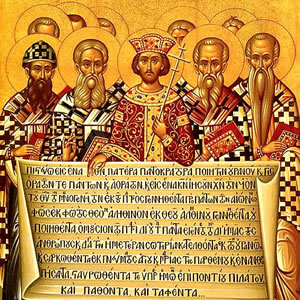 Where is Nicaea?
Nicaea or Nicea was an ancient city in northwestern Anatolia. It is primarily known as the site of the First and Second Councils of Nicaea (the first and seventh Ecumenical councils in the early history of the Christian Church), the Nicene Creed (which comes from the First Council), and as the capital city of the Empire of Nicaea following the Fourth Crusade in 1204, until the recapture of Constantinople by the Byzantines in 1261.