456 views
·
Last viewed: 3 weeks ago
Uploaded: 09 Nov 2012 (14 years ago) · Shared: 07 Jun 2017
Duration: 37:09
Uploaded: 09 Nov 2012 (14 years ago) · Shared: 07 Jun 2017
Duration: 37:09
Youtube Description
Four great Scriptural passages are considered in this presentation! Dr. Dale Tuggy of the State University of New York at Fredonia (SUNY) lectures ata recent Theological Conference in Atlanta about the relationship of logic and the New Testament. He tells us that God is logical and so are the Scriptures. Dr. Tuggy begins with a short introduction to the principles of logic and then takes up the matter of logic in four 'controversial' passages: John 10:30-36, John 17:1-3, John 20:17 and 1 Corinthians 8:6. This Christian Video produced by J. Dan Gill of 21st Century Reformation. For other presentations and interviews go to http://www.21stcr.org. To visit Dale Tuggy's blog, go to http://www.trinities.org/blog/
Explore More
New Testament Dale Tuggy SinSearch Google Search Explore Topics
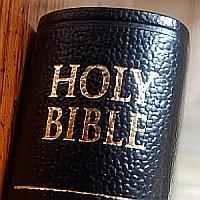 What is New Testament?
The New Testament is the second part of the Christian biblical canon. The first part being the Old Testament, based on the Hebrew Bible. The New Testament discusses the teachings and person of Jesus, as well as events in first-century Christianity. Christians regard both the Old and New Testaments together as sacred scripture. The New Testament (in whole or in part) has frequently accompanied the spread of Christianity around the world. It reflects and serves as a source for Christian theology and morality.
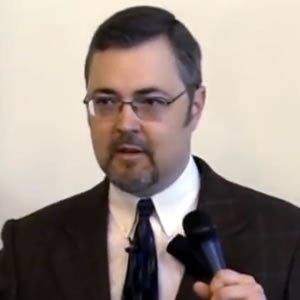 Who is Dale Tuggy?
Dale Tuggy (PhD, Brown University) is Professor of Philosophy at the State University of New York at Fredonia. He has authored about two dozen peer-reviewed articles and book chapters relating to the Trinity and other topics in analytic theology and philosophy of religion. Tuggy takes an interest in World Religions, Philosophy of Religion courses, the history of Philosophy, Eastern philosophies and religions, and Introduction to Philosophy.
 What is Sin?
In Abrahamic contexts, sin is the act of violating God's will. Sin can also be viewed as anything that violates the ideal relationship between an individual and God; or as any diversion from the ideal order for human living. To sin has been defined as "to miss the mark". Sins fall in a spectrum from minor errors to deadly misdeeds. Catholicism regards the least corrupt sins as venial sins which are part of human living and carry immediate consequences on earth, and, if unrepented for, more painful purgation, assuming the person is destined to heaven, as it is written in the formation letter "Purgatory", "most of the early Fathers of the Church speak of a cleansing fire, though we cannot tell whether this means actual or spiritual fire." Conversely, sins of great evil are mortal sins which bring the consequence of hell if they are not addressed either through an act of perfect contrition or going to confession about them.