1019 views
·
Last viewed: 18 hrs ago
Uploaded: 01 Sep 2009 (17 years ago) · Shared: 04 May 2017
Duration: 45:52 ·
Youtube Description
Introduction to New Testament (RLST 152) Early Christianity presents us with a wide diversity in attitudes towards the law. There were also manydifferent Christologies circulating in different communities. The book of James presents one unique perspective. It seems to be written in the tradition of Jewish wisdom literature in its presentation of sayings and its concern for the poor. James also presents a view of works and faith that seems to oppose Pauline teaching. However, the terms 'faith' and 'works' function differently in Paul's writings and in the book of James
00:00 - Chapter 1. Diversity in Early Christianity: Attitudes towards the Jewish Law
03:57 - Chapter 2. Diversity in Early Christianity: Christology
21:03 - Chapter 3. James as Jewish Wisdom Literature
27:47 - Chapter 4. Faith and Works in James in Comparison to Paul
Complete course materials are available at the Open Yale Courses website: http://open.yale.edu/courses
This course was recorded in Spring 2009.
Explore More
TOPIC Yale University Christine Hayes New Testament Apostle Paul Dale Martin PaulineSearch Google Search Explore Topics
 Who is Yale University?
Dale Martin (born 1954) is an American New Testament scholar. He is Woolsey Professor of Religious Studies at Yale University. He has degrees from Abilene Christian University, Princeton Theological
Seminary, and Yale. Martin previously taught at Rhodes College and Duke University. Martin was elected a Fellow of the American Academy of Arts and Sciences in 2009.
 Who is Christine Hayes? YALE UNIVERSITY
Christine Hayes is the Robert F and Patricia Ross Weis Professor of Religious Studies at Yale University. She is former Chair of the Department of Religious Studies, and one of the foremost American
academics focusing on talmudic-midrashic studies and Classical Judaica. Hayes received her B.A. summa cum laude in The Study of Religion from Harvard University in 1984. She subsequently received an M.A. with distinction from the University of California, Berkeley in 1988 which included a year of graduate work at the Hebrew University of Jerusalem. She received her PhD. in Talmudic and Judaic Studies (Department of Near Eastern Studies) from the University of California, Berkeley in 1993.
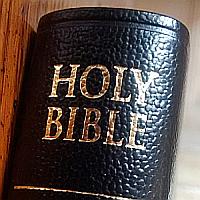 What is New Testament?
The New Testament is the second part of the Christian biblical canon. The first part being the Old Testament, based on the Hebrew Bible. The New Testament discusses the teachings and person of Jesus
as well as events in first-century Christianity. Christians regard both the Old and New Testaments together as sacred scripture. The New Testament (in whole or in part) has frequently accompanied the spread of Christianity around the world. It reflects and serves as a source for Christian theology and morality.
 Who was Apostle Paul?
Paul the Apostle (Latin: Paulus), commonly known as Saint Paul and also known by his Jewish name Saul of Tarsus was an apostle (though not one of the Twelve Apostles) who taught the gospel of Christ
to the first century world. Paul is generally considered one of the most important figures of the Apostolic Age and in the mid-30s to the mid-50s AD he founded several churches in Asia Minor and Europe. He took advantage of his status as both a Jew and a Roman citizen to minister to both Jewish and Roman audiences. According to writings in the New Testament and prior to his conversion, Paul was dedicated to persecuting the early disciples of Jesus in the area of Jerusalem. In Acts, Paul was traveling on the road from Jerusalem to Damascus on a mission to 'arrest them and bring them back to Jerusalem' when the resurrected Jesus appeared to him in a great light. He was struck blind, but after three days his sight was restored by Ananias of Damascus and Paul began to preach that Jesus of Nazareth is the Jewish Messiah and the Son of God.
Who is Dale Martin? YALE UNIVERSITYDale Martin (born 1954) is an American New Testament scholar. He is Woolsey Professor of Religious Studies at Yale University. He has degrees from Abilene Christian University, Princeton Theological
Seminary, and Yale. Martin previously taught at Rhodes College and Duke University. Martin was elected a Fellow of the American Academy of Arts and Sciences in 2009.
Who was Pauline?Paul the Apostle (Latin: Paulus), commonly known as Saint Paul and also known by his Jewish name Saul of Tarsus was an apostle (though not one of the Twelve Apostles) who taught the gospel of Christ
to the first century world. Paul is generally considered one of the most important figures of the Apostolic Age and in the mid-30s to the mid-50s AD he founded several churches in Asia Minor and Europe. He took advantage of his status as both a Jew and a Roman citizen to minister to both Jewish and Roman audiences. According to writings in the New Testament and prior to his conversion, Paul was dedicated to persecuting the early disciples of Jesus in the area of Jerusalem. In Acts, Paul was traveling on the road from Jerusalem to Damascus on a mission to 'arrest them and bring them back to Jerusalem' when the resurrected Jesus appeared to him in a great light. He was struck blind, but after three days his sight was restored by Ananias of Damascus and Paul began to preach that Jesus of Nazareth is the Jewish Messiah and the Son of God.
 3:07:21
1232 views · 15 secs ago
 34:09
857 views · 15 secs ago
 6:38
580 views · 22 secs ago

 2:56:24

 20:01
544 views · 2 mins ago
 2:51
379 views · 2 mins ago
 2:19
303 views · 3 mins ago